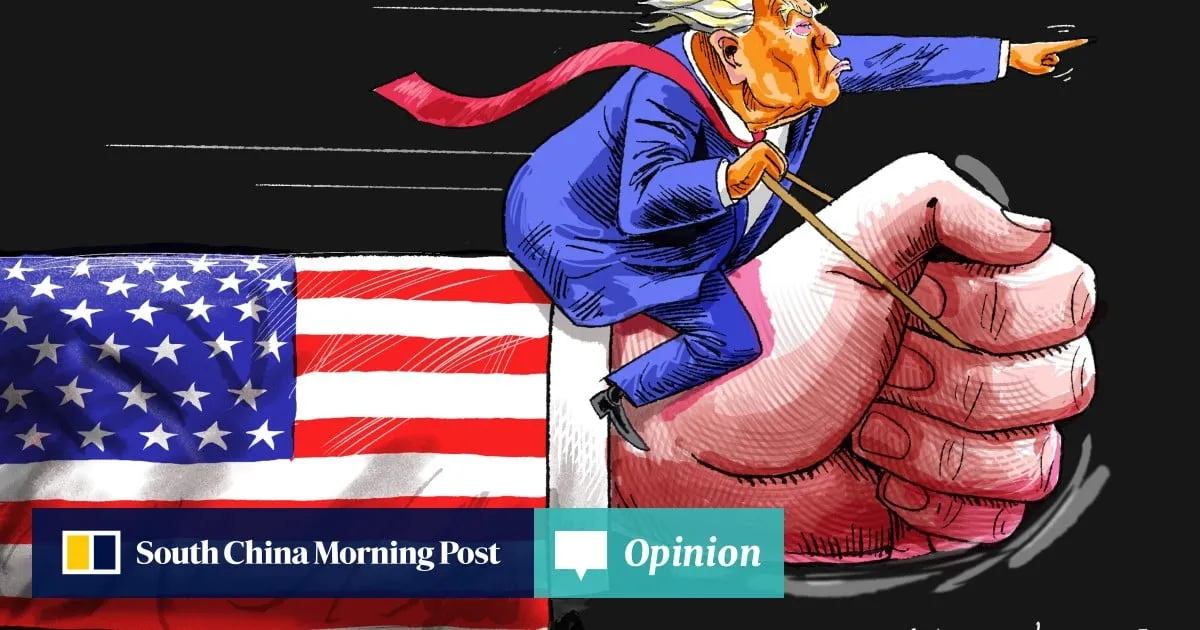
Sun Tzu wrote that “fighting and winning all your battles is not the height of skill; subduing the enemy without fighting is the height of skill”. That maxim offers perhaps the clearest lens to interpret the logic of American grand strategy under US President Donald Trump.What many dismiss as inconsistency may conceal a patient strategic deception. The aim is not direct confrontation, but the quiet reshaping of the global economy in support of long-term US power.The US wants to improve its relative position vis-a-vis China for the long game. At the centre lies what might be called positional power – control over the critical nodes through which global economic systems operate. It’s about dominance of computational power (semiconductors), resource power (rare earths, energy) and connectivity power (shipping and maritime chokepoints).
SRCSouth China Morning Post
LANGEN
LEANCenter-Right
WORDS130
ENT11
SUN · 2026-05-31 · 12:30 GMTBRIEF NSR-2026-0531-80630
NSR-2026-0531-80630Analysis·EN·Political Strategy
US quietly plays the long game on energy dominance against China
The article suggests that the US, under President Trump, is employing a long-term strategy to achieve energy dominance against China, drawing inspiration from Sun Tzu's principles of subduing an enemy without direct conflict. This approach, which may appear inconsistent, aims to subtly reshape the global economy to bolster US power.
Athanasios Platias,Vasilis TrigkasSouth China Morning PostFiled 2026-05-31 · 12:30 GMTLean · Center-RightRead · 1 min
South China Morning PostFIG 01
Reading time
1min
Word count
130words
Sources cited
0cited
Entities identified
11entities
Quality score
100%
§ 01
Briefing Summary
AI-generatedNEWSAR · AI
The article suggests that the US, under President Trump, is employing a long-term strategy to achieve energy dominance against China, drawing inspiration from Sun Tzu's principles of subduing an enemy without direct conflict. This approach, which may appear inconsistent, aims to subtly reshape the global economy to bolster US power. The US seeks to improve its relative position by controlling critical economic nodes, including computational power (semiconductors), resource power (rare earths and energy), and connectivity power (shipping and maritime chokepoints). This strategy focuses on positional power rather than direct confrontation.
Confidence 0.85Claims 4Entities 11
§ 02
Article analysis
Model · rule-basedFraming
Political Strategy
Technology
Tone
Mixed Tone
AI-assessed
CalmNeutralAlarmist
Factuality
0.30 / 1.00
Opinion-Heavy
LowHigh
Sources cited
0
No named sources
FewMany
§ 03
Key claims
4 extracted01
Positional power involves dominance of computational power (semiconductors), resource power (rare earths, energy) and connectivity power (shipping and maritime chokepoints).
factual
Confidence
0.70
02
The US wants to improve its relative position vis-a-vis China for the long game.
factual
Confidence
0.70
03
The aim is not direct confrontation, but the quiet reshaping of the global economy in support of long-term US power.
factual
Confidence
0.60
04
American grand strategy under Trump may conceal a patient strategic deception.
factual
Confidence
0.60
§ 04
Full report
1 min read · 130 words§ 05
Entities
11 identifiedKey playerOppositionContextPositiveNeutralNegative
Locations3
§ 06
Keywords & salience
10 termsenergy dominance
1.00
us grand strategy
0.90
china
0.80
positional power
0.70
computational power
0.60
semiconductors
0.60
maritime chokepoints
0.50
rare earths
0.50
donald trump
0.40
sun tzu
0.40
§ 07
Topic connections
Interactive graph Network visualization showing 51 related topics
View Full Graph Person Organization Location Event|Click node to navigate|Edge numbers = shared articles