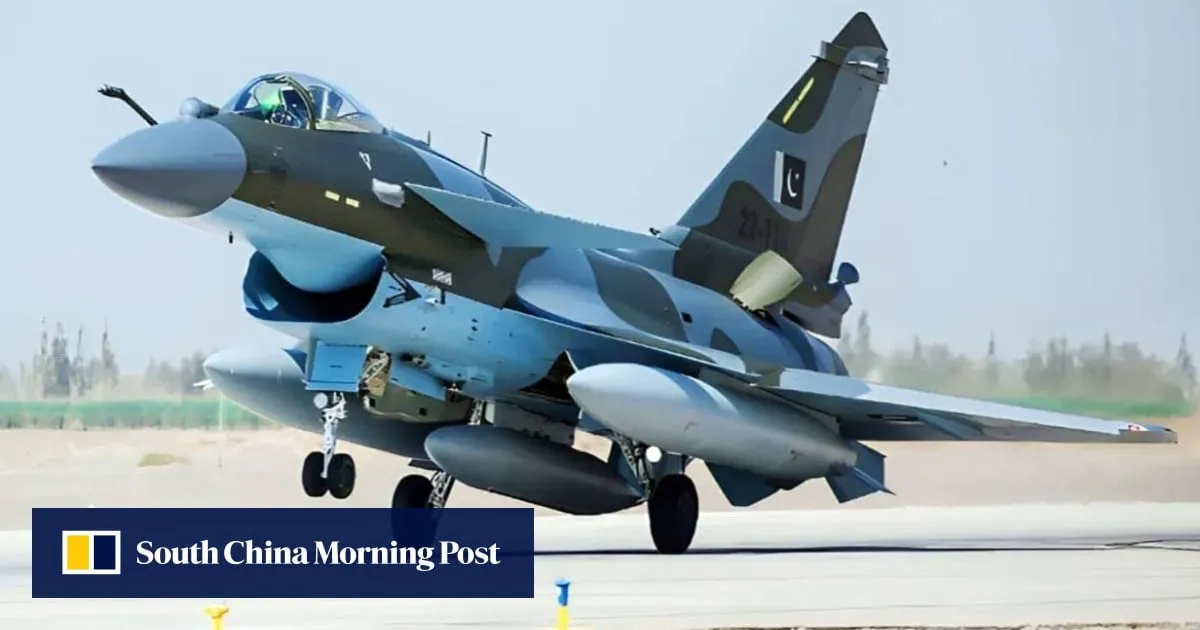
As China marks the 20th anniversary of completing its first domestically developed high-thrust turbofan engine for fighter jets, the WS-10 – Woshan-10, meaning Turbofan-10 – continues its crucial role in the People’s Liberation Army (PLA).The WS-10 turbofan engine was code-named Taihang after the famous Chinese mountain range.The Taihang engine family serves as the backbone of the PLA’s major active combat fighters, powering fourth-generation jets such as the J-10C, the J-11B, the air force’s J-16 and the navy’s carrier-based J-15. It has also played a vital role for variants of the fifth-generation J-20 stealth fighter.
SRCSouth China Morning Post
LANGEN
LEANCenter-Right
WORDS94
ENT10
SUN · 2026-05-31 · 14:00 GMTBRIEF NSR-2026-0531-80638
NSR-2026-0531-80638News Report·EN·Technology
How China’s home-grown WS-10 engine helped make the country a modern air power
China is celebrating the 20th anniversary of the completion of its first domestically developed high-thrust turbofan engine for fighter jets, the WS-10, also known by its codename Taihang. This engine is crucial for the People's Liberation Army (PLA), serving as the backbone for major active combat fighters.
Liu ZhenSouth China Morning PostFiled 2026-05-31 · 14:00 GMTLean · Center-RightRead · 1 min
South China Morning PostFIG 01
Reading time
1min
Word count
94words
Sources cited
0cited
Entities identified
10entities
Quality score
100%
§ 01
Briefing Summary
AI-generatedNEWSAR · AI
China is celebrating the 20th anniversary of the completion of its first domestically developed high-thrust turbofan engine for fighter jets, the WS-10, also known by its codename Taihang. This engine is crucial for the People's Liberation Army (PLA), serving as the backbone for major active combat fighters. The Taihang engine family powers fourth-generation jets like the J-10C, J-11B, J-16, and the navy's J-15, and is also used in variants of the fifth-generation J-20 stealth fighter. Its development marks a significant step in China's advancement as a modern air power.
Confidence 0.85Claims 5Entities 10
§ 02
Article analysis
Model · rule-basedFraming
Technology
National Security
Tone
Measured
AI-assessed
CalmNeutralAlarmist
Factuality
0.90 / 1.00
Factual
LowHigh
Sources cited
0
No named sources
FewMany
§ 03
Key claims
5 extracted01
The WS-10 has played a vital role for variants of the fifth-generation J-20 stealth fighter.
factual
Confidence
1.00
02
The WS-10 powers fourth-generation jets such as the J-10C, the J-11B, the J-16, and the J-15.
factual
Confidence
1.00
03
The Taihang engine family serves as the backbone of the PLA’s major active combat fighters.
factual
Confidence
1.00
04
The WS-10 turbofan engine was code-named Taihang.
factual
Confidence
1.00
05
China marks the 20th anniversary of completing its first domestically developed high-thrust turbofan engine for fighter jets, the WS-10.
factual
Confidence
1.00
§ 04
Full report
1 min read · 94 words§ 05
Entities
10 identifiedKey playerOppositionContextPositiveNeutralNegative
Organizations3
Locations1
§ 06
Keywords & salience
8 termsws-10 engine
1.00
turbofan engine
0.90
fighter jets
0.80
people's liberation army
0.70
pla
0.70
modern air power
0.60
j-20 stealth fighter
0.50
domestic development
0.40
§ 07
Topic connections
Interactive graph No topic relationship data available yet. This graph will appear once topic relationships have been computed.