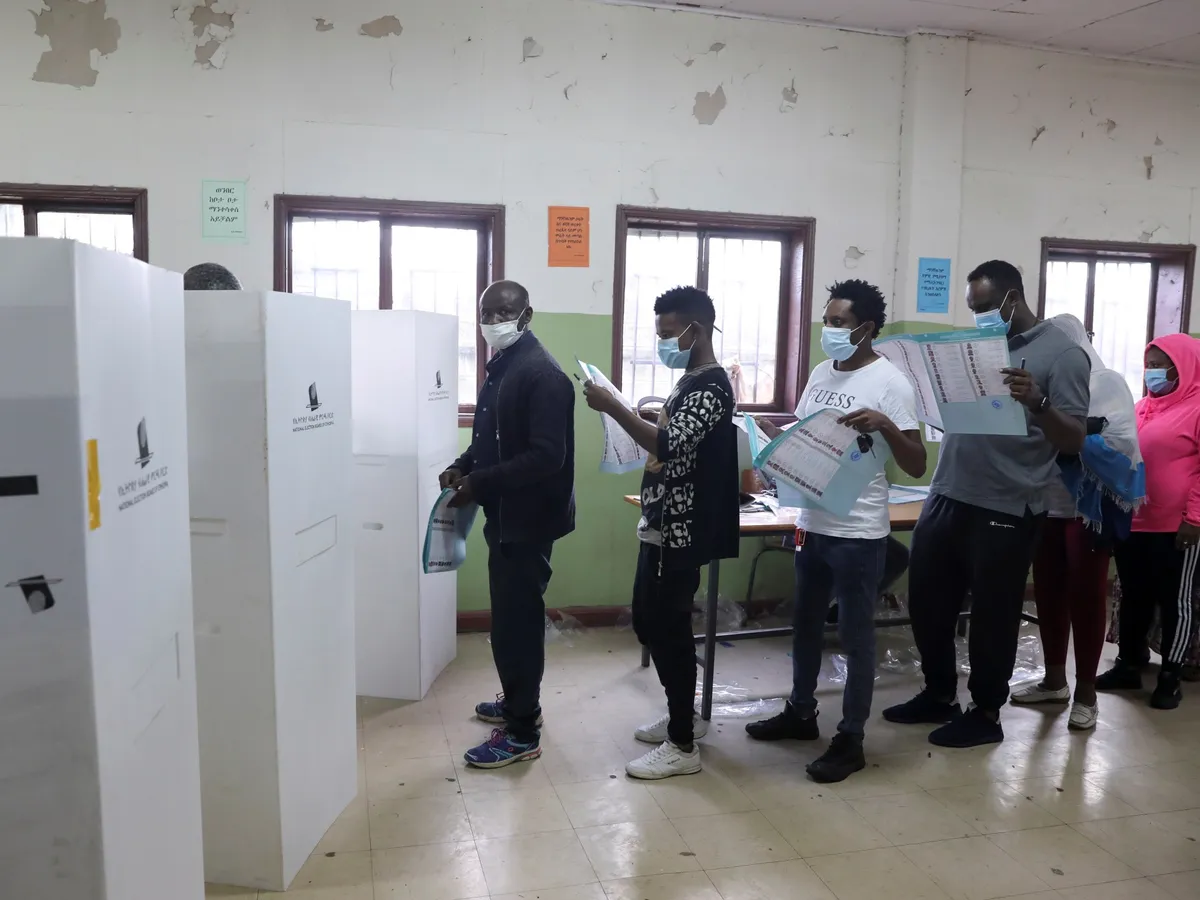
A national vote alone cannot address all challenges in the country, but it can be a step toward democratic consolidation.Published On 31 May 2026On June 1, more than 57 million Ethiopians are going to the polls in the country’s seventh national election since the adoption of the 1995 constitution. At a time when democratic systems across the world are under strain, Ethiopia’s vote is more than a routine electoral event — it is a significant test of whether a large, diverse, and rapidly changing state can navigate the difficult process of democratic transition.Ethiopia’s electoral system differs from that of many African countries. Voters do not directly elect a president; instead, they choose parliamentary representatives, reflecting a system closer to that of the United Kingdom. In this election, 47 political parties and more than 10,000 candidates are competing for seats at both the federal and regional levels.Recommended Stories list of 1 itemlist 1 of 1As Ethiopia votes, its deepening human rights crisis must be addressedend of listThe government’s performance in key sectors over the past few years is expected to reflect positively on the election outcome. During the past electoral cycle, Ethiopia has recorded strong economic growth, with average annual gross domestic product (GDP) expansion of around 7.5 percent and projections for this year reaching more than 10 percent.These figures are not just abstract statistics. Across major cities, including Addis Ababa, visible urban transformation is under way, reinforced by ambitious infrastructure development and a renewed push in agriculture and industry.Export performance has improved markedly, driven by agriculture and mining, while sectors such as tourism and digital services are beginning to play a growing role in the economy. The completion of the Grand Ethiopian Renaissance Dam has further cemented the country’s position as a regional energy powerhouse, with additional large-scale projects in the pipeline pointing to continued economic momentum.
SRCAl Jazeera
LANGEN
LEANCenter
WORDS307
ENT9
SUN · 2026-05-31 · 20:28 GMTBRIEF NSR-2026-0531-80701
NSR-2026-0531-80701Analysis·EN·Political Strategy
Ethiopia’s election is about affirming national commitment to democracy
On June 1, 2026, over 57 million Ethiopians will participate in the country's seventh national election since 1995. This vote is seen as a crucial test for Ethiopia's democratic transition, occurring as democratic systems globally face challenges.
Enatalem MelesAl JazeeraFiled 2026-05-31 · 20:28 GMTLean · CenterRead · 2 min
Al JazeeraFIG 01
Reading time
2min
Word count
307words
Sources cited
0cited
Entities identified
9entities
Quality score
100%
§ 01
Briefing Summary
AI-generatedNEWSAR · AI
On June 1, 2026, over 57 million Ethiopians will participate in the country's seventh national election since 1995. This vote is seen as a crucial test for Ethiopia's democratic transition, occurring as democratic systems globally face challenges. Voters will elect parliamentary representatives, with 47 political parties and over 10,000 candidates vying for seats at federal and regional levels. The election takes place amidst a backdrop of strong economic growth, with average annual GDP expansion around 7.5 percent and projections exceeding 10 percent for the current year. This economic performance, marked by urban transformation, infrastructure development, and improvements in agriculture, industry, and exports, is expected to influence the election outcome. The completion of the Grand Ethiopian Renaissance Dam further positions Ethiopia as a regional energy leader.
Confidence 0.90Claims 4Entities 9
§ 02
Article analysis
Model · rule-basedFraming
Political Strategy
Economic Impact
Tone
Measured
AI-assessed
CalmNeutralAlarmist
Factuality
0.70 / 1.00
Factual
LowHigh
Sources cited
0
No named sources
FewMany
§ 03
Key claims
4 extracted01
Ethiopia's seventh national election since 1995 will take place on June 1, with over 57 million voters participating.
factual
Confidence
1.00
02
The completion of the Grand Ethiopian Renaissance Dam has positioned Ethiopia as a regional energy powerhouse.
factual
Confidence
0.95
03
Ethiopia has recorded strong economic growth, with average annual GDP expansion of around 7.5 percent in the past electoral cycle.
statistic
Confidence
0.90
04
A national vote alone cannot address all challenges in Ethiopia, but it can be a step toward democratic consolidation.
factual
Confidence
0.80
§ 04
Full report
2 min read · 307 words§ 05
Entities
9 identifiedKey playerOppositionContextPositiveNeutralNegative
Organizations1
Locations4
§ 06
Keywords & salience
9 termsdemocratic consolidation
0.90
national election
0.90
ethiopia
0.80
democratic transition
0.80
economic growth
0.70
parliamentary representatives
0.70
infrastructure development
0.60
grand ethiopian renaissance dam
0.50
regional energy
0.40
§ 07
Topic connections
Interactive graph Network visualization showing 51 related topics
View Full Graph Person Organization Location Event|Click node to navigate|Edge numbers = shared articles