There was a time when going to university seemed a no-brainer. Better qualifications opened doors to better jobs with greater earning potential.But with the graduate premium shrinking, mounting anger about spiralling student debt and growing fears about AI eating into the graduate jobs market, it is not surprising that attitudes are shifting.Public confidence in the value of a university education has plummeted after decades of unfettered expansion across the sector.The latest British Social Attitudes (BSA) survey found the proportion of people who believe a degree is not worth the time and money has jumped from 14% in 2005 to 34% in 2025. Correspondingly, the proportion who believe those who go to university will end up a lot better off financially than those who do not has nosedived, down from 50% to 36%.Higher education in the UK has undergone a huge transformation since the first BSA survey in 1983. At that time, only a tiny proportion of school leavers – about 6% – went to university. By 2025, that had ballooned to 36%, and more than 2 million domestic students are enrolled.Survey views on university educationThis means more graduates are hunting for jobs. They are also paying more for their education. When tuition fees were introduced in 1998, they were set at £1,000 a year. Now, English students pay up to £9,535 a year, as well as living costs.Younger graduates, with experience of the fee system, are – understandably – more disillusioned than those who did not pay fees, according to the survey.Meanwhile, student loan repayment thresholds – the salary level above which graduates start paying back their loans – have been frozen many times, rather than uprated in line with inflation as promised. The thresholds will be frozen for three years from 2027 onwards.Growing disquiet about the above-inflation interest rates charged on these loans has also prompted questions about whether the burden on graduates is too great.“There’s no getting away from the fact that it’s a challenging labour market out there for everyone seeking work, not just graduates, which is a reflection of the current economy,” said Vivienne Stern, the chief executive of Universities UK. “But the data consistently shows that those with a degree are more likely to have a job, earn more and have better health. And a university education doesn’t just benefit the individual. If we want our country to grow, we need more graduates entering the labour market.”Nick Hillman, the director of the Higher Education Policy Institute, agrees. “While university still benefits most graduates most of the time, the lack of substantial economic growth means the rewards are not always as great as people hope beforehand,” he said. “However, despite years of negative rhetoric, it is still only one in three people who think university is not worth it.”Despite his growing loan debt, Alex Stanley, the vice-president for higher education at the National Union of Students, is glad he went to university. “I wouldn’t be in this role without it,” he said. “And it is the experiences I gained, beyond the piece of paper, that make it valuable.“But the funding system did not work for me. I had to do three jobs alongside my studies and my grades suffered as a result. And despite not being able to live on the loans I received, I still have over £50,000 of debt which is growing each month despite my repayments. The funding system is broken, and that is decaying trust in the university model.“We want a university system where young people can go, spend three years expanding their horizons, deepening their knowledge and challenging their thinking, and then leave with a qualification that sets them up for the workplace. But right now, that is not the case. This should serve as a wake-up call for universities and for the government.”Alex Scholes, a co-author of the BSA report, said universities were not just about education, but were also engines of social mobility and economic growth.He added: “They are also under immense financial pressure, and it appears recent debates about the fairness of student loan repayment systems and the role of AI on the job market have filtered through to people’s views about the value of a degree.“If public confidence continues to fall, we risk seeing the financial situation become even worse.”
SRCThe Guardian - World News
LANGEN
LEANCenter-Left
WORDS713
ENT5
TUE · 2026-06-02 · 05:00 GMTBRIEF NSR-2026-0602-81043
NSR-2026-0602-81043News Report·EN·Economic Impact
Shrinking graduate premium sours views on value of a university education, UK poll shows
A UK poll reveals a significant decline in public confidence regarding the value of a university education. The British Social Attitudes (BSA) survey found that 34% of people now believe a degree is not worth the time and money, a sharp increase from 14% in 2005.
Sally Weale Education correspondentThe Guardian - World NewsFiled 2026-06-02 · 05:00 GMTLean · Center-LeftRead · 3 min
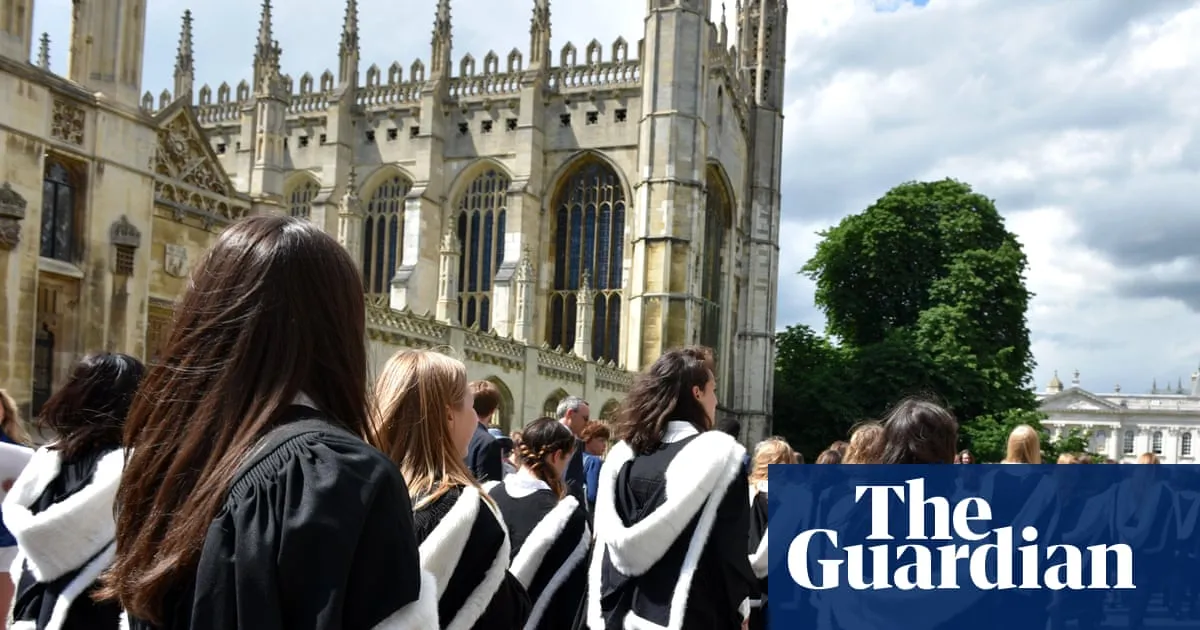
The Guardian - World NewsFIG 01
Reading time
3min
Word count
713words
Sources cited
3cited
Entities identified
5entities
Quality score
100%
§ 01
Briefing Summary
AI-generatedNEWSAR · AI
A UK poll reveals a significant decline in public confidence regarding the value of a university education. The British Social Attitudes (BSA) survey found that 34% of people now believe a degree is not worth the time and money, a sharp increase from 14% in 2005. This shift is attributed to a shrinking graduate premium, mounting student loan debt, and concerns about artificial intelligence impacting graduate job prospects. While universities argue degrees still lead to better employment and higher earnings, the rising cost of tuition and stagnant loan repayment thresholds are contributing to disillusionment, particularly among younger graduates. The BSA report suggests that falling public confidence could worsen the financial situation for universities.
Confidence 0.90Sources 3Claims 5Entities 5
§ 02
Article analysis
Model · rule-basedFraming
Economic Impact
Human Interest
Tone
Mixed Tone
AI-assessed
CalmNeutralAlarmist
Factuality
0.70 / 1.00
Factual
LowHigh
Sources cited
3
Well sourced
FewMany
§ 03
Key claims
5 extracted01
Graduates are more likely to have a job, earn more, and have better health, according to Vivienne Stern.
quoteVivienne Stern, chief executive of Universities UK
Confidence
1.00
02
University tuition fees in England have risen to up to £9,535 a year.
statistic
Confidence
1.00
03
The proportion believing graduates will end up a lot better off financially has dropped from 50% to 36%.
statisticBritish Social Attitudes (BSA) survey
Confidence
1.00
04
The proportion of people believing a degree is not worth the time and money jumped from 14% in 2005 to 34% in 2025.
statisticBritish Social Attitudes (BSA) survey
Confidence
1.00
05
Student loan repayment thresholds have been frozen multiple times instead of being adjusted for inflation.
factual
Confidence
0.90
§ 04
Full report
3 min read · 713 words§ 05
Entities
5 identifiedKey playerOppositionContextPositiveNeutralNegative
People1
Organizations1
Locations1
§ 06
Keywords & salience
10 termsuniversity education
1.00
graduate premium
0.90
student debt
0.80
public opinion
0.70
higher education
0.60
student loans
0.60
labour market
0.50
ai
0.40
tuition fees
0.40
uk
0.40
§ 07
Topic connections
Interactive graph Network visualization showing 51 related topics
View Full Graph Person Organization Location Event|Click node to navigate|Edge numbers = shared articles