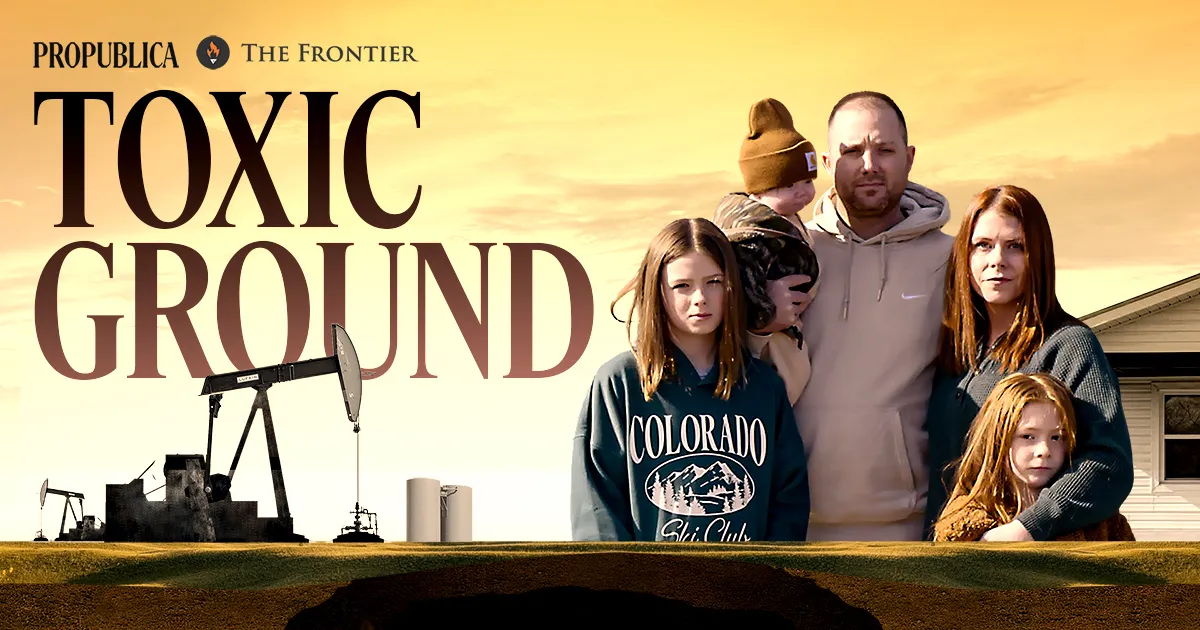
Kara Meredith can tell you the exact day her life turned upside down: Aug. 23, 2025. She was at her home in Fort Gibson, Oklahoma, caring for her 5-week-old son, when one of her daughters ran to tell her there was water all over the bathroom floor. Her husband, Mitch Meredith, wasn’t worried — until he saw the dark liquid bubbling up around the base of the bathtub. Mitch and his relatives worked all night trying to contain it. It was near dawn when his uncle said, “This is oil.” The United States is the largest oil and gas producer in the world. All of that drilling produces hundreds of billions of gallons of toxic wastewater each year. For decades, energy companies have disposed of that briny fluid by shooting it back underground using high-pressure injection wells. But across Oklahoma, the fluid is spreading uncontrollably belowground, blasting out of old, unplugged wells, polluting land and contaminating drinking water. In a new documentary from The Frontier and ProPublica, reporter Nick Bowlin investigates a scourge of oil field wastewater seeping into the lives of Oklahomans, about half of whom live within a mile of an oil and gas operation. His reporting takes him to the headquarters of the Oklahoma-corporation-commission" class="entity-link entity-organization" data-entity-id="20363" data-entity-type="organization">Oklahoma Corporation Commission, the state agency tasked with regulating oil and gas. The agency told Bowlin that it is committed to “doing the right thing, holding operators accountable, protecting Oklahoma and its resources, and providing fair and balanced regulation.” But as Bowlin continues to dig, he discovers he is far from the first one to raise the alarm about what’s happening in Oklahoma.Watch the documentary here. Support Independent Journalism: As a nonprofit newsroom, we rely on donations from individuals like you to fuel our work. Your support today will directly fund investigations that shine a light on urgent issues: corporations prioritizing profits over public safety, health insurers denying coverage to patients, unintended consequences of new laws and more.
SRCProPublica
LANGEN
LEANCenter-Left
WORDS324
ENT12
TUE · 2026-06-02 · 10:00 GMTBRIEF NSR-2026-0602-81133
NSR-2026-0602-81133News Report·EN·Human Interest
Toxic Ground: How Oil Field Pollution Is Threatening Oklahoma
Oil field wastewater is uncontrollably spreading underground in Oklahoma, polluting land and contaminating drinking water. This toxic fluid, a byproduct of the nation's extensive oil and gas production, is being injected back underground by energy companies.
Katie CampbellProPublicaFiled 2026-06-02 · 10:00 GMTLean · Center-LeftRead · 2 min
ProPublicaFIG 01
Reading time
2min
Word count
324words
Sources cited
2cited
Entities identified
12entities
Quality score
100%
§ 01
Briefing Summary
AI-generatedNEWSAR · AI
Oil field wastewater is uncontrollably spreading underground in Oklahoma, polluting land and contaminating drinking water. This toxic fluid, a byproduct of the nation's extensive oil and gas production, is being injected back underground by energy companies. However, it is now seeping out of old wells, impacting residents like the Meredith family in Fort Gibson, whose home was flooded with oil. A documentary by The Frontier and ProPublica investigates this issue, highlighting that approximately half of Oklahomans live near oil and gas operations. The Oklahoma Corporation Commission, the state's regulatory agency, states its commitment to accountability and protection, but the problem has been raised by others previously.
Confidence 0.90Sources 2Claims 5Entities 12
§ 02
Article analysis
Model · rule-basedFraming
Human Interest
Environmental
Tone
Mixed Tone
AI-assessed
CalmNeutralAlarmist
Factuality
0.70 / 1.00
Factual
LowHigh
Sources cited
2
Limited
FewMany
§ 03
Key claims
5 extracted01
Oklahoma Corporation Commission is committed to 'doing the right thing, holding operators accountable, protecting Oklahoma and its resources, and providing fair and balanced regulation.'
quoteOklahoma Corporation Commission
Confidence
1.00
02
The United States is the largest oil and gas producer in the world, generating hundreds of billions of gallons of toxic wastewater annually.
statistic
Confidence
0.95
03
Energy companies have historically disposed of toxic wastewater by injecting it underground using high-pressure injection wells.
factual
Confidence
0.90
04
Oil field wastewater is spreading uncontrollably underground in Oklahoma, blasting out of old wells and polluting land and drinking water.
factual
Confidence
0.90
05
About half of Oklahomans live within a mile of an oil and gas operation.
statistic
Confidence
0.85
§ 04
Full report
2 min read · 324 words§ 05
Entities
12 identifiedKey playerOppositionContextPositiveNeutralNegative
People3
Organizations3
§ 06
Keywords & salience
9 termsoil field pollution
1.00
toxic wastewater
0.90
underground injection wells
0.80
oklahoma
0.70
drinking water contamination
0.70
oil and gas production
0.60
regulatory agencies
0.50
corporate accountability
0.40
public safety
0.40
§ 07
Topic connections
Interactive graph Network visualization showing 33 related topics
View Full Graph Person Organization Location Event|Click node to navigate|Edge numbers = shared articles