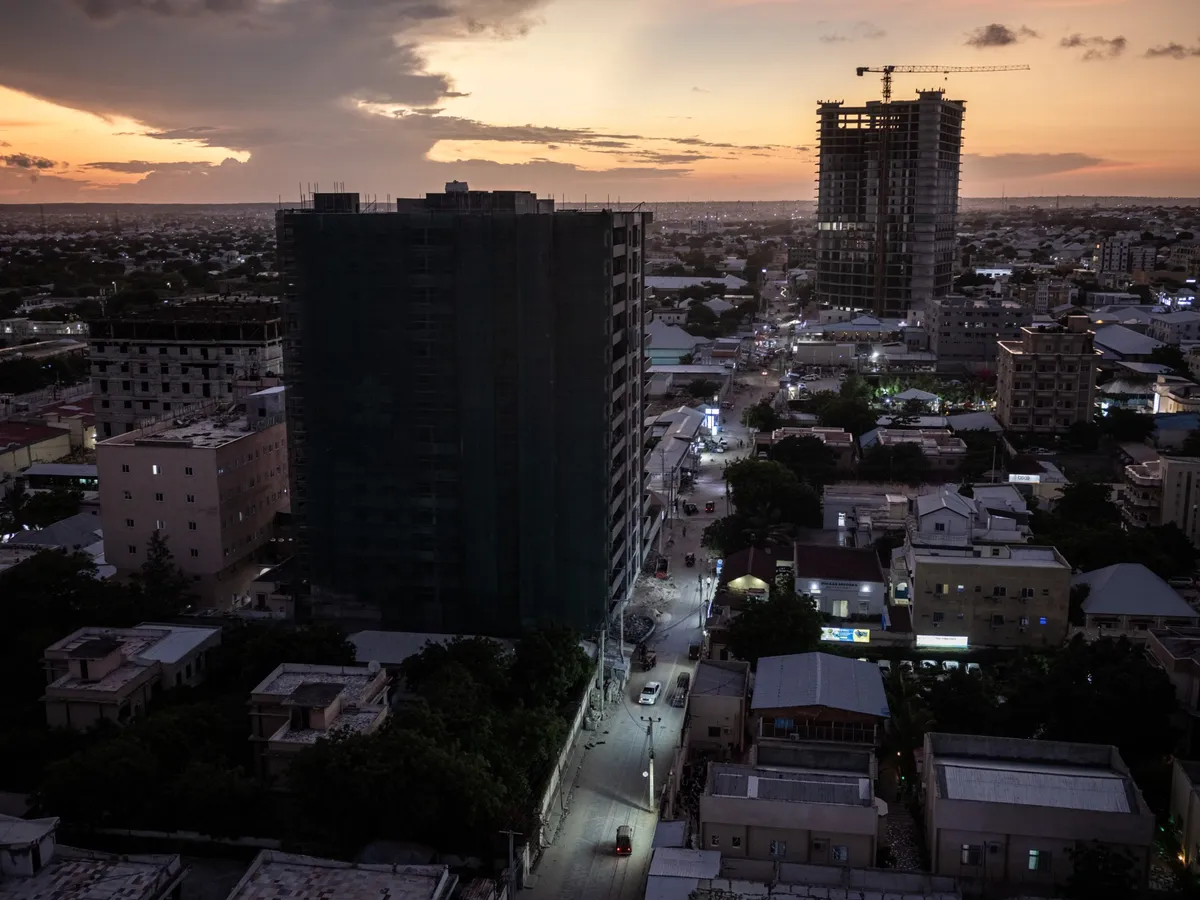
Recognising Somaliland would not deliver stability. It would entrench division, in Somalia and well beyond it.State Minister for Foreign Affairs and International Cooperation of the Somalia" class="entity-link entity-location" data-entity-id="11498" data-entity-type="location">Federal Republic of Somalia.Published On 2 Jun 2026Mogadishu, Somalia seen from the top of a high-rise building, on April 25, 2025 [Ed Ram/Getty Images]Recent arguments advocating for the international recognition of an integral part of Somalia called Somaliland rest on a series of assumptions that deserve closer scrutiny. While proponents portray Somaliland as a unified, stable, and strategically indispensable state deserving immediate recognition, the realities on the ground tell a far more complicated story.The first and most fundamental misconception is that the former Somaliland-protectorate" class="entity-link entity-location" data-entity-id="139086" data-entity-type="location">British Somaliland Protectorate exists today as a coherent political entity. It does not.The territory that briefly gained independence in June 1960 ceased to exist when it voluntarily united with the Somalia" class="entity-link entity-location" data-entity-id="139087" data-entity-type="location">Trust Territory of Somalia to form the Somali Republic. More importantly, the geographic and political boundaries claimed by today’s Somaliland administration are neither uncontested nor uniformly accepted by the populations living within them.Over the past two years, the eastern regions of Sool, Sanaag, and parts of Cayn (SSC) have demonstrated precisely this reality. Following prolonged conflict and popular mobilisation, local communities overwhelmingly rejected rule from Hargeisa and established the North Eastern administration, which has since aligned itself with the Somalia" class="entity-link entity-organization" data-entity-id="139092" data-entity-type="organization">Federal Government of Somalia. The people of these regions have made clear that they do not share Somaliland’s secessionist project and instead seek their future within a federal Somali state alongside the vast majority of the Somali people. This development alone undermines the central claim that Somaliland represents a unified political community exercising uncontested authority over the territory it claims.In the west of the Somaliland region, growing political movements in Awdal have increasingly questioned Hargeisa’s perceived monopoly over political and economic decision-making. Calls for a distinct regional administration have gained momentum, reflecting longstanding grievances regarding political representation, economic development, and governance. These dynamics suggest that the future political map of northwestern Somalia is far more fluid than some advocates of recognition acknowledge.Recognition advocates frequently point to Somaliland’s stability. Yet, stability cannot be measured solely by the existence of institutions or periodic elections. Genuine stability requires political inclusion, territorial legitimacy, and social consensus. None of these conditions currently exists within the Somali territory of Somaliland.The reality is that the Somaliland secessionist project faces significant internal opposition. Political disagreements, clan-based tensions, territorial disputes, and competing visions of governance remain unresolved. International recognition cannot erase these challenges. Indeed, it risks intensifying them by encouraging zero-sum political calculations among communities that already feel excluded from decision-making processes.Equally problematic is the argument that Somaliland’s recognition should be driven primarily by geopolitical competition in the Red Sea. The Horn of Africa should not become another arena where local political disputes are transformed into instruments of broader regional rivalries. Moreover, the attempts to frame Somaliland as a strategic asset in competition with Iran, the Houthis, China, or other global actors overlook a basic reality: sustainable security arrangements cannot be built on unresolved sovereignty disputes.History offers numerous examples of external powers pursuing short-term strategic gains only to discover that local realities ultimately prevail. Durable partnerships emerge from political legitimacy and regional consensus, not from efforts to bypass internationally recognised states.Recent developments surrounding Israel’s engagement in the region further illustrate this danger. Rather than producing greater cohesion, external involvement has generated new political tensions and heightened anxieties among local communities concerned about militarisation, foreign influence, and the future direction of regional governance.The disingenuous assumption that foreign recognition of the Somaliland part of Somalia automatically translates into stability is not supported by any evidence. Moreover, recognition of Somaliland would not simply affect Somalia, as it would carry implications far beyond the Horn of Africa.The African Union has consistently maintained its commitment to preserving inherited borders and resolving disputes through dialogue. This principle has been essential in preventing countless territorial conflicts across the continent. Creating exceptions without a broad regional consensus risks opening debates that many African states have spent decades working to contain.The path to lasting peace and stability in Somalia, like in most post-conflict states, lies not in fragmentation but in reconciliation, dialogue, and constitutional settlement among Somalis themselves. Significant progress has already been made through federal institutions, expanding political participation, and locally driven governance arrangements. While challenges remain, they are best addressed through inclusive internal political processes rather than externally imposed outcomes in line with international law.The Somali government remains committed to dialogue, reconciliation, and constitutional processes that allow all Somali communities to participate in shaping the country’s future. Sustainable peace and stability globally and, specifically, in the Horn of Africa at this most challenging time in human history will be achieved not through fragmentation, but inclusive political solutions that strengthen cooperation, legitimacy, and national unity.The views expressed in this article are the author’s own and do not necessarily reflect Al Jazeera’s editorial stance.
SRCAl Jazeera
LANGEN
LEANCenter
WORDS813
ENT12
TUE · 2026-06-02 · 16:05 GMTBRIEF NSR-2026-0602-81206
NSR-2026-0602-81206Opinion·EN·Diplomatic
The Horn of Africa needs reconciliation, not new borders
The Federal Republic of Somalia's State Minister for Foreign Affairs argues against international recognition of Somaliland, stating it would entrench division rather than deliver stability. The article contends that Somaliland is not a unified political entity, citing internal opposition in regions like Sool, Sanaag, and Awdal, which have expressed a desire to remain within a federal Somali state.
Ali Mohamed OmarAl JazeeraFiled 2026-06-02 · 16:05 GMTLean · CenterRead · 4 min
Al JazeeraFIG 01
Reading time
4min
Word count
813words
Sources cited
0cited
Entities identified
12entities
Quality score
100%
§ 01
Briefing Summary
AI-generatedNEWSAR · AI
The Federal Republic of Somalia's State Minister for Foreign Affairs argues against international recognition of Somaliland, stating it would entrench division rather than deliver stability. The article contends that Somaliland is not a unified political entity, citing internal opposition in regions like Sool, Sanaag, and Awdal, which have expressed a desire to remain within a federal Somali state. Proponents' claims of stability are challenged, as genuine stability requires political inclusion and territorial legitimacy, which are currently lacking. The article also criticizes the geopolitical argument for recognition, asserting that sustainable security cannot be built on unresolved sovereignty disputes and that external involvement risks intensifying local tensions. The African Union's principle of preserving inherited borders through dialogue is highlighted as crucial for regional stability.
Confidence 0.90Claims 5Entities 12
§ 02
Article analysis
Model · rule-basedFraming
Diplomatic
Conflict
Tone
Measured
AI-assessed
CalmNeutralAlarmist
Factuality
0.30 / 1.00
Opinion-Heavy
LowHigh
Sources cited
0
No named sources
FewMany
§ 03
Key claims
5 extracted01
Eastern regions of Sool, Sanaag, and parts of Cayn (SSC) have rejected rule from Hargeisa and aligned with the Federal Government of Somalia.
factual
Confidence
0.80
02
Recognising Somaliland would not deliver stability and would entrench division.
predictionState Minister for Foreign Affairs and International Cooperation of the Federal Republic of Somalia
Confidence
0.80
03
Growing political movements in Awdal have questioned Hargeisa's monopoly over political and economic decision-making.
factual
Confidence
0.70
04
The territory claimed by today's Somaliland administration is not a coherent political entity.
factual
Confidence
0.70
05
Genuine stability requires political inclusion, territorial legitimacy, and social consensus, which do not exist in Somaliland.
factual
Confidence
0.60
§ 04
Full report
4 min read · 813 words§ 05
Entities
12 identifiedKey playerOppositionContextPositiveNeutralNegative
Organizations1
Locations11
S
Somalia
CountryContext
8x
90
S
Somaliland
RegionContext
10x
90
FR
Federal Republic of Somalia
CountryContext
80
S
Sanaag
RegionContext
70
H
Hargeisa
CityContext
2x
70
A
Ayn
RegionContext
70
S
Sool
RegionContext
70
BS
British Somaliland Protectorate
TerritoryContext
60
A
Awdal
RegionContext
60
SR
Somali Republic
CountryContext
50
TT
Trust Territory of Somalia
TerritoryContext
50
§ 06
Keywords & salience
10 termssomaliland recognition
1.00
horn of africa
0.90
somalia federal government
0.80
political stability
0.70
regional autonomy
0.60
secessionist project
0.60
political boundaries
0.50
governance
0.50
sool, sanaag, and cayn
0.40
awdal
0.40
§ 07
Topic connections
Interactive graph Network visualization showing 51 related topics
View Full Graph Person Organization Location Event|Click node to navigate|Edge numbers = shared articles