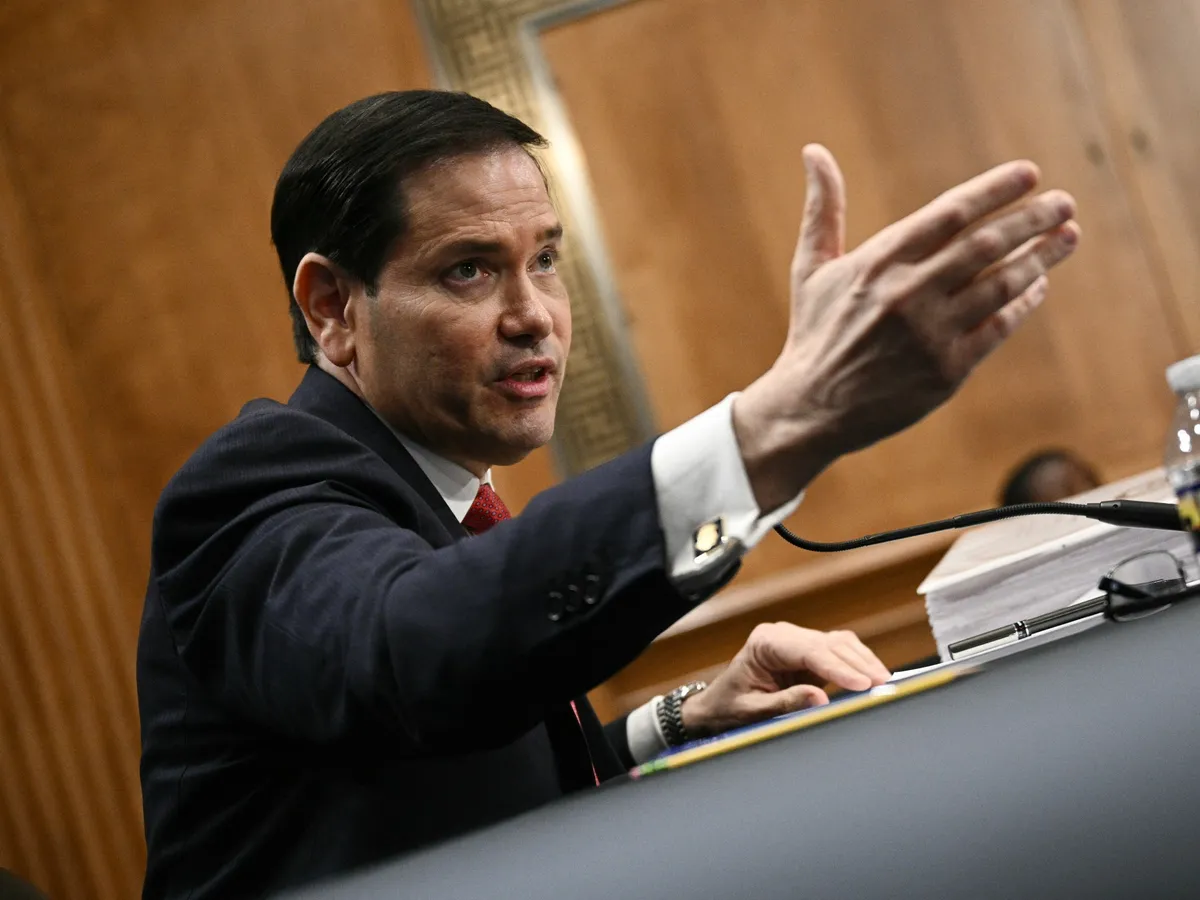
Addressing US lawmakers, Rubio said Tehran has agreed to discuss previously off-limits aspects of its nuclear programme.US Secretary of State Marco Rubio testifies during a Senate Foreign Relations Committee hearing, June 2 [AFP]Published On 2 Jun 2026United States Secretary of State Marco Rubio has said Iran’s Supreme Leader Mojtaba Khamenei appears to be taking a more active role as negotiations between the two countries continue following an April 8 truce.Testifying before the US’s Senate Foreign Relations Committee on Tuesday, Rubio said there are signs that Mojtaba Khamenei, who has not been seen publicly since US air strikes killed his father and predecessor on the first day of the war, is alive and more deeply engaged in the country’s affairs.Recommended Stories list of 3 itemslist 1 of 3Iran warns Israeli attacks in Lebanon and Gaza threaten US ceasefire talkslist 2 of 3Iran reinstates some internet access but restrictions remain for mostlist 3 of 3Iran restores some gas production at South Pars facilityend of list“I think there are indications out there that he is increasingly engaging at some level, although all of his communications have been in writing and through intermediaries,” said the US’s top diplomat.Rubio’s remarks come as Tehran is reviewing the latest version of a US proposal aimed at ending the war, which US President Donald Trump reportedly tightened the terms of in recent days.Iran’s semi-official Mehr News Agency cited a source close to the country’s negotiating team as saying Tehran is still studying the latest proposal and has not communicated with the US in several days. The official stressed Iran was taking a “stern” approach given what it sees as US non-compliance with the ceasefire and general mistrust.Trump insists Iran talks happening ‘continuously’Trump has said his priorities for any deal include Iran agreeing to never develop nuclear weapons and to reopen the Strait of Hormuz, through which about 20 percent of the world’s oil and liquefied natural gas supplies transited before the war.In a social media post on Tuesday, Trump disputed reports that talks with Iran had paused, saying “conversations between us have been going on continuously”. “Where they lead, one never knows, but as I told Iran, ‘It’s time, one way or another, for you to make a Deal’,” wrote Trump in his Truth Social platform.Addressing lawmakers, Rubio said the US talks with Iran may now include “aspects of their nuclear programme” the country was unwilling to discuss as recently as a month ago.However, “that is not a guarantee it will ultimately lead to a deal that’s acceptable,” Rubio cautioned.“There is the prospect before us, which could happen today, it could happen tomorrow, it could happen next week,” he added.Rubio, who also serves as Trump’s national security adviser, said the first condition in the talks was that Iran opened the Strait of Hormuz, and it also had to commit to negotiations on its stock of highly enriched uranium.Asked whether the US would lift sanctions on Iran in return for the country reopening the Strait of Hormuz, Rubio said that would not be sufficient.“That’s not been discussed. That’s not been offered,” said Rubio, adding that sanctions relief would only come after significant concession on the nuclear programme and the enriched uranium.Al Jazeera’s Patty Culhane, reporting from Washington, DC, said Rubio’s remarks give the clearest indication to date of “what the negotiations are actually centred on”.“The US isn’t even offering any carrots,” said Culhane. “He [Rubio] talked about the stick, that they have to open the Strait of Hormuz and then the Iranians have to commit to getting rid of its enriched uranium and limits on future uranium.”The UN’s International Atomic Energy Agency chief, Rafael Grossi, said Iran has stopped many nuclear activities that were previously taking place in the country. In comments cited by the Reuters news agency, Grossi said any deal to end the war on Iran should have robust verification and monitoring mechanisms.Iran warns of ‘direct confrontation’ if Israel continues Lebanon ‘aggression’The US-Israel war on Iran that began on February 28 has killed thousands of people, mainly in Iran and Lebanon. It has caused global pain by pushing up energy prices since Iran effectively closed the Strait of Hormuz, which previously carried about a fifth of global supplies of oil and liquefied natural gas.It also triggered the latest round of conflict between Israel and Lebanese group Hezbollah, with Israel invading deep into Lebanon and even attacking parts of the capital Beirut.The continuing Israeli attacks in Lebanon have become a major point of contention for Iran, which insists a full ceasefire in Lebanon must be part of any agreement with WashingtonIran’s parliament speaker and chief negotiator, Mohammad Bagher Ghalibaf, said he told Lebanon’s Parliament Speaker Nabih Berri if Israel’s “aggression against Lebanon continues”, Tehran “will not only halt the path of negotiations” with the US, “but we will also be in direct confrontation with the enemy.”
SRCAl Jazeera
LANGEN
LEANCenter
WORDS808
ENT10
TUE · 2026-06-02 · 17:53 GMTBRIEF NSR-2026-0602-81232
NSR-2026-0602-81232News Report·EN·Diplomatic
Iran’s supreme leader appears more active as talks continue: US’s Rubio
US Secretary of State Marco Rubio stated that Iran's Supreme Leader Mojtaba Khamenei appears more active in negotiations, with Tehran agreeing to discuss previously off-limits aspects of its nuclear program. These discussions are ongoing following an April 8 truce.
Al Jazeera StaffAl JazeeraFiled 2026-06-02 · 17:53 GMTLean · CenterRead · 4 min
Al JazeeraFIG 01
Reading time
4min
Word count
808words
Sources cited
3cited
Entities identified
10entities
Quality score
100%
§ 01
Briefing Summary
AI-generatedNEWSAR · AI
US Secretary of State Marco Rubio stated that Iran's Supreme Leader Mojtaba Khamenei appears more active in negotiations, with Tehran agreeing to discuss previously off-limits aspects of its nuclear program. These discussions are ongoing following an April 8 truce. President Trump has indicated continuous talks, prioritizing Iran's commitment to never develop nuclear weapons and reopening the Strait of Hormuz. Rubio clarified that sanctions relief would only follow significant concessions on the nuclear program and enriched uranium, not simply reopening the Strait. The International Atomic Energy Agency chief noted Iran has ceased many nuclear activities, emphasizing the need for robust verification in any deal. Iran, however, views US actions with mistrust and insists a ceasefire in Lebanon must be part of any agreement.
Confidence 0.90Sources 3Claims 5Entities 10
§ 02
Article analysis
Model · rule-basedFraming
Diplomatic
National Security
Tone
Measured
AI-assessed
CalmNeutralAlarmist
Factuality
0.70 / 1.00
Factual
LowHigh
Sources cited
3
Well sourced
FewMany
§ 03
Key claims
5 extracted01
Trump's priorities for a deal include Iran agreeing to never develop nuclear weapons and reopening the Strait of Hormuz.
factualDonald Trump
Confidence
0.90
02
US President Donald Trump insists that conversations with Iran have been ongoing continuously.
factualDonald Trump
Confidence
0.90
03
Iran's Supreme Leader Mojtaba Khamenei appears to be taking a more active role as negotiations continue.
factualMarco Rubio
Confidence
0.80
04
Iran is still studying the latest US proposal and has not communicated with the US in several days.
factualSource close to Iran's negotiating team (via Mehr news agency)
Confidence
0.70
05
Tehran has agreed to discuss previously off-limits aspects of its nuclear program.
factualMarco Rubio
Confidence
0.70
§ 04
Full report
4 min read · 808 words§ 05
Entities
10 identifiedKey playerOppositionContextPositiveNeutralNegative
People3
Organizations2
Locations4
§ 06
Keywords & salience
8 termsus-iran negotiations
1.00
iran nuclear program
1.00
mojtaba khamenei
0.90
marco rubio
0.80
ceasefire talks
0.70
strait of hormuz
0.60
nuclear weapons development
0.50
us lawmakers
0.40
§ 07
Topic connections
Interactive graph Network visualization showing 51 related topics
View Full Graph Person Organization Location Event|Click node to navigate|Edge numbers = shared articles