Updated [hour]:[minute] [AMPM] [timezone], [monthFull] [day], [year] DUBAI, United Arab Emirates (AP) — Kuwait said Wednesday it had suspended commercial flights after an Iranian drone attack heavily damaged the country’s airport and caused injuries, hours after Iran and the United States traded missile strikes in the region. The strikes came as semiofficial Iranian news agencies said the country had stopped communicating with mediators about extending a ceasefire in the war with the U.S. and Israel. U.S. President Donald Trump disputed that claim and said talks were continuing.Exchanges of strikes in the Gulf region and Israel’s broadening war in Lebanon are adding strain to efforts to end the war with Iran. Iranian drone strike hits Kuwait’s main airportDefense Ministry spokesperson Brig. Gen. Saud Abdulaziz Al-Otaibi said that “a number of hostile drones” had targeted Kuwait-international-airport" class="entity-link entity-location" data-entity-id="40992" data-entity-type="location">Kuwait International Airport’s passenger building, severely damaging the building and injuring “a number of individuals.”The airport reopened on June 1 after closing in February due to the Iran war. State media reported that Kuwait-airways" class="entity-link entity-organization" data-entity-id="139378" data-entity-type="organization">Kuwait Airways was suspending its operations until further notice.Late Tuesday, the U.S. military said it had launched strikes on an Iranian military facility in retaliation for Iranian missiles fired at Kuwait and Bahrain. It said Iran had fired two missiles at Kuwait that fell apart en route, while U.S. and Bahraini forces intercepted missiles aimed at Bahrain. Bahrain’s Defense Ministry said its military had intercepted and destroyed three missiles and a number of drones fired by Iran at the Gulf island country. U.S. Central Command also said it had “downed multiple drones” targeting American forces in Kuwait. 4 MIN READ 1 MIN READ 2 MIN READ Iran’s paramilitary Revolutionary Guard said it had targeted the headquarters of the U.S. Navy’s 5th Fleet in Bahrain and another country in its attack, without naming Kuwait. It said it launched its attack in response to the U.S. firing a missile into the engine room of an oil tanker that was trying to reach Iran despite the U.S. blockade. “We had previously warned that in case of aggression, the response would be different and more severe, and we acted accordingly,” the Guard said in its statement. Central Command said it responded with strikes on an Iranian military ground control station on Qeshm Island in the Strait of Hormuz. Iranian news agencies report pause in communication with mediatorsIran’s Fars and Tasnim news agencies, both believed to be close to the Guard, reported that Iran’s negotiators have stopped communicating with ceasefire mediators as tensions flared in Israel’s separate but related fight against the Iranian-backed Hezbollah militia in Lebanon. A regional official involved in the mediation, speaking on condition of anonymity to discuss the talks, told The Associated Press that Iran had not communicated at all on Tuesday after saying that a ceasefire needed to be enforced in Lebanon for negotiations to continue.Trump called reports of a cessation in talks “false and erroneous.”“The conversations between us have been going on continuously, including four days ago, three days ago, two days ago, one day ago and today,” Trump said in a social media post. “Where they lead, one never knows, but as I told Iran, ’It’s time, one way or another, for you to make a Deal.” U.S. Secretary of State Marco Rubio did not address the reported cutoff in communications as he testified at a congressional hearing in Washington. Instead, he sounded an optimistic note about the nuclear dimension of the negotiations, while cautioning that there’s no guarantee of reaching “a deal that’s acceptable.”As talks continue, the U.S. is attempting to loosen the Islamic Republic’s chokehold on the Strait of Hormuz and the oil, gas and other commodities that normally pass through it.The war with Iran is increasingly tied to Israel’s war in LebanonThe war with Iran has increasingly become conjoined to Israel’s war in Lebanon, as Iran insists that any potential truce in the war there must also quell the fighting in Lebanon.Israeli forces have moved deeper into the country than at any time in over a quarter of a century.Trump could potentially push Israeli Prime Minister Benjamin Netanyahu to halt or slow the advance of his forces, but Israel and the U.S. maintain that the fighting in Lebanon is separate from the Iran war talks. ___Magdy reported from Cairo. Associated Press writers Jennifer Peltz in New York and Aamer Madhani and Konstantin Toropin in Washington contributed to this report. Gambrell is the news director for the Gulf and Iran for The Associated Press. He has reported from each of the Gulf Cooperation Council countries, Iran and other locations across the world since joining the AP in 2006. Magdy is a Middle East reporter for The Associated Press, based in Cairo. He focuses on conflict, migration and human rights abuses.
SRCAssociated Press (AP)
LANGEN
LEANCenter
WORDS790
ENT12
WED · 2026-06-03 · 06:23 GMTBRIEF NSR-2026-0603-81335
NSR-2026-0603-81335News Report·EN·Conflict
Iranian drone attack hits Kuwait airport, wounding people
Kuwait suspended commercial flights after an Iranian drone attack severely damaged its international airport and injured individuals. This incident occurred hours after Iran and the United States exchanged missile strikes.
By
JON GAMBRELL and SAMY MAGDYAssociated Press (AP)Filed 2026-06-03 · 06:23 GMTLean · CenterRead · 4 min
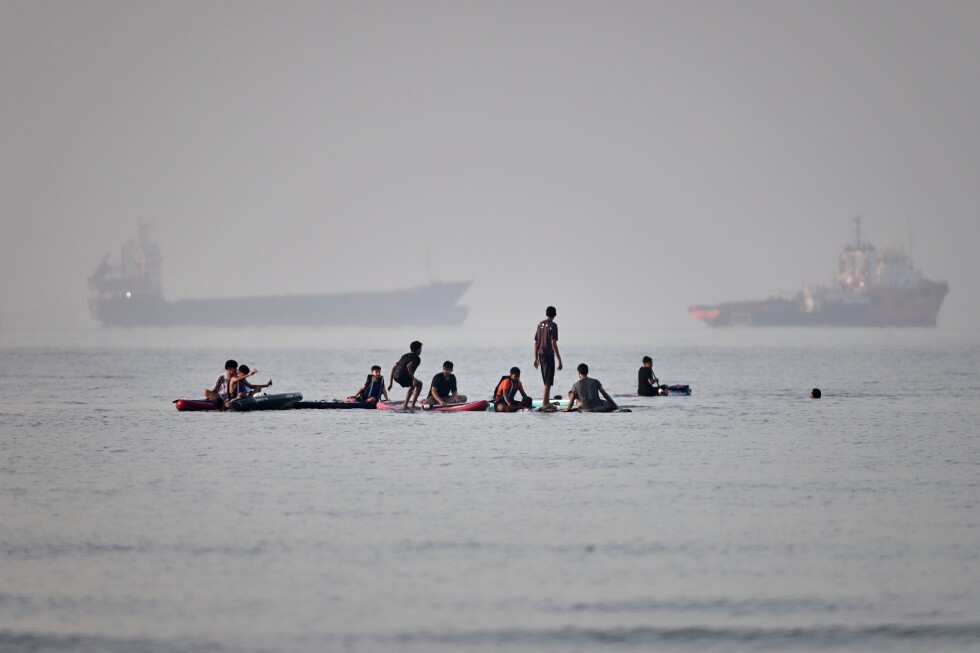
Associated Press (AP)FIG 01
Reading time
4min
Word count
790words
Sources cited
5cited
Entities identified
12entities
Quality score
100%
§ 01
Briefing Summary
AI-generatedNEWSAR · AI
Kuwait suspended commercial flights after an Iranian drone attack severely damaged its international airport and injured individuals. This incident occurred hours after Iran and the United States exchanged missile strikes. The U.S. military stated it struck an Iranian military facility in retaliation for Iranian missiles fired at Kuwait and Bahrain, while Bahrain reported intercepting Iranian missiles and drones. Iran's Revolutionary Guard claimed to have targeted U.S. military assets in response to a U.S. missile strike. Reports also emerged of Iran halting communication with ceasefire mediators, a claim disputed by U.S. President Donald Trump. The escalating regional tensions are increasingly linked to Israel's war in Lebanon.
Confidence 0.90Sources 5Claims 5Entities 12
§ 02
Article analysis
Model · rule-basedFraming
Conflict
National Security
Tone
Mixed Tone
AI-assessed
CalmNeutralAlarmist
Factuality
0.80 / 1.00
Factual
LowHigh
Sources cited
5
Well sourced
FewMany
§ 03
Key claims
5 extracted01
Bahrain’s Defense Ministry said its military had intercepted and destroyed three missiles and a number of drones fired by Iran.
factualBahrain’s Defense Ministry
Confidence
0.90
02
U.S. President Donald Trump disputed that claim and said talks were continuing.
factualU.S. President Donald Trump
Confidence
0.90
03
The U.S. military said it had launched strikes on an Iranian military facility in retaliation for Iranian missiles fired at Kuwait and Bahrain.
factualU.S. military
Confidence
0.90
04
Kuwait said it had suspended commercial flights after an Iranian drone attack heavily damaged the country’s airport and caused injuries.
factualKuwait
Confidence
0.90
05
Iran’s Fars and Tasnim news agencies reported that Iran’s negotiators have stopped communicating with ceasefire mediators.
factualFars and Tasnim news agencies
Confidence
0.80
§ 04
Full report
4 min read · 790 words§ 05
Entities
12 identifiedKey playerOppositionContextPositiveNeutralNegative
Organizations2
§ 06
Keywords & salience
8 termsiranian drone attack
1.00
kuwait airport
0.90
us-iran conflict
0.80
missile strikes
0.70
regional escalation
0.60
ceasefire negotiations
0.50
revolutionary guard
0.40
strait of hormuz
0.40
§ 07
Topic connections
Interactive graph Network visualization showing 51 related topics
View Full Graph Person Organization Location Event|Click node to navigate|Edge numbers = shared articles