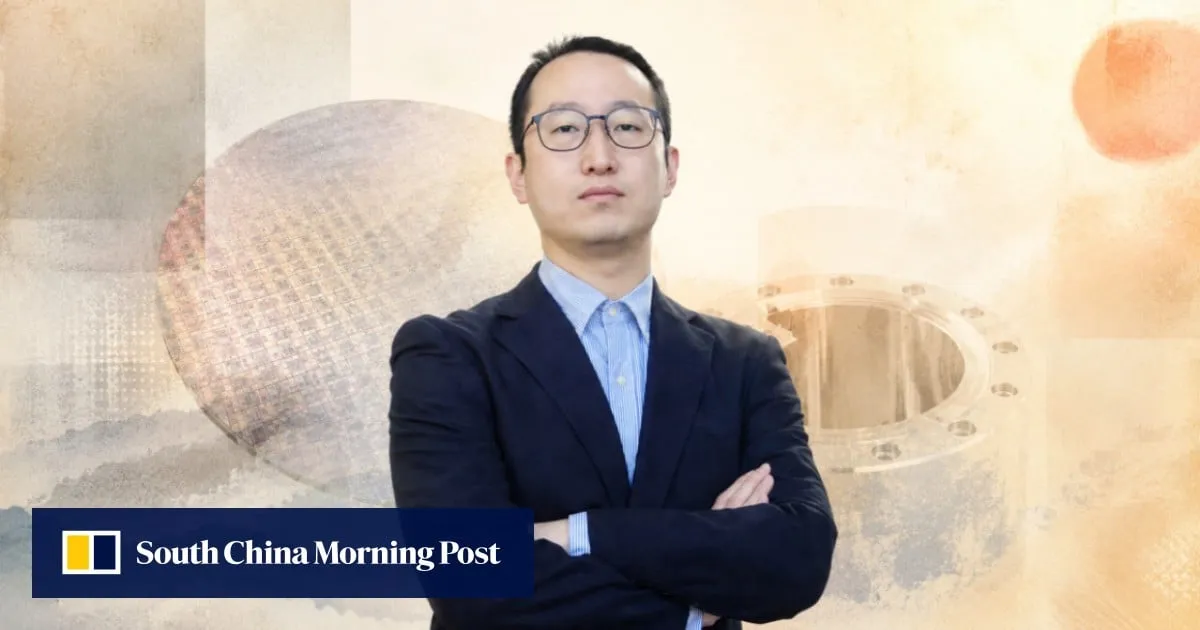
We have put together stories from our coverage on science from the past two weeks to help you stay informed. If you would like to see more of our reporting, please consider subscribing.1. Chinese archaeologist who discovered 5,000-year-old city pleads guilty to corruptionLiu Bin, a Chinese archaeologist credited with discovering a vast 5,000-year-old prehistoric city that rewrote the history of Chinese civilisation, has pleaded guilty to taking bribes and embezzlement.2. Chip prodigy Da Bo returns to China after his role in TSMC’s 3nm plant in JapanA Chinese chip pioneer who made his name in Japan – sweeping its top awards and developing the core components of the world’s most advanced production line – has returned to China, along with his team of researchers.3. Huawei, scientists build 2D parallel computing chip that rewrites Moore’s LawChinese researchers are using two-dimensional materials such as molybdenum disulfide to pack more transistors onto microchips. Photo: Nanjing UniversityChinese researchers, in collaboration with Huawei Technologies, have built the world’s first parallel processor using a two-dimensional (2D) semiconductor.4. Chinese scientists create self-deciding algorithm for drone swarmA research team from northwestern China has released a new algorithm that could fundamentally change how drone swarms hunt and destroy enemy targets.5. Why China is weaponising a ‘towering’ hybrid crop to farm where wheat failsThe crop can grow up to 1.6 metres high, taller than some humans. Photo: qq.comScientists in China are growing towering hybrids of wheat and rye – taller even than some humans – in the deserts of its western Xinjiang region.6. Concerns mount in China’s space sector that Musk’s Starship will be a failureThere are growing doubts within China’s space sector that Starship, the world’s most powerful rocket being developed by SpaceX in the United States, will ever overcome its engineering and financial challenges and deliver for founder and CEO Elon Musk.7. Why China is looking to coal waste as a source of critical metalsAmid a global energy shortage, coal piles sit near a chemical plant in Datong, as China turns coal into critical metals. Photo: APChina is turning coal waste into a source of critical metals including lithium, gallium and germanium, leveraging its advantages in extraction technology and industrial infrastructure.Further Reading
SRCSouth China Morning Post
LANGEN
LEANCenter-Right
WORDS363
ENT12
WED · 2026-06-03 · 07:30 GMTBRIEF NSR-2026-0603-81338
NSR-2026-0603-81338News Report·EN·Technology
Chip prodigy returns to China, coal waste used for critical minerals: 7 science highlights
Recent science highlights from China include a chip pioneer returning to China with his team after contributing to TSMC's advanced production line in Japan. Chinese researchers, in collaboration with Huawei, have developed the world's first parallel processor using two-dimensional materials, potentially challenging Moore's Law.
SCMPSouth China Morning PostFiled 2026-06-03 · 07:30 GMTLean · Center-RightRead · 2 min
South China Morning PostFIG 01
Reading time
2min
Word count
363words
Sources cited
0cited
Entities identified
12entities
Quality score
100%
§ 01
Briefing Summary
AI-generatedNEWSAR · AI
Recent science highlights from China include a chip pioneer returning to China with his team after contributing to TSMC's advanced production line in Japan. Chinese researchers, in collaboration with Huawei, have developed the world's first parallel processor using two-dimensional materials, potentially challenging Moore's Law. A new algorithm for drone swarms capable of self-decision-making has also been released. Scientists are developing hybrid wheat-rye crops for desert farming in Xinjiang, and China is exploring coal waste as a source for critical metals like lithium and gallium. Separately, a Chinese archaeologist has pleaded guilty to corruption charges related to the discovery of a prehistoric city. Doubts are also surfacing within China's space sector regarding the success of SpaceX's Starship rocket.
Confidence 0.90Claims 5Entities 12
§ 02
Article analysis
Model · rule-basedFraming
Technology
Economic Impact
Tone
Measured
AI-assessed
CalmNeutralAlarmist
Factuality
0.80 / 1.00
Factual
LowHigh
Sources cited
0
No named sources
FewMany
§ 03
Key claims
5 extracted01
China is turning coal waste into critical metals like lithium, gallium, and germanium.
factual
Confidence
1.00
02
A new algorithm for drone swarms was released by a research team from northwestern China.
factual
Confidence
1.00
03
Chinese researchers built the world's first parallel processor using a 2D semiconductor.
factual
Confidence
1.00
04
Chinese chip pioneer Da Bo returned to China with his research team.
factual
Confidence
1.00
05
Chinese archaeologist Liu Bin pleaded guilty to corruption.
factual
Confidence
1.00
§ 04
Full report
2 min read · 363 words§ 05
Entities
12 identifiedKey playerOppositionContextPositiveNeutralNegative
Organizations4
§ 06
Keywords & salience
10 termscritical minerals
1.00
china science
1.00
chip technology
1.00
coal waste
0.80
semiconductor
0.80
hybrid crop
0.60
drone swarm
0.60
archaeology
0.60
space sector
0.50
moore's law
0.40
§ 07
Topic connections
Interactive graph Network visualization showing 51 related topics
View Full Graph Person Organization Location Event|Click node to navigate|Edge numbers = shared articles