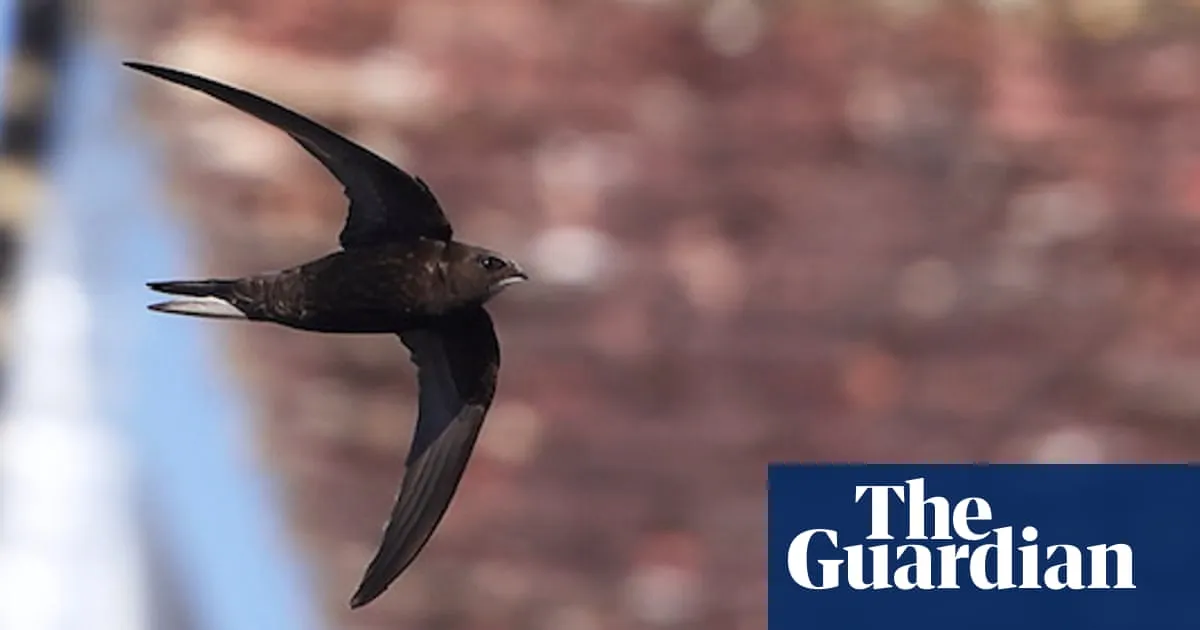
A building that was a noted nesting site for Swifts, among the UK’s most at-risk birds, has been demolished during the nesting season, highlighting significant weaknesses in the protection of wildlife from development, campaigners say.Contractors for the housebuilder Hill Group carried out the demolition of Regent House near Dorking station in Surrey over the last few weeks, during the nesting season which runs from 1 March to 31 August.Footage captured last week shows Swifts attempting to return to nests in the building, which was known to be home to one of the largest populations of the birds in the Mole Valley area in Surrey. They approach and then repeatedly turn away because their nests are no longer there.Swifts trying to return to demolished building – loopThe building was a known habitat for nesting Swifts. Volunteers for Swift Protection Association Reigate have recorded very intense low-level flying involving as many as 40 birds using about 20 sites in the eaves of the building in early spring and summer for several years.Demolition and construction work are heavily restricted during the nesting season under the Wildlife and Countryside Act. It is an offence to intentionally or recklessly damage or destroy the nest of any wild bird while it is in use or being built, or to disturb dependent young.Annie Griffin of Swifts" class="entity-link entity-organization" data-entity-id="139434" data-entity-type="organization">Banstead Swifts, a volunteer group that monitors and tries to stabilise swift populations, said residents raised the alarm with Surrey-police" class="entity-link entity-organization" data-entity-id="30610" data-entity-type="organization">Surrey Police wildlife officers in early May, shortly after the Swifts returned from migration and were observed nesting in the building. Mole Valley District Council (MVDC) was also told about the birds’ presence.“Despite this, demolition proceeded during peak nesting season,” said Griffin. “Conservationists are now describing the incident as a significant wildlife crime, raising broader concerns about the enforcement of environmental protections during development across England.”Regent House was demolished as part of a development of 126 flats by Clarion housing association. An impact assessment carried out for the developers by the Arbtech environmental consultancy said demolition and construction should take place outside the nesting season. If a different timeframe could not be avoided, it said, an ecological expert would have to undertake a thorough inspection before the start of any work and all active nests would have to be retained until the young had fledged.An image taken in spring 2024 of a swift flying in front of Regent House. Photograph: Piotr Szczypa / Swift Protection Association ReigateThe Guardian asked Hill Group and Clarion if such an ecological inspection had taken place in the last few weeks, but they declined to answer. They also refused to say the timeframe for the demolition could not be avoided.In a statement they said: “We have been working closely with independent ecologists and the local planning authority throughout the demolition of Regent House to ensure all works are carried out in full accordance with the approved planning requirements.“This collaborative approach helps safeguard local wildlife and ensures that nesting birds are protected throughout the process.”Several people have filed criminal complaints with Surrey-police" class="entity-link entity-organization" data-entity-id="30610" data-entity-type="organization">Surrey Police alleging a breach of the Wildlife and Countryside Act.Julia Hemsley of Dorking Swift Conservation said: “It all makes me feel absolutely sick. Swift populations are massively in decline. It would have been a simple thing to have carried out the demolition outside the nesting season. These birds have been let down.”Amy Brewer, who captured the footage of the Swifts trying to return to the building after its demolition, had been watching them nest there two weeks earlier.“When I came back the building was gone and I saw them flying back and forth repeatedly towards where it used to be,” she said.Paul Powlesland of Lawyers for Nature said the protections given to birds’ nests in the Wildlife and Countryside Act were woefully inadequate. “Even where nests are in active use, it’s hard to get evidence of their destruction and the police do not take such crimes seriously.“We need to change the law to protect the nesting holes of birds like Swifts and sand martins even when they are not in use, and set up and fund a proper wildlife police force that takes the destruction of active bird nests seriously.”Swifts are on the UK red list of birds of conservation concern. Their population has declined by about 60% since the 1990s. They nest almost exclusively in gaps under roof tiles and in the walls of older buildings. Demolition, renovation and modern construction techniques, which have left them with fewer nesting sites, are key contributors to their decline.Despite a national campaign for the mandatory installation of swift bricks in all new homes in England to provide the birds with nesting sites, the government only recommends them. The Scottish government has made them mandatory.Councillor Bradley Nelson, the cabinet member for planning at MVDC, said: “The approved planning documents do not impose an absolute prohibition on demolition during the nesting season. Instead, they require that, where works take place during this period, a nesting bird check is carried out by the developer within 48 hours prior to demolition.”He said the council was reviewing the available information to establish whether the requirements had been met and had served a temporary stop notice requiring any works to cease.“We are aware of the concerns raised in relation to the site and are making appropriate enquiries to understand the situation fully,” he said. “If it becomes apparent that a breach of planning control has taken place, MVDC will consider, in line with its usual processes, whether formal enforcement action is expedient.”Surrey-police" class="entity-link entity-organization" data-entity-id="30610" data-entity-type="organization">Surrey Police have been approached for comment.
SRCThe Guardian - World News
LANGEN
LEANCenter-Left
WORDS923
ENT12
WED · 2026-06-03 · 06:00 GMTBRIEF NSR-2026-0603-81362
NSR-2026-0603-81362News Report·EN·Environmental
Noted Surrey colony of at-risk swifts destroyed during nesting season
A building known to be a significant nesting site for at-risk swifts in Dorking, Surrey, was demolished by contractors for the Hill Group during the birds' nesting season. Campaigners state this highlights weak wildlife protection from development, as swifts were observed attempting to return to their destroyed nests.
Sandra LavilleThe Guardian - World NewsFiled 2026-06-03 · 06:00 GMTLean · Center-LeftRead · 4 min
The Guardian - World NewsFIG 01
Reading time
4min
Word count
923words
Sources cited
3cited
Entities identified
12entities
Quality score
100%
§ 01
Briefing Summary
AI-generatedNEWSAR · AI
A building known to be a significant nesting site for at-risk swifts in Dorking, Surrey, was demolished by contractors for the Hill Group during the birds' nesting season. Campaigners state this highlights weak wildlife protection from development, as swifts were observed attempting to return to their destroyed nests. Volunteers had alerted Mole Valley district council and Surrey police about the nesting birds before demolition commenced. Despite an environmental assessment recommending work outside the nesting season or an expert inspection, the developers declined to confirm if these steps were taken. Several criminal complaints have been filed alleging a breach of the Wildlife and Countryside Act, with conservationists calling for stronger legal protections for nesting sites and improved enforcement.
Confidence 0.90Sources 3Claims 5Entities 12
§ 02
Article analysis
Model · rule-basedFraming
Environmental
Legal & Judicial
Tone
Mixed Tone
AI-assessed
CalmNeutralAlarmist
Factuality
0.70 / 1.00
Factual
LowHigh
Sources cited
3
Well sourced
FewMany
§ 03
Key claims
5 extracted01
Hill Group and Clarion declined to answer if an ecological inspection took place or if the demolition timeframe could not be avoided.
factual
Confidence
1.00
02
An impact assessment stated demolition should occur outside the nesting season, or an expert must inspect and retain active nests until young fledge.
factualArbtech environmental consultancy
Confidence
1.00
03
Demolition and construction work are restricted during the nesting season under the Wildlife and Countryside Act, making it an offense to destroy active wild bird nests.
factual
Confidence
1.00
04
A building known as a nesting site for at-risk swifts was demolished during the nesting season.
factual
Confidence
1.00
05
Conservationists describe the incident as a significant wildlife crime, raising concerns about enforcement of environmental protections during development.
quoteConservationists
Confidence
0.90
§ 04
Full report
4 min read · 923 words§ 05
Entities
12 identifiedKey playerOppositionContextPositiveNeutralNegative
Organizations6
§ 06
Keywords & salience
10 termsswift nesting season
1.00
wildlife protection
0.90
development impact
0.80
wildlife crime
0.70
at-risk birds
0.60
nest destruction
0.50
demolition
0.50
regent house
0.40
surrey
0.40
environmental protections
0.40
§ 07
Topic connections
Interactive graph No topic relationship data available yet. This graph will appear once topic relationships have been computed.