Germany's foreign minister says support for Ukraine and Israel may have cost votes after Berlin failed to secure a rotating spot on the UN Security Council.Johann Wadephul described losing out to Portugal and Austria as a "bitter defeat" after a vote on which countries would become one of the five new members of the council was held on Wednesday evening."There is our firm support for Ukraine, the fact that Russia does not want such a voice at the Security Council," Wadephul said, adding it was "no secret" Russia had stirred up sentiment against Germany.There are five permanent members of the UN Security Council – China, France, Russia, the UK, and the US – and 10 temporary ones. "We have always taken a clear stance on certain issues, and these are positions that not all member states share," Wadephul said."The fact that Germany must always assume a special responsibility for Israel in the Middle East conflict may also have cost votes," he said.Wadephul also in part blamed his country's late entry into the race for the two-year term on the Security Council.Russia has not responded to accusations it lobbied against Germany's membership.
SRCBBC News - World
LANGEN
LEANCenter
WORDS191
ENT12
THU · 2026-06-04 · 01:02 GMTBRIEF NSR-2026-0604-81593
NSR-2026-0604-81593News Report·EN·Diplomatic
Germany blames Russia for 'bitter defeat' in UN Security Council bid
Germany's bid for a rotating seat on the UN Security Council has failed, with officials attributing the "bitter defeat" to its strong support for Ukraine and its stance on the Middle East conflict. Johann Wadephul, a German official, stated that Russia had actively stirred up sentiment against Germany's membership, a move he described as unsurprising given Germany's vocal support for Ukraine.
BBC News - WorldFiled 2026-06-04 · 01:02 GMTLean · CenterRead · 1 min
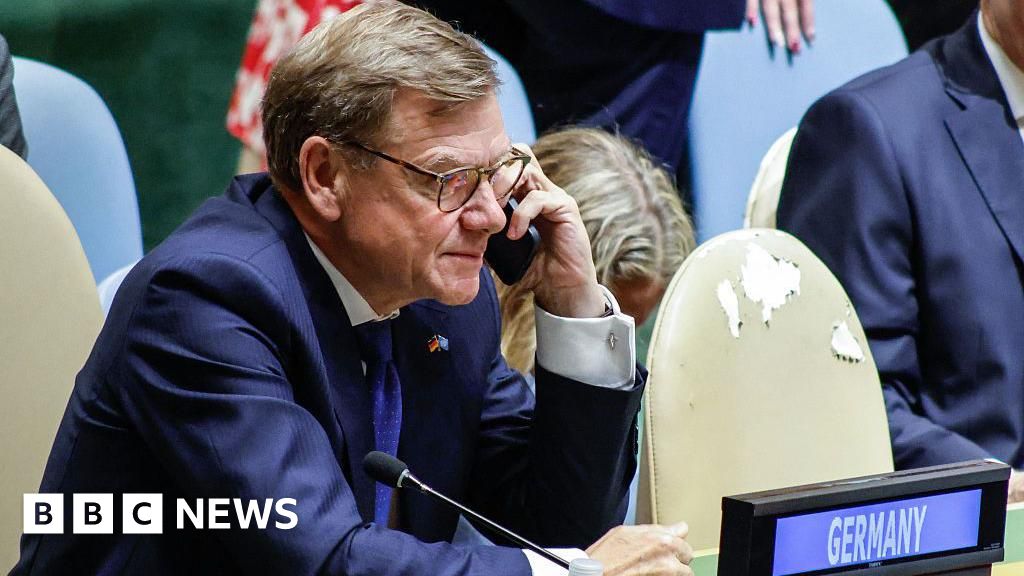
BBC News - WorldFIG 01
Reading time
1min
Word count
191words
Sources cited
1cited
Entities identified
12entities
Quality score
100%
§ 01
Briefing Summary
AI-generatedNEWSAR · AI
Germany's bid for a rotating seat on the UN Security Council has failed, with officials attributing the "bitter defeat" to its strong support for Ukraine and its stance on the Middle East conflict. Johann Wadephul, a German official, stated that Russia had actively stirred up sentiment against Germany's membership, a move he described as unsurprising given Germany's vocal support for Ukraine. Wadephul also suggested that Germany's consistent position on Israel may have alienated some member states. The vote, held on Wednesday evening, saw Portugal and Austria secure the available seats. Wadephul also cited Germany's late entry into the race as a contributing factor to the loss. Russia has not yet responded to the accusations.
Confidence 0.90Sources 1Claims 5Entities 12
§ 02
Article analysis
Model · rule-basedFraming
Diplomatic
Political Strategy
Tone
Measured
AI-assessed
CalmNeutralAlarmist
Factuality
0.60 / 1.00
Mixed
LowHigh
Sources cited
1
Limited
FewMany
§ 03
Key claims
5 extracted01
Portugal and Austria were elected to the UN Security Council instead of Germany.
factual
Confidence
1.00
02
Germany's foreign minister blames support for Ukraine and Israel for the loss.
quoteJohann Wadephul
Confidence
1.00
03
Germany failed to secure a rotating spot on the UN Security Council.
factual
Confidence
1.00
04
Russia may have stirred up sentiment against Germany's UN Security Council bid.
quoteJohann Wadephul
Confidence
0.80
05
Germany's late entry into the race contributed to its failure.
quoteJohann Wadephul
Confidence
0.70
§ 04
Full report
1 min read · 191 words§ 05
Entities
12 identifiedKey playerOppositionContextPositiveNeutralNegative
§ 06
Keywords & salience
9 termsun security council
1.00
germany
0.90
russia
0.80
ukraine
0.70
israel
0.60
foreign minister
0.50
portugal
0.40
austria
0.40
middle east conflict
0.40
§ 07
Topic connections
Interactive graph Network visualization showing 43 related topics
View Full Graph Person Organization Location Event|Click node to navigate|Edge numbers = shared articles