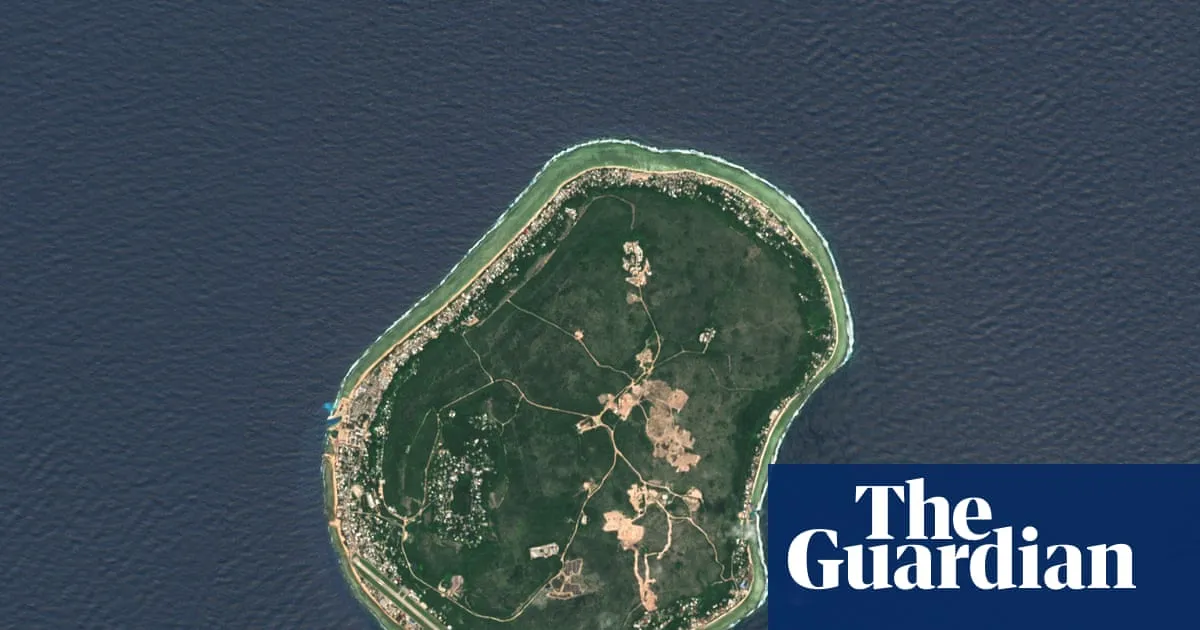
Australia" class="entity-link entity-organization" data-entity-id="329" data-entity-type="organization">Guardian Australia has spoken to advocates and an NZYQ-affected man detained on the tiny Pacific island of Nauru – home to about 12,000 residents – who warn the conditions are poor and unsustainable. Photograph: Gallo Images/Getty Images View image in fullscreen Australia" class="entity-link entity-organization" data-entity-id="329" data-entity-type="organization">Guardian Australia has spoken to advocates and an NZYQ-affected man detained on the tiny Pacific island of Nauru – home to about 12,000 residents – who warn the conditions are poor and unsustainable. Photograph: Gallo Images/Getty Images Nauru issues rare statement after whistleblower alleges violent threats against Australia’s non-citizens Nauran government says its citizens are ‘friendly’ after MP spoke of serious threats allegedly made against former Australian detainees Get our breaking news email, free app or daily news podcast The Nauruan government has issued a rare statement insisting it is a “friendly” and “welcoming” country after a whistleblower alleged “serious threats of physical violence” were made against a group of non-citizens removed there by the Albanese government. The unexpected defence, sent shortly after midday Thursday, was mounted hours after independent MP Andrew Wilkie used his three-minute constituency statement to read claims from an anonymous whistleblower familiar with the arrangements of the secretive $2.5bn deal between Australia and Nauru. The person, who claimed to be involved in the process through their employment, said the serious threats arose from “numerous conversations” and “were not idly made”. “They were said with a tone and gravity that indicated, at best, an indifference to the dignity and wellbeing of the removed cohort, and at worst, an active desire to cause them serious harm,” Wilkie said, reading out the whistleblower’s statement. “I came to understand that those responsible for overseeing the removed cohort had a fundamental lack of respect for the humanity and rights of the cohort. “The threats included comments that those removed were, quote, ‘absolute fucking pieces of shit’, who in Nauru would be mistreated in such a way to make, quote, ‘very clear’ how they are going to be managed for the rest of their lives.” The person said they needed to remain anonymous due to fears about their employment security and physical safety. The Nauruan government’s rebuttal said the group had free access to “modern sports facilities, employment opportunities and a relaxed, Pacific way of life”. “Nauru is one of the safest countries in the Pacific, if not the world,” the statement said. “We are a friendly, welcoming people and this welcome extends to those who arrive as part of our arrangement with Australia.” Former refugee processing camp ‘isolated’ and ‘demoralising’ Australia" class="entity-link entity-organization" data-entity-id="329" data-entity-type="organization">Guardian Australia has spoken to advocates and an NZYQ-affected man on the tiny Pacific island – home to about 12,000 residents – who warn the conditions are poor and unsustainable. Twelve men formerly held indefinitely in Australian immigration detention centres until the landmark 2023 high court ruling now reside in the former regional process centre in Nauru’s north. View image in fullscreen Independent MP Andrew Wilkie used his three-minute constituency statement to read claims from an anonymous whistleblower familiar with the arrangements of the secretive $2.5bn deal between Australia and Nauru. Photograph: Mick Tsikas/AAP Australian authorities have been systematically applying for 30-year Nauruan visas on behalf of the 350-or-so former detainees since February 2025. After Nauru grants a visa under the arrangement, the non-citizen can be re-detained in immigration detention until their removal to Nauru. More than 30 others have been re-detained since being granted a visa, home affairs department officials confirmed in Senate estimates last month. Tony Kellisar, who arrived in the camp last month after his high court challenge was dismissed, has begun a hunger strike in protest of the conditions, which he described as living in a “hellhole” before sewing his lips shut in protest. The 64-year-old Iranian-born refugee, who was convicted of murdering his wife in 1999, was released from jail and placed into indefinite immigration until the high court’s 2023 ruling in favour of NZYQ. In a five-page document, seen by Australia" class="entity-link entity-organization" data-entity-id="329" data-entity-type="organization">Guardian Australia, Kellisar outlined the camp’s isolated location, the “terrible state” of medical care, inadequate allowance for the price groceries and a lack of assistance by Nauruan officials as reasons behind the “demoralising” situation. The camp is isolated from the main population, surrounded by coastal scrub and patches of jungle. The walk to the main road that loops around the island takes about 90 minutes in the humid, tropical weather. The men are transported by car once a fortnight to the city to shop with Nauruan safety officers, though two of the cohort have acquired motorbikes, Kellisar said. Australia" class="entity-link entity-organization" data-entity-id="329" data-entity-type="organization">Guardian Australia has seen footage of one man, who arrived in late May, in a wheelchair, struggling to enter his room without assistance. View image in fullscreen Anthony Albanese and Nauru prime minister David Adeang in 2024. A deal signed in February this year allows Australia to apply for 30-year visas on behalf of those within the NZYQ-affected cohort to offload them to the tiny Pacific island. Photograph: Dominic Giannini/AP A home affairs department spokesperson said Nauru was responsible for managing the cohort once they reached the island. The spokesperson added the Pacific nation had “established processes to address medical concerns for settled persons in Nauru, including access to a range of physical and mental health supports”. Kellisar has also claimed he and the other men have attempted to open bank accounts and obtain travel documents, in some cases trying for months, but were told by Nauruan officials it was a decision for the Australian government. A department spokesperson said banking access was a matter for Australia’s Commonwealth Bank, which runs the local banking system, and travel documents were a matter for Nauru. Australia and Nauru have signed a memorandum of understanding to provide the guardrails for the arrangement, expected to cost at least $2.5bn over three decades. That MoU, however, is subject to a public interest immunity claim. What is known is that around $20m of the first instalment was expected to become immediately available for the Nauruan government to “facilitate the settlement” of the cohort. The remaining $388m provided to Nauru once the deal was inked was to go into a sovereign trust fund, jointly run by Nauru and Australia. In Senate estimates last month, the home department’s first assistant secretary, Ben Biddington, revealed he was one of the overseeing committee’s board members while Damon Adeang, the Nauruan finance secretary and the Nauruan president’s son, was the other. Biddington confirmed he had signed off on a $31.5m withdrawal. Nauruan government documents show about $22.7m of it went to the finance department, with $1.9m going to the president’s office. Nauru’s trust fund will receive a further $70m each year from Australia as part of the deal, totalling more than $2.5bn across the three decades. A yearly $1,000 fee for each long-stay visa will also apply. The deal’s fine print allows Australia to allegedly “claw back” any funds provided to the trust should Nauru fail to deliver on the deal. Explore more on these topics Australian immigration and asylum Nauru Asia Pacific Australian politics news Share Reuse this content
SRCThe Guardian - World News
LANGEN
LEANCenter-Left
WORDS1 173
ENT9
THU · 2026-06-04 · 15:00 GMTBRIEF NSR-2026-0604-81759
NSR-2026-0604-81759News Report·EN·Human Rights
Nauru issues rare statement after whistleblower alleges violent threats against Australia’s non-citizens
The Nauruan government has issued a rare statement asserting it is a "friendly" and "welcoming" country following allegations of "serious threats of physical violence" against non-citizens removed there by the Australian government. Independent MP Andrew Wilkie read claims from an anonymous whistleblower who stated that those overseeing the removed cohort showed indifference or a desire to cause harm, using derogatory language and suggesting mistreatment.
Sarah Basford CanalesThe Guardian - World NewsFiled 2026-06-04 · 15:00 GMTLean · Center-LeftRead · 5 min
The Guardian - World NewsFIG 01
Reading time
5min
Word count
1 173words
Sources cited
3cited
Entities identified
9entities
Quality score
100%
§ 01
Briefing Summary
AI-generatedNEWSAR · AI
The Nauruan government has issued a rare statement asserting it is a "friendly" and "welcoming" country following allegations of "serious threats of physical violence" against non-citizens removed there by the Australian government. Independent MP Andrew Wilkie read claims from an anonymous whistleblower who stated that those overseeing the removed cohort showed indifference or a desire to cause harm, using derogatory language and suggesting mistreatment. The Nauruan government countered by stating the group has access to modern facilities and a relaxed lifestyle, calling Nauru one of the safest countries in the Pacific. Advocates and one affected man describe the conditions on Nauru as poor and unsustainable, with one individual on a hunger strike protesting the isolated location, inadequate medical care, and lack of assistance.
Confidence 0.90Sources 3Claims 5Entities 9
§ 02
Article analysis
Model · rule-basedFraming
Human Rights
Diplomatic
Tone
Mixed Tone
AI-assessed
CalmNeutralAlarmist
Factuality
0.40 / 1.00
Mixed
LowHigh
Sources cited
3
Well sourced
FewMany
§ 03
Key claims
5 extracted01
The Nauruan government issued a rare statement insisting it is a 'friendly' and 'welcoming' country.
factualNauruan government
Confidence
1.00
02
The threats included comments that those removed were 'absolute fucking pieces of shit' and would be mistreated to make clear how they would be managed.
quotewhistleblower (via Andrew Wilkie)
Confidence
0.90
03
A whistleblower alleged serious threats of physical violence were made against non-citizens removed to Nauru by the Australian government.
factualwhistleblower (via Andrew Wilkie)
Confidence
0.90
04
Advocates and an NZYQ-affected man warn conditions on Nauru are poor and unsustainable.
factualadvocates and NZYQ-affected man
Confidence
0.80
05
Nauru is one of the safest countries in the Pacific, if not the world.
factualNauruan government
Confidence
0.70
§ 04
Full report
5 min read · 1 173 words§ 05
Entities
9 identifiedKey playerOppositionContextPositiveNeutralNegative
Organizations4
§ 06
Keywords & salience
10 termsviolent threats
1.00
whistleblower allegations
1.00
non-citizens
0.90
nauru
0.90
australia
0.80
detention conditions
0.70
albanese government
0.60
human rights
0.50
pacific island
0.40
secretive deal
0.40
§ 07
Topic connections
Interactive graph Network visualization showing 51 related topics
View Full Graph Person Organization Location Event|Click node to navigate|Edge numbers = shared articles