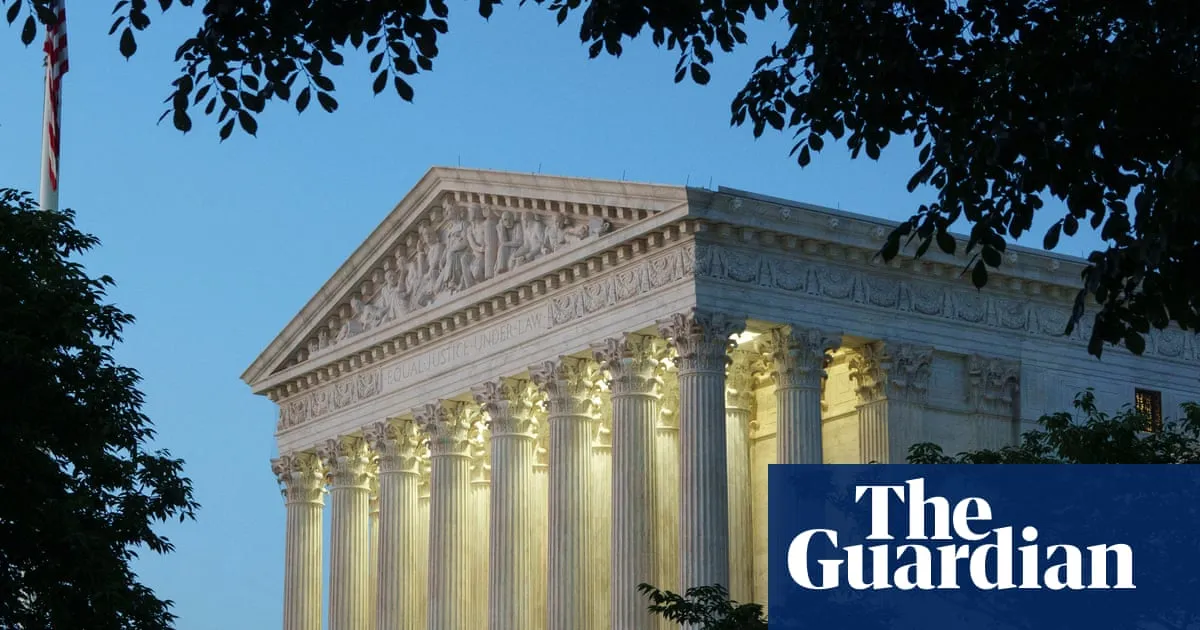
The US supreme court backed the Federal Communications Commission’s system for levying fines, ruling on Thursday against wireless carriers AT&T and Verizon in their challenge to the agency and handing a win to Donald Trump’s administration.The ruling was 8-1. At issue in the legal dispute was whether the agency’s in-house proceedings for imposing the penalties deprived the companies of their right to a Jury Trial under the US constitution. Trump’s administration defended the FCC’s system for assessing financial penalties, known as forfeiture orders.The conservative chief justice, John Roberts, authored the ruling. Clarence Thomas, a conservative justice, was the court’s lone dissenter.The court embraced the Trump administration’s argument that the FCC’s in-house system does not stop parties from bringing legal challenges to the agency’s assessments.The legal dispute marked the latest case to test whether a federal agency’s internal enforcement arrangement violates the constitutional right to a Jury Trial after the supreme court in 2024 curbed the power of in-house proceedings at the Securities and Exchange Commission.The FCC fined AT&T $57m and Verizon nearly $47m after the agency concluded that the companies had unlawfully sold access to customer location data to third parties without securing the consent of users.In all, the FCC imposed nearly $200m in fines on carriers that it said failed to safeguard customer data. It fined T-Mobile $80m and Sprint, which T-Mobile acquired in 2020, $12m.Verizon and AT&T paid the fines they were assessed, but also filed legal challenges that eventually led to a split among regional US appellate courts over the lawfulness of the FCC’s in-house procedure for imposing the penalties.In the government’s defense of the FCC’s in-house system, justice department lawyers had argued that the agency’s assessments were not binding. If the government were to bring an enforcement action in court, it would allow the companies to make their case before a jury, the lawyers argued.The companies, for their part, said that the FCC’s system impermissibly uses in-house proceedings for a process that belongs in court, depriving them of their right to a Jury Trial. The FCC’s initial assessments, they added, inflict reputational harm before the accused have had their day in court.
SRCThe Guardian - World News
LANGEN
LEANCenter-Left
WORDS356
ENT12
THU · 2026-06-04 · 15:16 GMTBRIEF NSR-2026-0604-81763
NSR-2026-0604-81763News Report·EN·Legal & Judicial
US supreme court backs FCC in clash with wireless carriers over fines
The US Supreme Court, in an 8-1 decision, upheld the Federal Communications Commission's (FCC) authority to impose financial penalties through its in-house proceedings. The ruling, authored by Chief Justice John Roberts, rejected challenges from wireless carriers AT&T and Verizon, who argued that this system deprived them of their constitutional right to a jury trial.
ReutersThe Guardian - World NewsFiled 2026-06-04 · 15:16 GMTLean · Center-LeftRead · 2 min
The Guardian - World NewsFIG 01
Reading time
2min
Word count
356words
Sources cited
0cited
Entities identified
12entities
Quality score
100%
§ 01
Briefing Summary
AI-generatedNEWSAR · AI
The US Supreme Court, in an 8-1 decision, upheld the Federal Communications Commission's (FCC) authority to impose financial penalties through its in-house proceedings. The ruling, authored by Chief Justice John Roberts, rejected challenges from wireless carriers AT&T and Verizon, who argued that this system deprived them of their constitutional right to a jury trial. The FCC had fined AT&T $57 million and Verizon nearly $47 million for unlawfully selling customer location data. The court embraced the Trump administration's argument that the FCC's forfeiture orders are not binding and do not preclude companies from seeking legal challenges, including jury trials, in court. Justice Clarence Thomas was the sole dissenter.
Confidence 0.90Claims 5Entities 12
§ 02
Article analysis
Model · rule-basedFraming
Legal & Judicial
Technology
Tone
Measured
AI-assessed
CalmNeutralAlarmist
Factuality
0.90 / 1.00
Factual
LowHigh
Sources cited
0
No named sources
FewMany
§ 03
Key claims
5 extracted01
The legal dispute tested whether federal agency internal enforcement arrangements violate the constitutional right to a jury trial.
factual
Confidence
1.00
02
The court embraced the Trump administration's argument that the FCC's in-house system does not prevent legal challenges to agency assessments.
factual
Confidence
1.00
03
The FCC fined AT&T $57m and Verizon nearly $47m for unlawfully selling customer location data without user consent.
factual
Confidence
1.00
04
The ruling was 8-1, with Justice Clarence Thomas as the lone dissenter.
statistic
Confidence
1.00
05
US Supreme Court backed the FCC's system for levying fines against wireless carriers AT&T and Verizon.
factual
Confidence
1.00
§ 04
Full report
2 min read · 356 words§ 05
Entities
12 identifiedKey playerOppositionContextPositiveNeutralNegative
People3
Organizations7
Locations1
§ 06
Keywords & salience
10 termsfcc fines
1.00
us supreme court
0.90
jury trial
0.80
wireless carriers
0.70
customer data
0.60
in-house proceedings
0.50
forfeiture orders
0.50
verizon
0.40
trump administration
0.40
at&t
0.40
§ 07
Topic connections
Interactive graph Network visualization showing 51 related topics
View Full Graph Person Organization Location Event|Click node to navigate|Edge numbers = shared articles