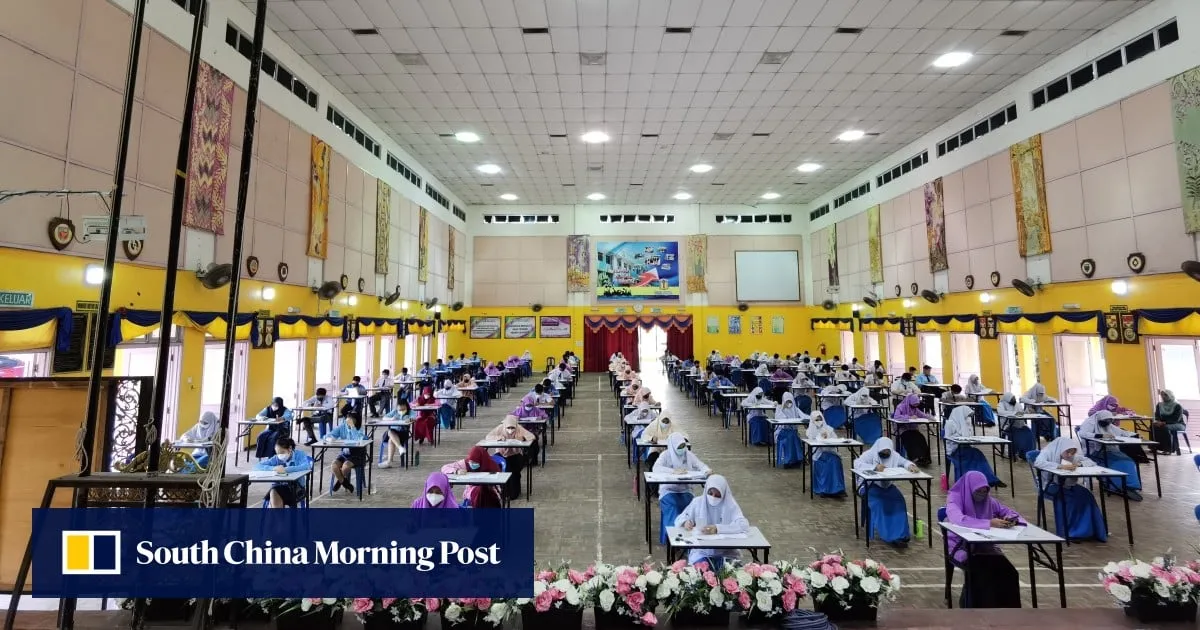
A revision to Malaysia’s public university admissions rules has reopened one of the multicultural country’s most sensitive political debates: how far its national education system should accommodate Chinese-language schooling.Malaysia’s government on May 15 said students from Chinese independent secondary schools could apply to public universities through specified pathways using the Unified Examination Certificate (UEC), the school-leaving qualification used by those institutions.The decision also covers students from other non-mainstream institutions that use the UEC, including Arabic schools, private institutes and tahfiz religious schools, provided they meet requirements, such as passes in Malay language and history in the national secondary school examination.
SRCSouth China Morning Post
LANGEN
LEANCenter-Right
WORDS100
ENT10
FRI · 2026-06-05 · 03:02 GMTBRIEF NSR-2026-0605-81890
NSR-2026-0605-81890News Report·EN·Social Justice
Malaysia’s new university rules rekindle multilingualism debate
Malaysia's government announced on May 15th a revision to public university admissions rules, allowing students from Chinese independent secondary schools to apply using their Unified Examination Certificate (UEC). This decision also extends to students from other non-mainstream institutions that utilize the UEC, such as Arabic, private, and tahfiz religious schools, provided they meet specific requirements like passing Malay language and history in the national examination.
Ushar DanieleSouth China Morning PostFiled 2026-06-05 · 03:02 GMTLean · Center-RightRead · 1 min
South China Morning PostFIG 01
Reading time
1min
Word count
100words
Sources cited
0cited
Entities identified
10entities
Quality score
100%
§ 01
Briefing Summary
AI-generatedNEWSAR · AI
Malaysia's government announced on May 15th a revision to public university admissions rules, allowing students from Chinese independent secondary schools to apply using their Unified Examination Certificate (UEC). This decision also extends to students from other non-mainstream institutions that utilize the UEC, such as Arabic, private, and tahfiz religious schools, provided they meet specific requirements like passing Malay language and history in the national examination. The move has reignited a long-standing debate in Malaysia regarding the extent to which its national education system should accommodate Chinese-language schooling and other non-mainstream educational pathways.
Confidence 0.85Claims 5Entities 10
§ 02
Article analysis
Model · rule-basedFraming
Social Justice
Political Strategy
Tone
Measured
AI-assessed
CalmNeutralAlarmist
Factuality
0.80 / 1.00
Factual
LowHigh
Sources cited
0
No named sources
FewMany
§ 03
Key claims
5 extracted01
The revision has reopened a debate on accommodating Chinese-language schooling within Malaysia's national education system.
factual
Confidence
1.00
02
These students must meet requirements, such as passing Malay language and history in the national secondary school examination.
factualMalaysia's government
Confidence
1.00
03
The new rules also cover students from other non-mainstream institutions using the UEC, including Arabic, private, and tahfiz schools.
factualMalaysia's government
Confidence
1.00
04
The decision allows students to use the Unified Examination Certificate (UEC) for public university applications.
factualMalaysia's government
Confidence
1.00
05
Malaysia's public university admissions rules were revised on May 15 to allow students from Chinese independent secondary schools to apply.
factualMalaysia's government
Confidence
1.00
§ 04
Full report
1 min read · 100 words§ 05
Entities
10 identifiedKey playerOppositionContextPositiveNeutralNegative
Organizations5
Locations1
§ 06
Keywords & salience
8 termsmultilingualism debate
1.00
public university admissions
0.90
chinese-language schooling
0.80
unified examination certificate
0.70
national education system
0.60
multicultural country
0.50
malay language
0.40
history
0.40
§ 07
Topic connections
Interactive graph Network visualization showing 51 related topics
View Full Graph Person Organization Location Event|Click node to navigate|Edge numbers = shared articles