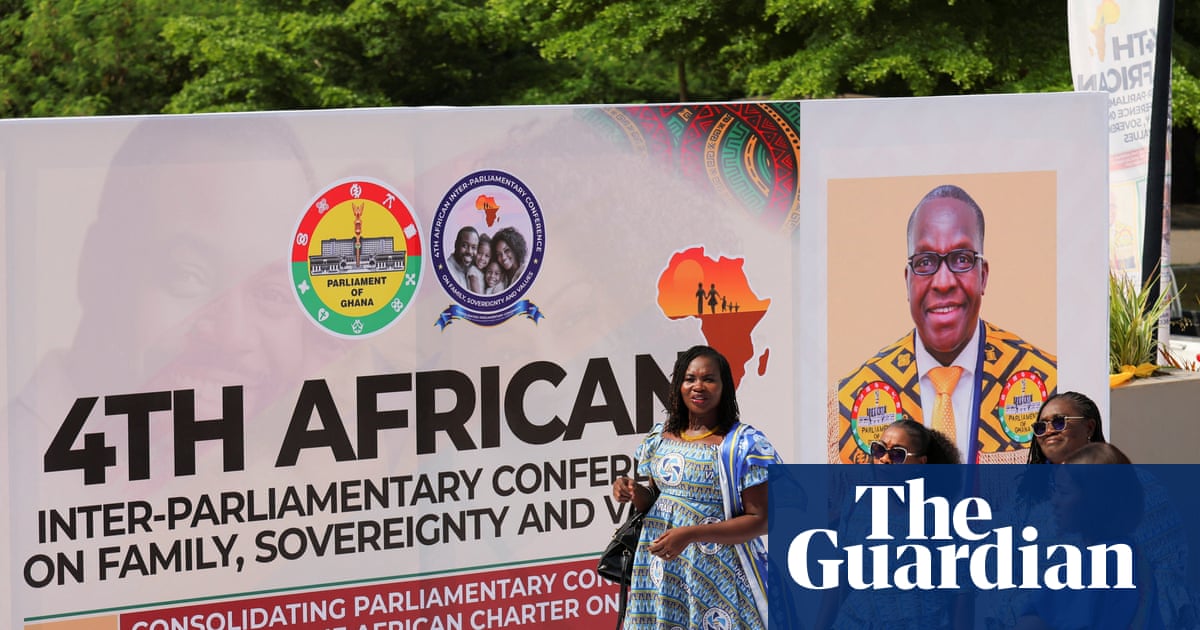
An African treaty that rejects longstanding international human rights obligations moved a step closer to becoming policy this week as governments across the continent met in Ghana.The draft African charter on family, sovereignty and values, seen by the Guardian, asserts that African values and culture are under attack from “foreign ideologies” and urges states to withdraw from any agreements that do not align with the principles of the charter, including the 2003 Maputo protocol, which promotes Gender Equality and protects the reproductive and health rights of women and girls.The charter is the first attempt to impose a continent-wide legal framework rooted in a moralistic rather than rights-based viewpoint. It claims that sexual and reproductive health and rights are an existential threat to the African family, and falsely states that policies based on these rights promote abortion on demand.The draft treaty also rejects comprehensive sex education (CSE), which it claims sexualises children; asserts that gender is either male or female; and declares that parental rights override a child’s rights, including on decisions about sexuality and discipline.African legal experts, reproductive rights groups and LGBTQ+ advocates have condemned the charter as regressive and dangerous.A mural asserting women’s rights in Freetown, Sierra Leone, where abortion is largely illegal. A bill to decriminalise abortion was blocked by religious leaders last year. Photograph: AFP/GettyGilbert Mitullah, a Kenyan lawyer and board member at the Queer African Network, said: “It is a licence to oppose, regress on or refuse to implement existing commitments on sexual and reproductive health, and on LGBTQ rights, and to dismantle the Maputo protocol from within. That is its operational function, even before any signature is placed on it.”The charter was drawn up by a core group of African lawmakers, led by Ugandan government ministers, at the annual inter-parliamentary conference on family values and sovereignty, a controversial meeting that has become known for shaping anti-homosexuality legislation.The objective of the 2026 conference, which was held in Ghana for the first time this week and attended by representatives from 20 countries, was to advance the charter by garnering enough support to take it to the African Union general assembly next February, when it would be put to a vote.Critics say the charter’s definition of family based strictly on heterosexual marriage ignores the huge diversity of families across the continent’s 54 countries.In an extensive analysis of the draft, the Initiative for Strategic Litigation in Africa (ISLA), a pan-African feminist initiative, argues that prioritising the family over the individual “risks legitimising the subordination of women, children and adolescents to collective family interests and insulating private family relations from state accountability, especially in situations involving violence, coercion, or discrimination”.Lakshita Kanhiya, a legal officer at ISLA, said: “Women will no longer be safe; children will not be safe.”Protesters marching in Nairobi in 2023 after Kenya’s supreme court upheld the right of an LGBTQ+ rights organisation to be formally recognised. Photograph: Monicah Mwangi/ReutersMitullah said: “‘Family values’ rhetoric does two things at once. It legitimises expanded state intrusion into private life, and it provides a vocabulary that wins votes without delivering material change.”The ISLA report also criticises the way legitimate concerns around sovereignty and colonialism are distorted. The terminology running through the charter exposes the strong influence of conservative Christian organisations from the US and Europe that oppose abortion and LGBTQ+ rights. Progressive policies are dismissed as neocolonialism or cultural imperialism.Famia Nkansa, communications lead at Purposeful, a Sierra Leone-based organisation focused on girls’ activism, said: “Anti-rights activity on the continent is simply an extension and expansion of the same colonial playbook: Africa serving as a battleground on which the west wages its ideological and economic wars.”According to the US-based international reproductive rights organisation Ipas, the annual conferences have been supported by Family Watch International, an Arizona-based Christian lobbying organisation that opposes abortion and runs an anti-CSE campaign. Sharon Slater, FWI’s co-founder, has repeatedly claimed that the UN and western donor nations are imposing a “radical sexual rights agenda”.Mitullah said: “The charter is not a continental instrument that happens to share vocabulary with western anti-rights groups. It is a transplant.”He added that the Geneva Consensus Declaration, an anti-abortion manifesto crafted by the former Trump adviser Valerie Huber, was cited in the text, describing the document as a “collaborative product of a transnational network, with African signatories used to give it the appearance of Indigenous provenance”.In a statement, FWI said it was not participating in or a sponsor of the conference in Ghana.“The draft charter is Africa-inspired, African-initiated, and African-directed and controlled,” it said, but added: “That being said, FWI strongly supports the draft charter’s restrictions on the dissemination of harmful CSE programmes in Africa, given their propensity to sexualise children. We also strongly support the provisions encouraging governments to use a family lens when developing and implementing laws, policies and programmes.”
SRCThe Guardian - World News
LANGEN
LEANCenter-Left
WORDS798
ENT10
FRI · 2026-06-05 · 08:00 GMTBRIEF NSR-2026-0605-81961
NSR-2026-0605-81961News Report·EN·Human Rights
‘Family values’ African charter condemned by rights groups as regressive and dangerous
African governments met in Ghana to advance a draft "African charter on family, sovereignty and values" that rights groups condemn as regressive. The charter, influenced by conservative Christian organizations, asserts that sexual and reproductive health and rights threaten the African family and urges states to withdraw from agreements like the Maputo protocol, which promotes gender equality and reproductive rights.
Isabel ChoatThe Guardian - World NewsFiled 2026-06-05 · 08:00 GMTLean · Center-LeftRead · 4 min
The Guardian - World NewsFIG 01
Reading time
4min
Word count
798words
Sources cited
3cited
Entities identified
10entities
Quality score
100%
§ 01
Briefing Summary
AI-generatedNEWSAR · AI
African governments met in Ghana to advance a draft "African charter on family, sovereignty and values" that rights groups condemn as regressive. The charter, influenced by conservative Christian organizations, asserts that sexual and reproductive health and rights threaten the African family and urges states to withdraw from agreements like the Maputo protocol, which promotes gender equality and reproductive rights. Critics argue the charter imposes a moralistic, rather than rights-based, framework, defining family narrowly, rejecting comprehensive sex education, and prioritizing parental rights over children's. Legal experts and advocates fear it will legitimize opposition to existing human rights commitments and dismantle protections for women, girls, and LGBTQ+ individuals.
Confidence 0.90Sources 3Claims 5Entities 10
§ 02
Article analysis
Model · rule-basedFraming
Human Rights
Social Justice
Tone
Mixed Tone
AI-assessed
CalmNeutralAlarmist
Factuality
0.70 / 1.00
Factual
LowHigh
Sources cited
3
Well sourced
FewMany
§ 03
Key claims
5 extracted01
Gilbert Mitullah states the charter is 'a licence to oppose, regress on or refuse to implement existing commitments on sexual and reproductive health, and on LGBTQ rights'.
quoteGilbert Mitullah
Confidence
1.00
02
The draft African charter on family, sovereignty and values urges states to withdraw from agreements not aligning with its principles, including the Maputo protocol.
factual
Confidence
0.95
03
The charter claims sexual and reproductive health and rights are an existential threat to the African family and falsely states they promote abortion on demand.
factual
Confidence
0.90
04
An African treaty that rejects longstanding international human rights obligations moved a step closer to becoming policy.
factual
Confidence
0.90
05
Critics argue the charter's definition of family based strictly on heterosexual marriage ignores the diversity of families across the continent.
factualCritics
Confidence
0.85
§ 04
Full report
4 min read · 798 words§ 05
Entities
10 identifiedKey playerOppositionContextPositiveNeutralNegative
§ 06
Keywords & salience
10 termsafrican charter on family
1.00
human rights
0.90
maputo protocol
0.80
sexual and reproductive health and rights
0.80
gender equality
0.70
family values
0.70
lgbtq+ rights
0.60
comprehensive sex education
0.50
sovereignty
0.40
regressive
0.40
§ 07
Topic connections
Interactive graph No topic relationship data available yet. This graph will appear once topic relationships have been computed.