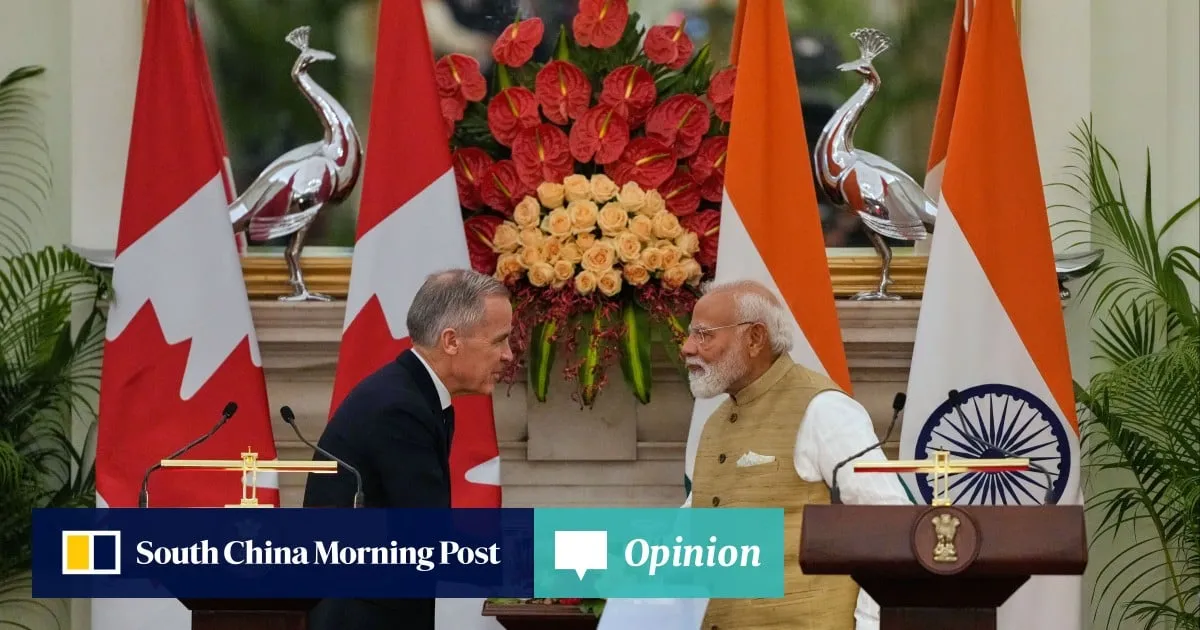
China-Canada relations are undergoing a thaw after years of estrangement and recrimination. China and India are seeking a rapprochement despite deep-seated distrust and sometimes violent border disputes. Both cases share a common element: Donald Trump.Meanwhile, following the US president’s visit to Beijing, his defence secretary Pete Hegseth avoided mentioning Taiwan at the Shangri-La Dialogue in Singapore. He sounded almost conciliatory by hailing ties with Beijing as “better than they’ve been in many years” while arguing for a “strong, quiet and clear” US stance towards the region.That would have pleased President Xi Jinping. However, it probably alarmed Japanese Prime Minister Sanae Takaichi, Philippine President Ferdinand Marcos Jnr and Taiwan’s leader William Lai Ching-te. The trio seem to have been coordinating on a united front against Beijing from an old American script. Perhaps they haven’t received the latest memo.
SRCSouth China Morning Post
LANGEN
LEANCenter-Right
WORDS137
ENT12
FRI · 2026-06-05 · 12:30 GMTBRIEF NSR-2026-0605-82004
NSR-2026-0605-82004Analysis·EN·Political Strategy
Trump is turning allies and partners into friends of China
The article suggests that Donald Trump's actions are leading to improved relations between China and its former adversaries, Canada and India. Following Trump's visit to Beijing, US Defense Secretary Pete Hegseth adopted a conciliatory tone at the Shangri-La Dialogue, downplaying concerns about Taiwan and describing US-China ties as "better than they've been in many years." This shift in US rhetoric, characterized by a call for a "strong, quiet and clear" stance, may have pleased Chinese President Xi Jinping.
Alex LoSouth China Morning PostFiled 2026-06-05 · 12:30 GMTLean · Center-RightRead · 1 min
South China Morning PostFIG 01
Reading time
1min
Word count
137words
Sources cited
0cited
Entities identified
12entities
Quality score
100%
§ 01
Briefing Summary
AI-generatedNEWSAR · AI
The article suggests that Donald Trump's actions are leading to improved relations between China and its former adversaries, Canada and India. Following Trump's visit to Beijing, US Defense Secretary Pete Hegseth adopted a conciliatory tone at the Shangri-La Dialogue, downplaying concerns about Taiwan and describing US-China ties as "better than they've been in many years." This shift in US rhetoric, characterized by a call for a "strong, quiet and clear" stance, may have pleased Chinese President Xi Jinping. However, it has likely concerned leaders in Japan, the Philippines, and Taiwan, who appeared to be coordinating a united front against Beijing based on an older US approach.
Confidence 0.85Claims 5Entities 12
§ 02
Article analysis
Model · rule-basedFraming
Political Strategy
Diplomatic
Tone
Mixed Tone
AI-assessed
CalmNeutralAlarmist
Factuality
0.30 / 1.00
Opinion-Heavy
LowHigh
Sources cited
0
No named sources
FewMany
§ 03
Key claims
5 extracted01
US defence secretary Pete Hegseth sounded almost conciliatory by hailing ties with Beijing as 'better than they’ve been in many years' at the Shangri-La Dialogue.
factual
Confidence
0.90
02
China and India are seeking a rapprochement despite deep-seated distrust and sometimes violent border disputes.
factual
Confidence
0.80
03
China-Canada relations are undergoing a thaw after years of estrangement and recrimination.
factual
Confidence
0.80
04
Donald Trump is a common element in the thawing of China-Canada and China-India relations.
factual
Confidence
0.70
05
Japanese Prime Minister Sanae Takaichi, Philippine President Ferdinand Marcos Jnr and Taiwan’s leader William Lai Ching-te may be alarmed by a perceived shift in US stance towards China.
prediction
Confidence
0.60
§ 04
Full report
1 min read · 137 words§ 05
Entities
12 identifiedKey playerOppositionContextPositiveNeutralNegative
People6
§ 06
Keywords & salience
8 termsus foreign policy
1.00
china relations
0.90
donald trump
0.80
geopolitical shifts
0.70
taiwan
0.60
allies and partners
0.50
shangri-la dialogue
0.40
xi jinping
0.40
§ 07
Topic connections
Interactive graph Network visualization showing 51 related topics
View Full Graph Person Organization Location Event|Click node to navigate|Edge numbers = shared articles