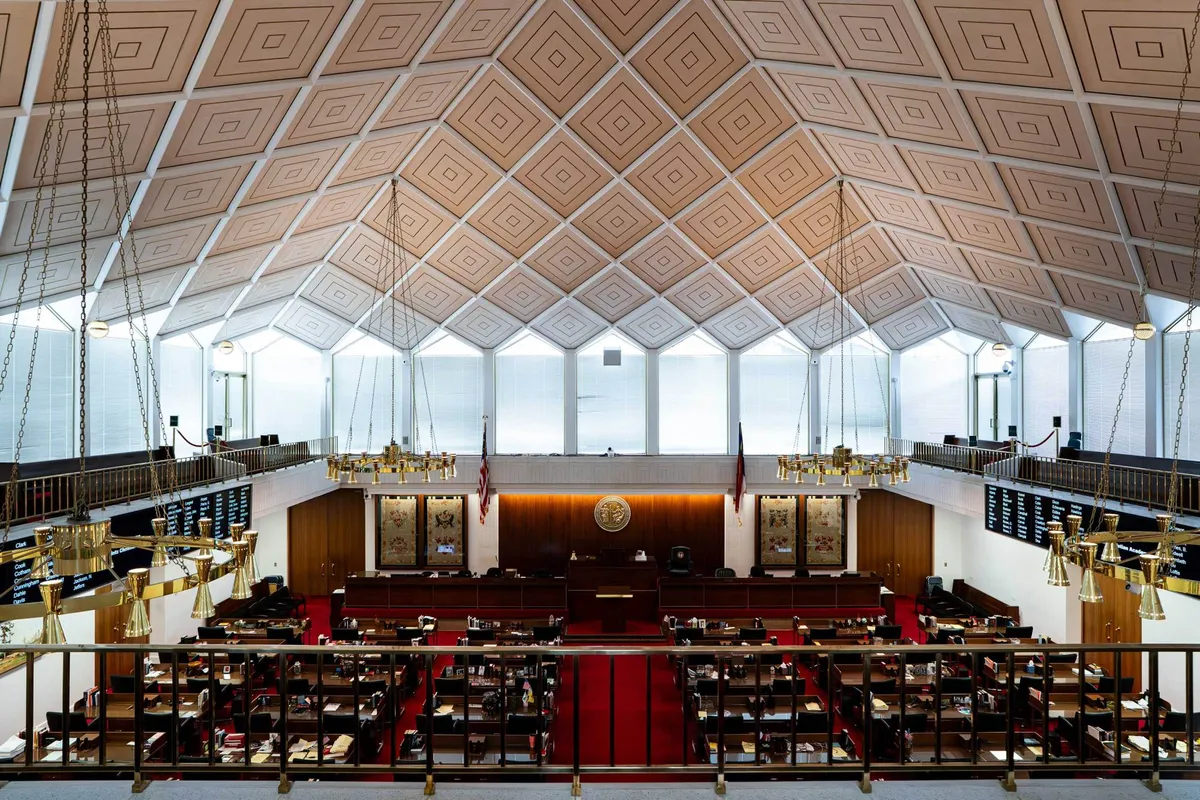
The North Carolina legislature, where Democrats recently introduced three bills to reform the state’s courts and protect the separation of powers between its branches of government Al Drago/Bloomberg via Getty Images Democratic lawmakers in North Carolina introduced a trio of constitutional amendments this week aimed at protecting traditional powers of the state’s governor and reforming oversight of its court system. The effort was prompted in part by ProPublica’s reporting, including an investigation that found that over nearly a decade, Republican lawmakers had pushed through law after law shrinking the powers of North Carolina’s governor, always a Democrat during that time. At a press conference on Wednesday, the bills’ sponsors readily acknowledged that the initiatives are unlikely to pass, at least in the current legislative session: Republicans hold majorities in North Carolina’s House and Senate. But in proposing the measures as changes to the state constitution, the group of eight Democrats said their goal was to make them less vulnerable to the persistent partisan warfare that has engulfed the narrowly divided swing state. Republicans “won’t always be in the majority,” said Rep. Phil Rubin, the primary sponsor of one bill . “And when they’re not, they’re going to suddenly think these are great rules. So let’s do them now.” Republican leaders in the House, Senate and court system did not respond to requests for comment on the bills. Experts have long maintained that Republican power grabs have thwarted the will of North Carolina voters, removing the Democratic governor’s control or partial control over numerous boards, entities and executive prerogatives and leaving him the nation’s weakest. (Republican officials have defended the shifts, pointing out that voters also elected a GOP legislative majority.) Rubin’s measure would bar the legislature from stripping away additional gubernatorial powers, as well as block majority leaders from what he called “government by ambush” — springing major legislation on the minority and public without notice. “ProPublica’s reporting shows the perils of not having this law,” Rubin said. Voters should have “the opportunity to secure their constitution, demand absolute transparency in lawmaking and ensure that people, not backroom deals, have the final say.” The two other constitutional amendments unveiled this week target aspects of the judicial system. The first , authored by House Rep. Marcia Morey, would make disciplinary hearings and sanctions by the courts’ internal watchdog, the Judicial Standards Commission, public. GOP rules currently cloak the commission’s work in secrecy. Behind closed doors, ProPublica revealed , the majority-Republican state Supreme Court quashed the commission’s recommendations that two Republican judges who’d admitted to committing egregious conduct violations be publicly reprimanded. (Spokespeople for the North Carolina Supreme Court and the Judicial Standards Commission declined to comment or respond to a detailed list of questions about the matter.) Morey’s bill would also change who appoints the commission’s members, a step she called critical to preventing the “weaponization” of its work. Currently, Republican legislative leaders and Paul Newby, the state’s conservative chief justice, appoint a majority of the commission’s members. As ProPublica has reported , in 2023 Newby encouraged the commission to investigate a Black Democratic justice who’d criticized his decision to effectively shut down a racial equity commission. (Newby, as well as spokespeople for the court and the Judicial Standards Commission, declined to comment for the story.) Morey’s measure would divide commission appointments equally among the chief justice, the governor and the North Carolina State Bar. “Who makes decisions about discipline and who appoints the decision-makers,” she said, are critical to making the system “fair and effective.” The second bill , sponsored by Rep. Deb Butler, would disqualify state Supreme Court justices from hearing cases in which family members are parties. Justice Phil Berger Jr. has caused controversy by ruling in multiple cases in which his father, the leader of the state Senate, is a defendant in his legislative capacity. (Berger referred recusal requests on these cases to the Republican majority on the Supreme Court, which ruled he could participate .) Butler’s measure would also compel justices to disclose more information about large stock transactions, outside sources of income and sponsored travel. A ProPublica investigation found Newby didn’t disclose a trip to a luxurious Hawaiian resort, paid for by a conservative judicial education program. Newby and court spokespeople did not respond to requests for comment about his decision not to disclose the trip. Butler described her bill as an effort to restore public trust. “People deserve complete confidence in the integrity of their court,” she said. In the unlikely event that the bills pass, the public would then have the chance to vote on them in November. If not, the sponsors said, they’d revive them in the next session, by which time even some Republican strategists think that a blue wave may have flipped the North Carolina House. “We’re committed to following through on these bills to ensure fairness and impartiality in our courts and legislature,” Morey said. “This should be the norm, not the partisan bias we have now.” The post North Carolina Democrats Propose Changes to Block GOP Power Transfers and Secrecy appeared first on ProPublica .
SRCProPublica
LANGEN
LEANCenter-Left
WORDS847
ENT10
FRI · 2026-06-05 · 17:00 GMTBRIEF NSR-2026-0605-82094
NSR-2026-0605-82094News Report·EN·Political Strategy
North Carolina Democrats Propose Changes to Block GOP Power Transfers and Secrecy
North Carolina Democrats have introduced three constitutional amendments aimed at reforming the state's courts and protecting the separation of powers. These proposals seek to restore gubernatorial powers previously diminished by Republican lawmakers and increase transparency in the judicial system.
Doug Bock ClarkProPublicaFiled 2026-06-05 · 17:00 GMTLean · Center-LeftRead · 4 min
ProPublicaFIG 01
Reading time
4min
Word count
847words
Sources cited
3cited
Entities identified
10entities
Quality score
100%
§ 01
Briefing Summary
AI-generatedNEWSAR · AI
North Carolina Democrats have introduced three constitutional amendments aimed at reforming the state's courts and protecting the separation of powers. These proposals seek to restore gubernatorial powers previously diminished by Republican lawmakers and increase transparency in the judicial system. One amendment would make disciplinary hearings for judges public and alter the appointment process for the Judicial Standards Commission. Another would disqualify Supreme Court justices from hearing cases involving family members and require more disclosure of financial dealings. While unlikely to pass in the current Republican-controlled legislature, sponsors hope to make these reforms a constitutional standard, citing ProPublica reporting as a catalyst.
Confidence 0.90Sources 3Claims 5Entities 10
§ 02
Article analysis
Model · rule-basedFraming
Political Strategy
Legal & Judicial
Tone
Mixed Tone
AI-assessed
CalmNeutralAlarmist
Factuality
0.70 / 1.00
Factual
LowHigh
Sources cited
3
Well sourced
FewMany
§ 03
Key claims
5 extracted01
Another amendment would make disciplinary hearings and sanctions by the Judicial Standards Commission public.
factualHouse Rep. Marcia Morey
Confidence
1.00
02
One bill aims to prevent the legislature from stripping gubernatorial powers and stop 'government by ambush' legislation.
factualRep. Phil Rubin
Confidence
1.00
03
Democratic lawmakers in North Carolina introduced three constitutional amendments to reform courts and protect separation of powers.
factualarticle
Confidence
1.00
04
The majority-Republican state Supreme Court allegedly quashed recommendations to reprimand two Republican judges for conduct violations.
factualProPublica
Confidence
0.90
05
Republican lawmakers have previously passed laws shrinking the powers of North Carolina's governor, who was a Democrat during that time.
factualProPublica
Confidence
0.90
§ 04
Full report
4 min read · 847 words§ 05
Entities
10 identifiedKey playerOppositionContextPositiveNeutralNegative
Organizations5
Locations1
§ 06
Keywords & salience
9 termsgubernatorial powers
1.00
separation of powers
1.00
legislative reform
0.90
partisan warfare
0.80
constitutional amendments
0.80
court system reform
0.70
transparency in lawmaking
0.60
north carolina
0.50
government by ambush
0.40
§ 07
Topic connections
Interactive graph Network visualization showing 51 related topics
View Full Graph Person Organization Location Event|Click node to navigate|Edge numbers = shared articles