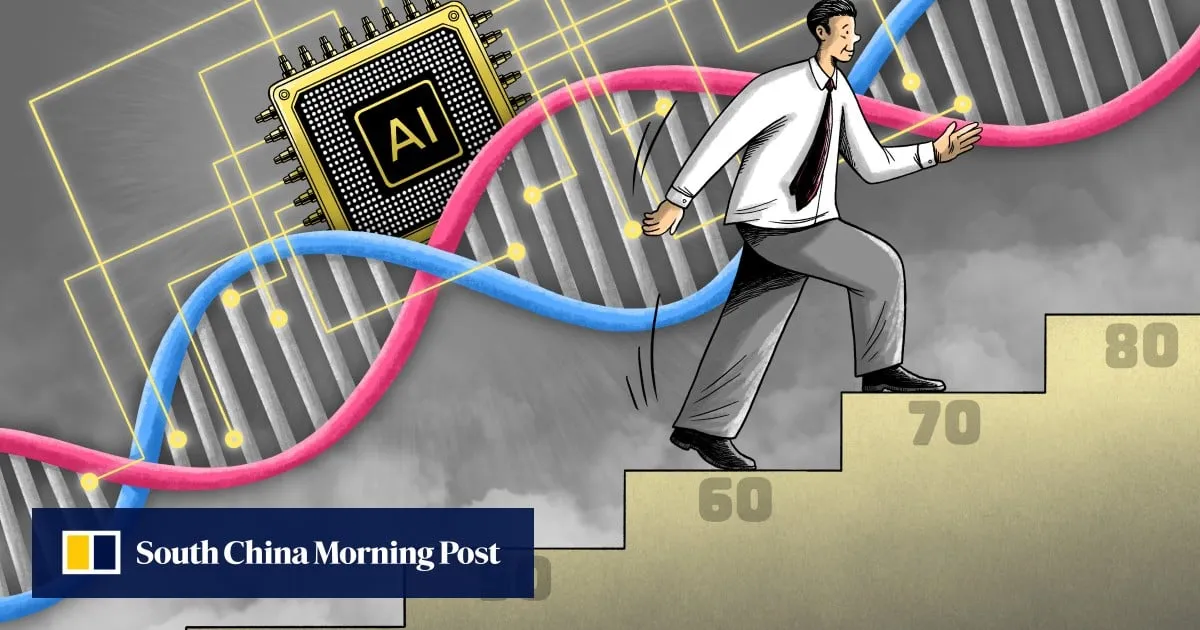
For Beijing-based METiS TechBio CEO Lai Tsai-Ta, ageing is comparable to bugs building up in a complex software system – it happens once errors begin to accumulate in the genetic code of human cells, such as their DNA sequences.“Those errors can be reprogrammed. It becomes possible to use AI to read, rewrite and reverse cells, or at least slow the ageing process,” Lai said in an interview with the China-morning-post" class="entity-link entity-organization" data-entity-id="12558" data-entity-type="organization">South China Morning Post.The process could begin by fixing “immune cells, such as T cells, as their function declines after old age. That is why older people become more susceptible to cancer and all kinds of disease,” he added.
SRCSouth China Morning Post
LANGEN
LEANCenter-Right
WORDS108
ENT12
SAT · 2026-06-06 · 00:00 GMTBRIEF NSR-2026-0606-82142
NSR-2026-0606-82142News Report·EN·Technology
Targeting US$610 billion longevity market, biotech firms race to reverse ageing
Biotech firms are actively pursuing the US$610 billion longevity market by developing technologies to reverse or slow the aging process. METiS TechBio CEO Lai Tsai-ta likens aging to software bugs accumulating in cellular genetic code, which he believes can be reprogrammed.
Julie ZhangSouth China Morning PostFiled 2026-06-06 · 00:00 GMTLean · Center-RightRead · 1 min
South China Morning PostFIG 01
Reading time
1min
Word count
108words
Sources cited
1cited
Entities identified
12entities
Quality score
100%
§ 01
Briefing Summary
AI-generatedNEWSAR · AI
Biotech firms are actively pursuing the US$610 billion longevity market by developing technologies to reverse or slow the aging process. METiS TechBio CEO Lai Tsai-ta likens aging to software bugs accumulating in cellular genetic code, which he believes can be reprogrammed. He suggests using artificial intelligence to "read, rewrite and reverse cells." The company's approach could start by repairing immune cells, like T cells, whose declining function in older individuals contributes to increased susceptibility to diseases such as cancer. This research aims to address the fundamental cellular mechanisms of aging.
Confidence 0.85Sources 1Claims 4Entities 12
§ 02
Article analysis
Model · rule-basedFraming
Technology
Economic Impact
Tone
Mixed Tone
AI-assessed
CalmNeutralAlarmist
Factuality
0.40 / 1.00
Mixed
LowHigh
Sources cited
1
Limited
FewMany
§ 03
Key claims
4 extracted01
The global longevity market is valued at US$610 billion.
statistic
Confidence
0.95
02
Ageing is comparable to bugs building up in a complex software system due to accumulated errors in the genetic code of human cells.
quoteLai Tsai-ta
Confidence
0.90
03
Fixing immune cells, such as T cells, could be an initial step in reversing ageing, as their function declines with age, leading to increased susceptibility to disease.
quoteLai Tsai-ta
Confidence
0.85
04
Errors in the genetic code can be reprogrammed using AI to read, rewrite, and reverse cells, or at least slow the ageing process.
quoteLai Tsai-ta
Confidence
0.80
§ 04
Full report
1 min read · 108 words§ 05
Entities
12 identifiedKey playerOppositionContextPositiveNeutralNegative
Events1
§ 06
Keywords & salience
8 termsreverse ageing
1.00
longevity market
0.90
biotech firms
0.80
ai
0.70
genetic code
0.60
immune cells
0.50
t cells
0.40
metis techbio
0.40
§ 07
Topic connections
Interactive graph No topic relationship data available yet. This graph will appear once topic relationships have been computed.