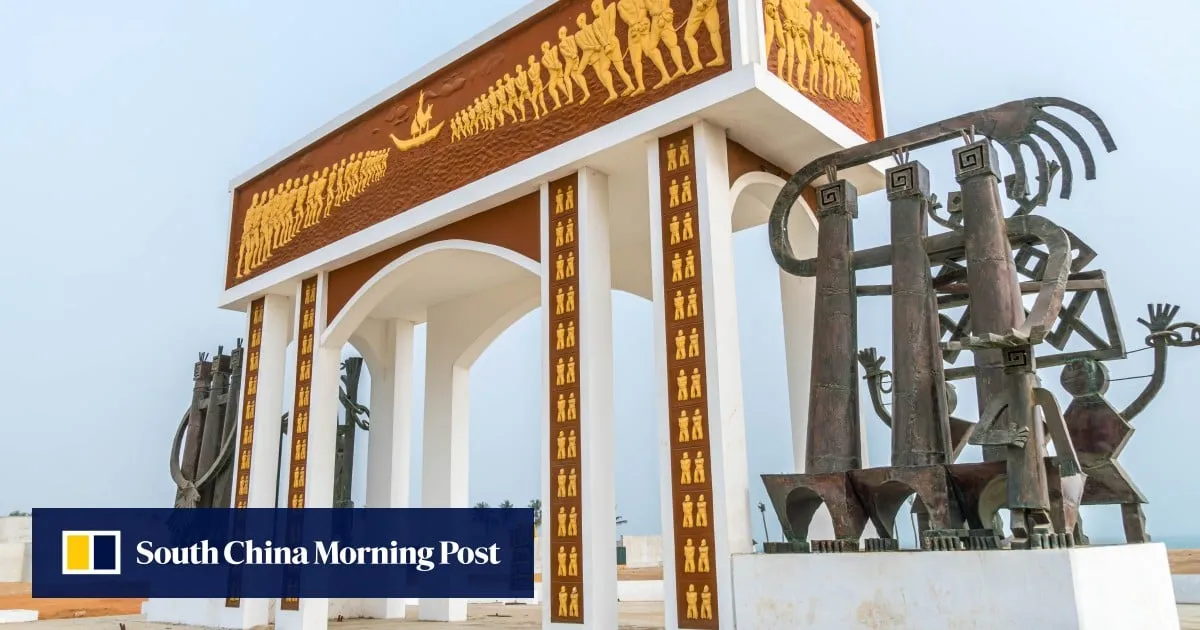
How China is turning historic African slave port into waterfront tourism destinationBeninese government has contracted Chinese firms to create seaside development linking port to historic slave route and memorial sites3-MIN READ3-MIN12ListenPublished: 8:00pm, 6 Jun 2026In Benin’s southern Atlantic coastal town of Ouidah, located about 40km (25 miles) west of the economic capital of Cotonou, China is turning a former slave trade hub into a busy tourist destination.The historic port once saw nearly 2 million enslaved Africans marched along the 2km “Slave Route” from the auction plaza to the beach during the Transatlantic slave trade.On the shore, captives were passed through the “Gate of No Return”, with a monumental memorial arch now standing at the exact point where they boarded the ships.Select VoiceSelect Speed0.8x0.9x1.0x1.1x1.2x1.5x1.75x00:0000:001.00x
SRCSouth China Morning Post
LANGEN
LEANCenter-Right
WORDS123
ENT9
SAT · 2026-06-06 · 12:00 GMTBRIEF NSR-2026-0606-82245
NSR-2026-0606-82245News Report·EN·Human Interest
How China is turning historic African slave port into waterfront tourism destination
Chinese firms are redeveloping Ouidah, a historic slave port in Benin, into a waterfront tourism destination. This initiative, contracted by the Beninese government, aims to transform the town, which once saw nearly two million enslaved Africans marched to the shore via a 2km "Slave Route" to board ships at the "Gate of No Return." The development links the port to these significant historical sites, including a memorial arch marking the departure point.
Jevans NyabiageSouth China Morning PostFiled 2026-06-06 · 12:00 GMTLean · Center-RightRead · 1 min
South China Morning PostFIG 01
Reading time
1min
Word count
123words
Sources cited
0cited
Entities identified
9entities
Quality score
100%
§ 01
Briefing Summary
AI-generatedNEWSAR · AI
Chinese firms are redeveloping Ouidah, a historic slave port in Benin, into a waterfront tourism destination. This initiative, contracted by the Beninese government, aims to transform the town, which once saw nearly two million enslaved Africans marched to the shore via a 2km "Slave Route" to board ships at the "Gate of No Return." The development links the port to these significant historical sites, including a memorial arch marking the departure point. The project seeks to create a busy tourist destination from this site of past human tragedy.
Confidence 0.85Claims 4Entities 9
§ 02
Article analysis
Model · rule-basedFraming
Human Interest
Social Justice
Tone
Measured
AI-assessed
CalmNeutralAlarmist
Factuality
0.80 / 1.00
Factual
LowHigh
Sources cited
0
No named sources
FewMany
§ 03
Key claims
4 extracted01
A monumental memorial arch now stands at the 'Gate of No Return' on the shore, marking where captives boarded ships.
factual
Confidence
1.00
02
The historic port was a hub for the transatlantic slave trade, with nearly 2 million enslaved Africans marched along the 'Slave Route'.
factual
Confidence
1.00
03
The Beninese government has contracted Chinese firms for this seaside development project.
factual
Confidence
1.00
04
China is transforming a historic African slave port in Ouidah, Benin, into a tourist destination.
factual
Confidence
1.00
§ 04
Full report
1 min read · 123 words§ 05
Entities
9 identifiedKey playerOppositionContextPositiveNeutralNegative
Locations4
§ 06
Keywords & salience
9 termsslave port
1.00
tourism destination
1.00
china
0.90
benin
0.90
slave trade
0.80
waterfront development
0.70
historic sites
0.60
transatlantic slave trade
0.50
memorial sites
0.40
§ 07
Topic connections
Interactive graph Network visualization showing 51 related topics
View Full Graph Person Organization Location Event|Click node to navigate|Edge numbers = shared articles