While many Chinese people joke that they “work like a dog” because they are anxious about dropping out of the rat race, there is a tradition in some areas that people can legitimately “lie flat” once a year to ward off bad luck.The day is called tian chuan, or the day when the sky breaks. It usually falls on the 20th day of the first lunar month, and marks the day when the sky that Nuwa mended breaks once in a year.Nuwa is a mythological figure, a mother goddess who is said to have moulded the first humans out of clay, and patched the tear in the sky with melted stones of five colours.The tian chuan day falls around the same time of the Rain Water solar term, which is named after the first rains of the year.The above painting depicts the mythological mother goddess Nuwa. Photo: leigongmo.comThere is also a folk belief that raining suggests that the sky Nuwa patched is breaking.The day is said to have been established in the Han dynasty (206 BC – AD 220), and widely celebrated in the Song dynasty (960–1279).Today, it is still celebrated in some northern regions such as Shanxi and Henan provinces, and among the Hakka people in China and abroad.The Hakka people in Guangdong province, southern China, believe that it will bring bad luck if people work on this day.Those who insist on working would be scolded by the family elders, that no matter how hard they work it is not enough to mend the sky.A community celebration in China involving expressive dancing by children. Photo: leigongmo.comInstead, the labour of housewives is valued on this day. Women are also liberated from their heavy housework on this day.Further ReadingThey are especially asked not to do needlework, as it might bring bad luck and toil for these women in the year to come.The Hakka people usually make steamed sweet rice cake during the Chinese New Year and keep the food until the tian chuan day for “sky mending”.A vast array of delicacies and fruit laid out for a village celebration. Photo: leigongmo.comOn the tian chuan day, people would fry the leftover sweet rice cake, and instead of eating them, they use them to patch the crannies in the wall, wishing for good luck in the coming year.People in northern China who celebrate the day usually make round and thin pancakes, and throw them into the sky, up to the rooftop or lay them on the ground as a symbol of mending the sky and the ground.The tian chuan day is essentially a day when people wish for favourable weather and good harvest in the following year.After the pancake ritual is over, some families also gather to eat the pancakes, wishing for all members to have a healthy and happy year.
SRCSouth China Morning Post
LANGEN
LEANCenter-Right
WORDS468
ENT10
SUN · 2026-06-07 · 08:00 GMTBRIEF NSR-2026-0607-82383
NSR-2026-0607-82383News Report·EN·Human Interest
‘Sky breaks’: in some China regions, lying flat can avoid bad luck; use ‘mending pancakes’
In some regions of China, particularly in northern provinces like Shanxi and Henan, and among the Hakka people, a tradition called "tian chuan" or "the day when the sky breaks" is observed. This day, typically falling on the 20th day of the first lunar month, commemorates the mythological goddess Nuwa mending the sky.
Fran LuSouth China Morning PostFiled 2026-06-07 · 08:00 GMTLean · Center-RightRead · 2 min
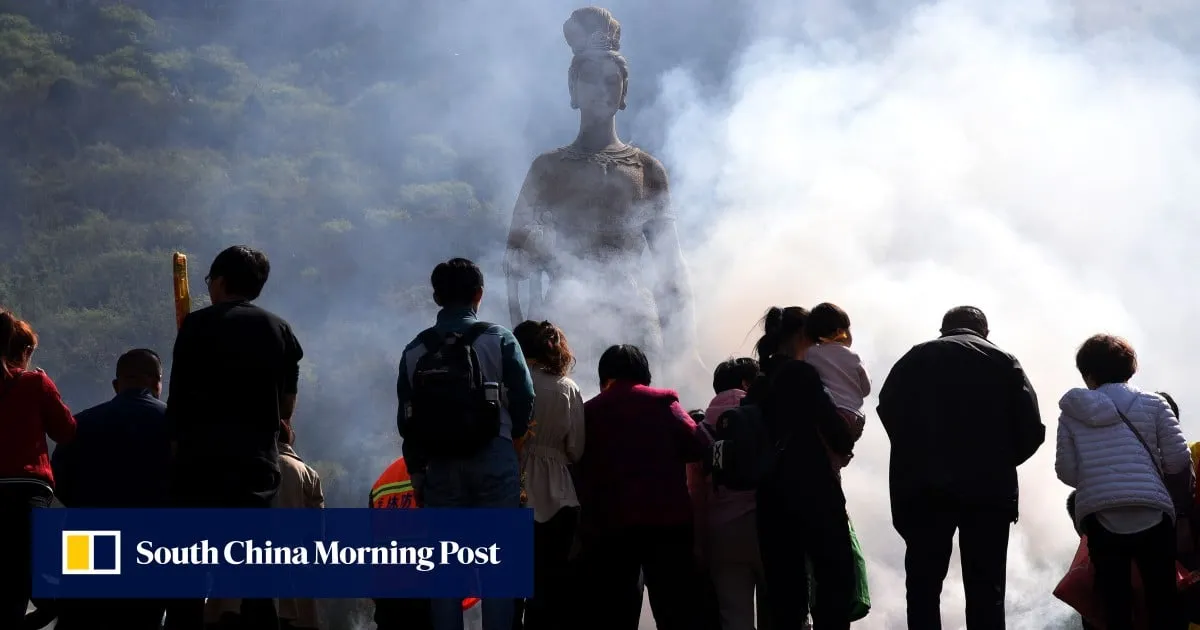
South China Morning PostFIG 01
Reading time
2min
Word count
468words
Sources cited
0cited
Entities identified
10entities
Quality score
100%
§ 01
Briefing Summary
AI-generatedNEWSAR · AI
In some regions of China, particularly in northern provinces like Shanxi and Henan, and among the Hakka people, a tradition called "tian chuan" or "the day when the sky breaks" is observed. This day, typically falling on the 20th day of the first lunar month, commemorates the mythological goddess Nuwa mending the sky. To ward off bad luck and wish for a good harvest, people are encouraged to "lie flat" and avoid working, especially strenuous labor and needlework. Instead, housewives' labor is valued, and leftover sweet rice cakes are used to patch walls, symbolizing mending the sky. In other areas, thin pancakes are thrown skyward or laid on the ground as a ritual for good luck.
Confidence 0.90Claims 5Entities 10
§ 02
Article analysis
Model · rule-basedFraming
Human Interest
Social Justice
Tone
Measured
AI-assessed
CalmNeutralAlarmist
Factuality
0.60 / 1.00
Mixed
LowHigh
Sources cited
0
No named sources
FewMany
§ 03
Key claims
5 extracted01
In some Chinese regions, there is a tradition to 'lie flat' once a year to ward off bad luck on a day called tian chuan.
factual
Confidence
0.90
02
People in northern China make and throw thin pancakes into the sky or onto rooftops as a symbol of mending the sky and ground on tian chuan day.
factual
Confidence
0.80
03
Hakka people in Guangdong believe working on tian chuan day brings bad luck and that housewives' labor is valued, with women liberated from housework.
factual
Confidence
0.80
04
The tian chuan day, marking when the sky patched by Nuwa breaks, falls on the 20th day of the first lunar month.
factual
Confidence
0.80
05
The tradition of tian chuan is said to have been established in the Han dynasty and widely celebrated in the Song dynasty.
factual
Confidence
0.70
§ 04
Full report
2 min read · 468 words§ 05
Entities
10 identifiedKey playerOppositionContextPositiveNeutralNegative
People1
Locations5
§ 06
Keywords & salience
10 termstian chuan
1.00
sky mending
0.90
ward off bad luck
0.80
nuwa
0.70
folk belief
0.60
chinese tradition
0.60
good harvest
0.50
hakka people
0.50
han dynasty
0.40
song dynasty
0.40
§ 07
Topic connections
Interactive graph Network visualization showing 51 related topics
View Full Graph Person Organization Location Event|Click node to navigate|Edge numbers = shared articles