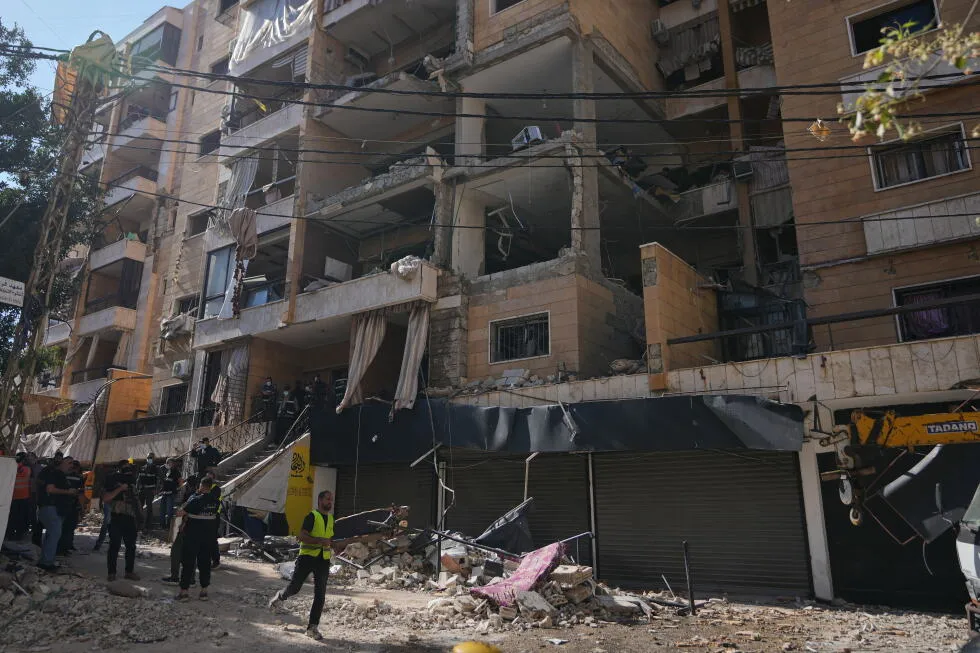
Pakistan’s interior minister is in Tehran as the US downs more Iranian drones over Hormuz 1 of 2 | People walk under a banner showing portraits of the late revolutionary founder Ayatollah Khomeini, left, and the slain Supreme Leader Ayatollah Ali Khamenei, who was killed in U.S. and Israeli strikes on Feb. 28, in Tehran, Iran, Saturday, June 6, 2026. (AP Photo/Vahid Salemi) 2 of 2 | A man walks past anti-U.S. graffiti painted on the wall of the British Embassy in Tehran, Iran, Saturday, June 6, 2026. (AP Photo/Vahid Salemi) By SAMY MAGDY and KAREEM CHEHAYEB Updated 12:40 PM MESZ, June 7, 2026 Leer en español Add AP News on Google Add AP News as your preferred source to see more of our stories on Google. Share Share Facebook Copy Link copied Print Email X LinkedIn Bluesky Flipboard Pinterest Reddit CAIRO (AP) — Pakistan’s interior minister was in Tehran on Sunday in a fresh bid to restart negotiations between Iran and the U.S., as the American military said it shot down two more Iranian drones over the Strait of Hormuz that threatened international maritime traffic. The latest action came as the U.S. administration presses Iran to make a deal to end the war in the Middle East, which has strained the global economy and threatened a hunger crisis in some of the world’s most vulnerable countries. The heaviest fighting ended with a preliminary ceasefire on April 8, but the sides have not been able to agree on a long-term end to the war. Fighting between Israel and the Lebanese militant group Hezbollah continued, meanwhile, despite last week’s announcement that a U.S.-brokered ceasefire had been extended. Pakistani Interior Minister Mohsin Naqvi is in Tehran to deliver a message to Iranian Supreme Leader Ayatollah Mojtaba Khamenei from Pakistan’s army chief Field Marshal Asim Munir, according to Iranian state-run IRNA news agency. Khamenei has not been seen in public since he was named the Islamic Republic’s ruler after his father was killed on the first day of the war on Feb. 28 when the U.S. and Israel lauched a bombardment campaign against Iran. Naqvi met with Iranian Interior Minister Eskandar Momeni late Saturday, and held talks Sunday morning with Foreign Minister Abbas Araghchi, according to official Iranian media. Talks stumble as Iran's top diplomat leaves Pakistan and Trump says he told envoys not to go Iran reopens Strait of Hormuz, but threatens to close it again as the US maintains its blockade Pakistani delegation meets in Tehran hoping for more US-Iran talks before ceasefire ends There were no details on the contents of the message. Pakistani authorities have said Islamabad, with support from regional countries including Qatar, Turkey and Egypt, has been working to help bridge differences between the United States and Iran and encourage efforts aimed at reducing tensions and ensuring the reopening of the Strait of Hormuz. Meanwhile, the new ceasefire in Lebanon, which was announced during U.S-brokered talks between Israel and Lebanon in Washington last week, did not appear to be holding. The Iranian-backed Hezbollah has rejected the U.S.-brokered deal and instead endorsed Iran’s demand that ending the war in Lebanon be part of the negotiations with the U.S. Israel struck what it said were over 150 Hezbollah military sites over the weekend, including rocket launchers and command centers, across southern Lebanon. Early Sunday, Israel identified at least five projectiles launched from Lebanon toward northern Israel, which were intercepted or fell in open areas. Hezbollah did not immediately claim to have fired projectiles at Israel. However, the militant group acknowledged it attacked Israeli troops in southern Lebanon. Two Israeli soldiers were killed in fighting in southern Lebanon on Saturday, the Israeli military said. The fighting in Lebanon, where Israeli forces have seized large swaths of the south in its latest ground invasion, threatens efforts to end the Iran war and reopen the Strait of Hormuz, a key transit point for oil and gas. Its closure has jolted the world economy. Iran has demanded that any lasting truce extend to Lebanon. Israeli Prime Minister Benjamin Netanyahu, who faces elections later this year, wants to press ahead with Israel’s offensive until he considers Hezbollah no longer poses a threat. Lebanon’s army commander, Gen. Rodolphe Haikal, headed to Pakistan Saturday at the invitation of Pakistan’s army chief. The Lebanese army gave no further details and did not say whether it is related to Pakistan’s mediation between Iran and the U.S. The U.S. military said Saturday that it had shot down several Iranian missiles and drones launched toward the Strait of Hormuz and Gulf Arab allies, and struck some of the Islamic Republic’s coastal surveillance radar sites in response. “The attack drones posed an immediate threat to regional maritime traffic,” U.S. Central Command said. Iran’s Revolutionary Guard said it had targeted the Ali Al Salem air base, which hosts U.S. forces in Kuwait, and the U.S. Navy’s 5th Fleet in Bahrain, according to the state-run IRNA news agency. The U.S. military said there were no reports of harm to U.S. personnel. Earlier in the month, Iranian drones heavily damaged a passenger terminal at Kuwait’s main airport, killing one person and wounding dozens. The U.S. military has kept up its blockade on Iranian ports in response to Tehran’s grip on the strait, a crucial corridor for global oil and natural gas shipments. Energy prices have spiked, posing political problems for U.S. President Donald Trump’s Republican Party ahead of midterm congressional elections in November. Chehayeb reported from Beirut and Lidman from Tel Aviv, Israel. SAMY MAGDY Magdy is a Middle East reporter for The Associated Press, based in Cairo. He focuses on conflict, migration and human rights abuses. twitter facebook mailto KAREEM CHEHAYEB Chehayeb is an Associated Press reporter in Beirut. twitter instagram mailto
SRCAssociated Press (AP)
LANGEN
LEANCenter
WORDS959
ENT12
SUN · 2026-06-07 · 10:53 GMTBRIEF NSR-2026-0607-82417
NSR-2026-0607-82417News Report·EN·Diplomatic
Pakistan’s interior minister is in Tehran as the US downs more Iranian drones over Hormuz
Pakistan's interior minister is in Tehran to deliver a message from Pakistan's army chief to Iranian Supreme Leader Ayatollah Mojtaba Khamenei, in an effort to restart negotiations between Iran and the U.S. This visit occurs as the U.S.
Associated Press (AP)Filed 2026-06-07 · 10:53 GMTLean · CenterRead · 4 min
Associated Press (AP)FIG 01
Reading time
4min
Word count
959words
Sources cited
3cited
Entities identified
12entities
Quality score
100%
§ 01
Briefing Summary
AI-generatedNEWSAR · AI
Pakistan's interior minister is in Tehran to deliver a message from Pakistan's army chief to Iranian Supreme Leader Ayatollah Mojtaba Khamenei, in an effort to restart negotiations between Iran and the U.S. This visit occurs as the U.S. military reported shooting down two Iranian drones over the Strait of Hormuz that threatened maritime traffic. The U.S. is urging Iran to reach a deal to end the ongoing Middle East war, which has impacted the global economy. Meanwhile, fighting between Israel and Hezbollah in Lebanon continues despite a U.S.-brokered ceasefire extension, with Israel striking Hezbollah sites and Hezbollah acknowledging attacks on Israeli troops. The U.S. military also reported shooting down Iranian missiles and drones targeting the Strait of Hormuz and Gulf allies, responding by striking Iranian radar sites.
Confidence 0.90Sources 3Claims 5Entities 12
§ 02
Article analysis
Model · rule-basedFraming
Diplomatic
Conflict
Tone
Measured
AI-assessed
CalmNeutralAlarmist
Factuality
0.80 / 1.00
Factual
LowHigh
Sources cited
3
Well sourced
FewMany
§ 03
Key claims
5 extracted01
The U.S. military shot down two Iranian drones over the Strait of Hormuz.
factualAP News
Confidence
0.95
02
Fighting between Israel and Hezbollah continued despite a ceasefire extension.
factualAP News
Confidence
0.90
03
Pakistan's interior minister was in Tehran to restart negotiations between Iran and the U.S.
factualAP News
Confidence
0.90
04
The U.S. administration is pressing Iran to make a deal to end the war in the Middle East.
factualAP News
Confidence
0.85
05
Pakistani Interior Minister Mohsin Naqvi is in Tehran to deliver a message from Pakistan's army chief to Iran's Supreme Leader.
factualIRNA news agency
Confidence
0.80
§ 04
Full report
4 min read · 959 words§ 05
Entities
12 identifiedKey playerOppositionContextPositiveNeutralNegative
People4
Organizations1
§ 06
Keywords & salience
9 termsstrait of hormuz
1.00
iranian drones
1.00
pakistan interior minister
0.90
iran-us negotiations
0.80
middle east war
0.70
maritime traffic
0.60
global economy
0.50
hunger crisis
0.40
ceasefire
0.40
§ 07
Topic connections
Interactive graph Network visualization showing 51 related topics
View Full Graph Person Organization Location Event|Click node to navigate|Edge numbers = shared articles