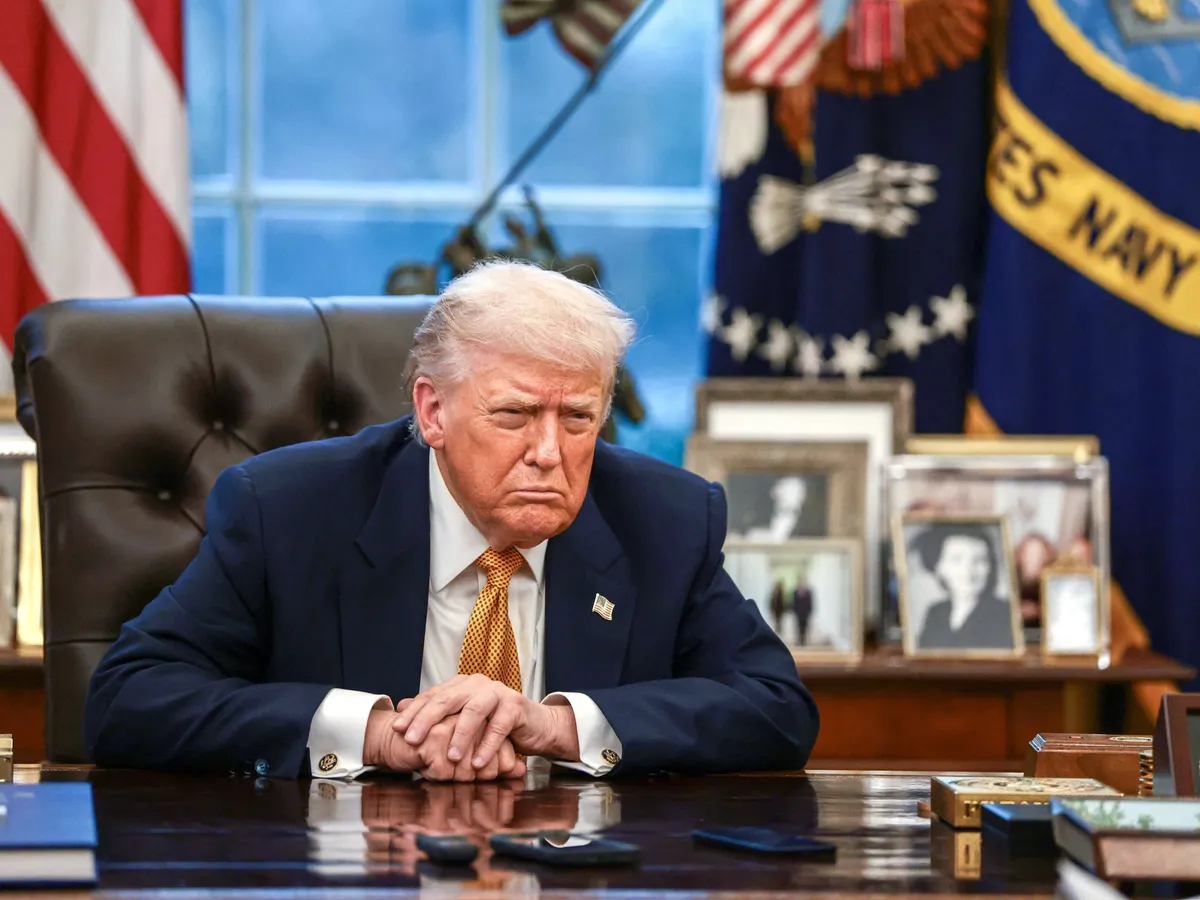
US president says 10 percent tariffs to be imposed on eight countries over opposition to US control of semi-autonomous Danish territory.U.SPresident Donald Trump [File: Evelyn Hockstein/Reuters]Published On 17 Jan 2026President Donald Trump has said a number of European allies will be hit with a series of increasing tariffs for opposing United States control of Greenland, as he escalates his campaign to acquire the semi-autonomous territory of Denmark.In a post on Truth Social on Saturday, Trump said 10 percent tariffs would come into effect on February 1 on Denmark, Finland, France, Germany, Norway, Sweden, the Netherlands and the United Kingdom.He added those tariffs would rise to 25 percent on June 1 and would continue until an agreement is reached for the US to buy Greenland.There was no immediate reaction from the European countries.Trump indicated in his lengthy social media post that the tariffs were being imposed in retaliation for trips to Greenland “for purposes unknown” by representatives from the countries, accusing all eight of playing a “very dangerous game” in opposing US control of the territory.The US had been trying to purchase Greenland “for over 150 years”, he said, adding that the “need to AQUIRE” the territory had become all the more essential for the planned US missile defence shield known as the Golden Dome, which would include the “possible protection of Canada”.Reporting from Washington, Al Jazeera’s Mike Hanna noted Trump’s move was “an unprecedented step”. “Clearly President Trump is taking this very seriously, imposing tariffs against the US’s closest allies,” he said, noting his characteristically capitalised warnings on the “safety, security and survival of our planet.Protests in Denmark and GreenlandTrump’s announcement came as thousands of people rallied in cities across Denmark to reject the Republican’s repeated threats to take control of Greenland.In the capital, Copenhagen, protesters waved the flags of Denmark and Copenhagen and chanted slogans such as “Kalaallit Nunaat” – the Arctic island’s name in Greenlandic.And in Greenland’s capital Nuuk, hundreds of people braved near-freezing temperatures, rain and icy streets to march in a rally in support of their own self-governance.Al Jazeera’s Rory Challands, who reported live from the Nuuk demonstration, said that for people returning from today’s protests, news of Trump “upping the ante” with his tariffs would be “very worrying indeed”.“They know that there is nothing that they could do if Donald Trump really did want to send in the troops,” he said.“Denmark knows there is nothing really that they could do if Donald Trump really wants to send the troops. What they have been trying to do over the last weeks is to reassure him that they can take Arctic security seriously,” he added.The protests took place hours after a bipartisan US congressional delegation in Copenhagen sought to reassure Denmark and Greenland of their support.“I hope that the people of the Kingdom of Denmark do not abandon their faith in the American people,” said Senator Chris Coons, adding that the US has respect for Denmark and NATO “for all we’ve done together.”Internal NATO spatThe threat of tariffs takes what Challands described as “an internal NATO” spat to a new level, marking a potentially dangerous escalation of tensions that will place further strain an alliance that dates to 1949 and provides a collective degree of security to Europe and North America.Since returning to the White House in January, Trump has insisted for months that the US should control Greenland. Earlier this week, he said that anything less than the Arctic island being in US hands would be “unacceptable.”According to the latest poll published in January of last year, 85 percent of Greenlanders oppose the territory joining the US, while only 6 percent were in favour.While Greenland and Denmark have rejected the idea of the island being “owned” by the US, efforts to get the US administration to change its stance have so far appeared to fail.The foreign ministers of Denmark and Greenland left a meeting with US Secretary of State Marco Rubio in Washington, DC, this week, saying that they “didn’t manage to change the American position”.
SRCAl Jazeera
LANGEN
LEANCenter
WORDS670
ENT12
SAT · 2026-01-17 · 16:41 GMTBRIEF NSR-2026-0117-8245
NSR-2026-0117-8245News Report·EN·Diplomatic
Trump pledges to slap tariffs on European allies over Greenland
In January 2026, President Trump announced the US would impose tariffs on eight European countries – Denmark, Finland, France, Germany, Norway, Sweden, the Netherlands, and the United Kingdom – for opposing US control of Greenland. The initial 10 percent tariffs are scheduled to begin February 1, increasing to 25 percent on June 1, and will remain until an agreement is reached for the US to buy Greenland.
Al Jazeera StaffAl JazeeraFiled 2026-01-17 · 16:41 GMTLean · CenterRead · 3 min
Al JazeeraFIG 01
Reading time
3min
Word count
670words
Sources cited
4cited
Entities identified
12entities
Quality score
100%
§ 01
Briefing Summary
AI-generatedNEWSAR · AI
In January 2026, President Trump announced the US would impose tariffs on eight European countries – Denmark, Finland, France, Germany, Norway, Sweden, the Netherlands, and the United Kingdom – for opposing US control of Greenland. The initial 10 percent tariffs are scheduled to begin February 1, increasing to 25 percent on June 1, and will remain until an agreement is reached for the US to buy Greenland. Trump stated the tariffs are in response to the countries sending representatives to Greenland "for purposes unknown" and obstructing the US acquisition of the territory. The US has been attempting to purchase Greenland for over 150 years, and Trump claims acquiring it is essential for the planned US missile defense shield. The announcement follows protests in Denmark and Greenland against Trump's threats to take control of the semi-autonomous Danish territory.
Confidence 0.90Sources 4Claims 5Entities 12
§ 02
Article analysis
Model · rule-basedFraming
Diplomatic
Economic Impact
Tone
Mixed Tone
AI-assessed
CalmNeutralAlarmist
Factuality
0.80 / 1.00
Factual
LowHigh
Sources cited
4
Well sourced
FewMany
§ 03
Key claims
5 extracted01
Tariffs would rise to 25 percent on June 1 and continue until an agreement is reached for the US to buy Greenland.
predictionPresident Donald Trump
Confidence
1.00
02
Trump indicated the tariffs were retaliation for trips to Greenland by representatives from the countries.
quotePresident Donald Trump
Confidence
1.00
03
The US had been trying to purchase Greenland “for over 150 years”.
quotePresident Donald Trump
Confidence
1.00
04
Trump said 10 percent tariffs would come into effect on February 1 on eight European countries.
quotePresident Donald Trump
Confidence
1.00
05
Thousands of people rallied in cities across Denmark to reject Trump's threats to take control of Greenland.
factual
Confidence
0.90
§ 04
Full report
3 min read · 670 words§ 05
Entities
12 identifiedKey playerOppositionContextPositiveNeutralNegative
Organizations1
Locations10
§ 06
Keywords & salience
9 termstariffs
1.00
greenland
1.00
us control
0.80
european allies
0.70
us foreign policy
0.60
trade war
0.60
protests
0.50
denmark
0.50
semi-autonomous territory
0.40
§ 07
Topic connections
Interactive graph Network visualization showing 51 related topics
View Full Graph Person Organization Location Event|Click node to navigate|Edge numbers = shared articles