NHS hospitals are using a new way of diagnosing bladder cancer that is faster, more accurate and more convenient for patients than the existing test.Doctors said the Galeas bladder test was a major breakthrough because it involved a urine test taken at home rather than an invasive procedure done at hospital which was uncomfortable for patients.Growing numbers of hospitals in England and Wales are switching to the test for a cancer that kills almost 6,000 people a year in the UK. Staff have found more people are being tested because it is a painless and convenient alternative to the standard method.Five hospitals have already adopted the test – University Hospitals of Leicester recently became the first NHS trust in England to do so – and at least 16 others will follow suit by the end of the year.Testing for bladder cancer is traditionally done by a cystoscopy, which involves a tube and camera being inserted into the body through the penis or urethra to let doctors examine the bladder. The discomfort involved meant quite a few patients decided not to have the procedure.However, the Galeas bladder test is non-invasive and involves only a urine sample. It is a DNA-based test that uses the 23 genes most commonly associated with bladder cancer.An NHS trial, involving 964 patients at seven hospitals in England and Scotland in 2024-25, found that it correctly identified whether 92% of participants had bladder cancer or not. It is the 11th most common cancer in the UK.In contrast, cystoscopy only had an 81% accuracy rate. That was because it was difficult to identify bladder cancers of differing shapes, shades and sizes with a manually-operated keyhole camera, said Jeff Bousfield, the chief executive of Nonacus, the biotech firm behind the Galeas bladder test. It hoped to improve the test’s 92% accuracy further as its NHS rollout continued, he added.Patients are referred for bladder cancer testing when they have haematuria – blood in their urine.“cystoscopy is an invasive investigation to look at the inside of the bladder,” said Jayne Douglas-Moore, a consultant urological surgeon at the Leicester NHS trust. “The patient is given an anaesthetic gel but otherwise remains awake. While it only takes one to two minutes it is an intimate examination and can be embarrassing or cause discomfort. It is commonly declined.”In contrast, the Galeas bladder test was better both for patients, who take it at home and post back their sample, and hospitals because it freed up their resources, said Douglas-Moore. The long-awaited non-invasive test was “a significant breakthrough” in diagnosing a cancer that affected more than 10,000 people a year, she added.The “convincing” results of the trial persuaded the Leicester trust to adopt the test last month for patients in whom blood in the urine is identified using a urine dipstick.“Of the results received so far patients have received their results in 16 days, which exceeds the NHS 28-day faster diagnosis standard [for cancer]. This is based on low numbers as we are only three weeks in but shows promise,” said Douglas-Moore.Her trust’s early data shows that the Galeas bladder test may be 50% faster at diagnosing the disease than a cystoscopy.The new test was developed by Prof Richard Bryan, a urologist turned academic who runs the University of Birmingham’s bladder cancer research centre, and his colleague Dr Doug Ward.Tony Hickson, the chief business officer at Cancer Research UK, said it co-funded initial studies into the new test “because of its potential to dramatically improve how we detect bladder cancers, making the process kinder and quicker for patients”.He added: “Studies are ongoing, but using this test could replace some of the unpleasant and invasive procedures patients currently experience when getting their symptoms checked out.“The test could also catch cases earlier, as it can be done when someone first visits their GP, rather than having to arrange a separate hospital appointment. Innovations like this are critical for improving how we diagnose cancer cases.”Prof Frankie Swords, NHS England’s national medical director, said: “The NHS has a long history of adopting innovations to improve patient care, and this is another great example of NHS healthcare professionals taking the initiative and trialling new technologies to help to diagnose and treat cancer earlier.”
SRCThe Guardian - World News
LANGEN
LEANCenter-Left
WORDS702
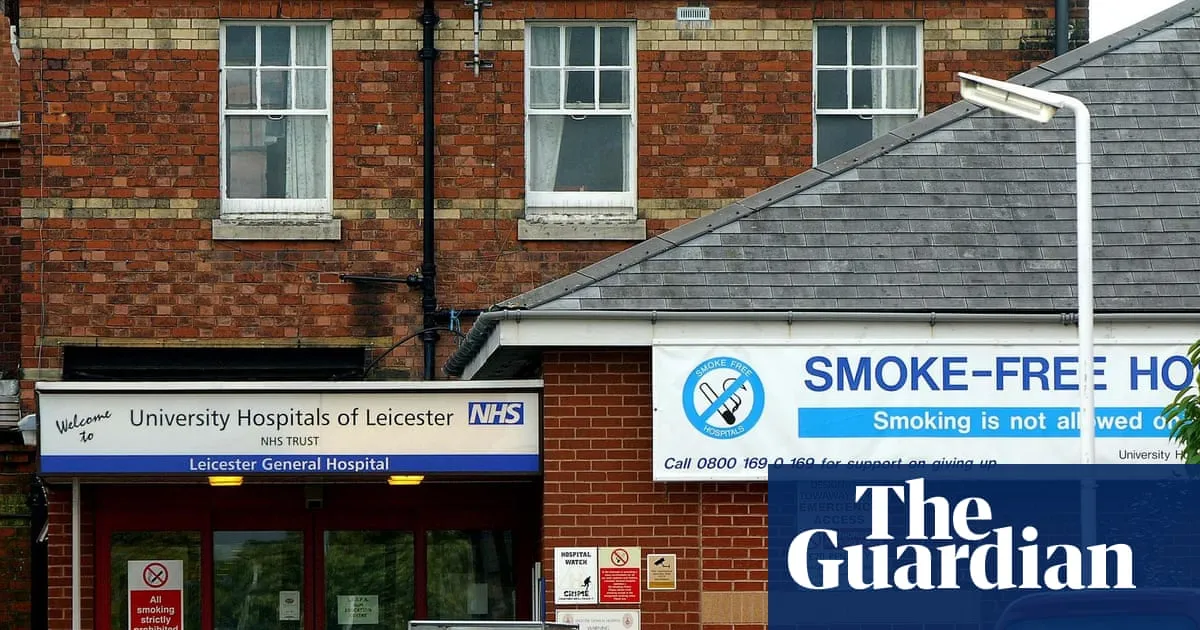
ENT11
SUN · 2026-06-07 · 14:12 GMTBRIEF NSR-2026-0607-82476
NSR-2026-0607-82476News Report·EN·Public Health
NHS hospitals adopt faster, more accurate at-home bladder cancer test
Five NHS hospitals in England and Wales are adopting the Galeas bladder test, a new, non-invasive urine test for bladder cancer. This DNA-based test, which analyzes 23 genes associated with the cancer, is faster, more accurate (92% in trials compared to 81% for cystoscopy), and more convenient for patients than the traditional, uncomfortable cystoscopy procedure.
Denis Campbell Health policy editorThe Guardian - World NewsFiled 2026-06-07 · 14:12 GMTLean · Center-LeftRead · 3 min
The Guardian - World NewsFIG 01
Reading time
3min
Word count
702words
Sources cited
3cited
Entities identified
11entities
Quality score
100%
§ 01
Briefing Summary
AI-generatedNEWSAR · AI
Five NHS hospitals in England and Wales are adopting the Galeas bladder test, a new, non-invasive urine test for bladder cancer. This DNA-based test, which analyzes 23 genes associated with the cancer, is faster, more accurate (92% in trials compared to 81% for cystoscopy), and more convenient for patients than the traditional, uncomfortable cystoscopy procedure. Developed by researchers at the University of Birmingham and supported by Cancer Research UK, the Galeas test allows patients to provide a sample at home, potentially leading to earlier diagnosis and freeing up hospital resources. Early data suggests it can deliver results significantly faster than the current NHS standard.
Confidence 0.90Sources 3Claims 5Entities 11
§ 02
Article analysis
Model · rule-basedFraming
Public Health
Technology
Tone
Measured
AI-assessed
CalmNeutralAlarmist
Factuality
0.80 / 1.00
Factual
LowHigh
Sources cited
3
Well sourced
FewMany
§ 03
Key claims
5 extracted01
The Galeas bladder test is a non-invasive DNA-based urine test, while cystoscopy is an invasive procedure involving a tube and camera.
factual
Confidence
0.95
02
NHS hospitals are adopting a new at-home bladder cancer test (Galeas) that is faster, more accurate, and more convenient than the traditional cystoscopy.
factual
Confidence
0.95
03
Patients using the Galeas test have received results in an average of 16 days, exceeding the NHS 28-day faster diagnosis standard.
factual
Confidence
0.90
04
An NHS trial found the Galeas test correctly identified bladder cancer in 92% of participants, compared to 81% accuracy for cystoscopy.
statisticNHS trial
Confidence
0.90
05
The Galeas test is a 'significant breakthrough' in diagnosing bladder cancer, which affects over 10,000 people a year in the UK.
quoteJayne Douglas-Moore
Confidence
0.85
§ 04
Full report
3 min read · 702 words§ 05
Entities
11 identifiedKey playerOppositionContextPositiveNeutralNegative
§ 06
Keywords & salience
10 termsbladder cancer test
1.00
galeas bladder test
0.90
nhs hospitals
0.80
non-invasive test
0.70
at-home testing
0.70
dna-based test
0.60
urine test
0.60
diagnostic accuracy
0.50
cystoscopy
0.50
haematuria
0.40
§ 07
Topic connections
Interactive graph Network visualization showing 19 related topics
View Full Graph Person Organization Location Event|Click node to navigate|Edge numbers = shared articles