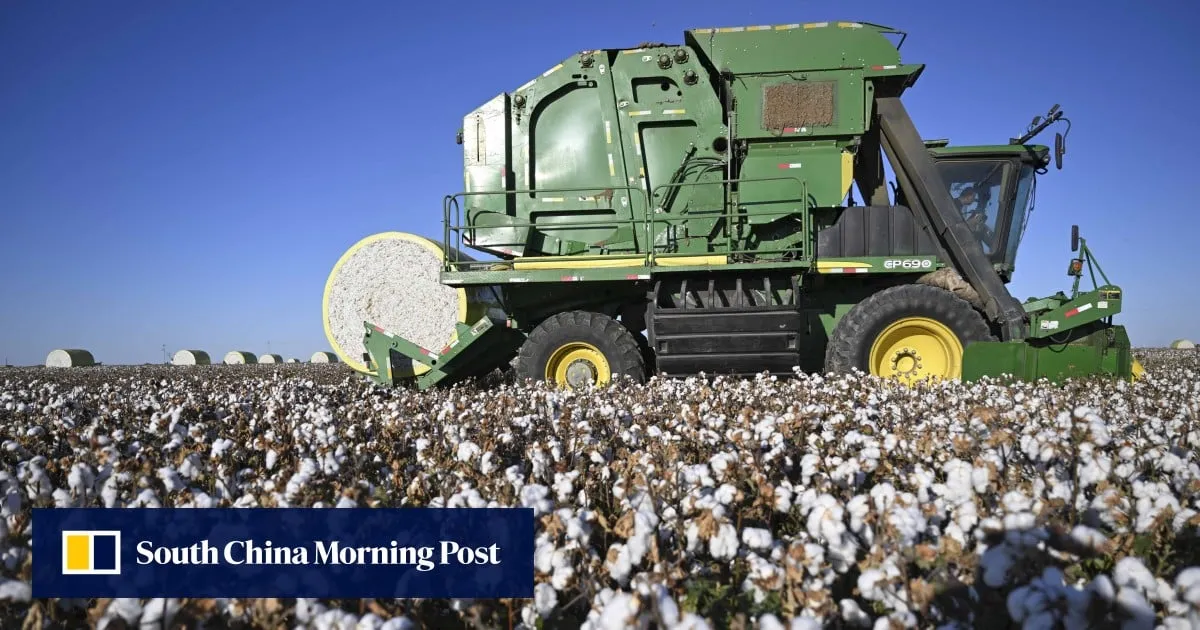
Scientists report potential to boost cotton yield by nearly a quarter after inserting stress-resistance gene from a species of steppe moss2-MIN READ2-MIN0ListenPublished: 4:00pm, 8 Jun 2026Chinese scientists who inserted a gene from desert moss into cotton say their innovation can boost yields by nearly a quarter through protection against a pervasive fungal disease that threatens crops worldwide.The team, led by researchers from the Chinese Academy of Sciences’ Xinjiang Institute of Ecology and Geography (XIEG), inserted a stress-resistance gene from a species of steppe moss that thrives in the deserts of the Xinjiang Uygur autonomous region into cotton plants.The resulting genetically modified plant showed improved resistance to Verticillium wilt, sometimes known as “cotton cancer”, which can also affect other crops, including fruits and vegetables.01:08Xinjiang, China’s top cotton producerThe transgenic cotton had “an approximate 23.8 per cent yield increase relative to non-transgenic counterparts under pathogen infection conditions”, according to the team’s paper published in the peer-reviewed Plant Biotechnology Journal in April.
SRCSouth China Morning Post
LANGEN
LEANCenter-Right
WORDS159
ENT10
MON · 2026-06-08 · 08:00 GMTBRIEF NSR-2026-0608-82638
NSR-2026-0608-82638News Report·EN·Technology
Chinese team injects desert moss gene into Xinjiang cotton to beat fungus, boost output
Chinese scientists have developed genetically modified cotton by inserting a stress-resistance gene from desert moss into cotton plants. This innovation, led by researchers from the Chinese Academy of Sciences’ Xinjiang Institute of Ecology and Geography, aims to protect cotton crops from Verticillium wilt, a significant fungal disease.
Victoria BelaSouth China Morning PostFiled 2026-06-08 · 08:00 GMTLean · Center-RightRead · 1 min
South China Morning PostFIG 01
Reading time
1min
Word count
159words
Sources cited
1cited
Entities identified
10entities
Quality score
100%
§ 01
Briefing Summary
AI-generatedNEWSAR · AI
Chinese scientists have developed genetically modified cotton by inserting a stress-resistance gene from desert moss into cotton plants. This innovation, led by researchers from the Chinese Academy of Sciences’ Xinjiang Institute of Ecology and Geography, aims to protect cotton crops from Verticillium wilt, a significant fungal disease. In trials, the transgenic cotton demonstrated an approximate 23.8% increase in yield compared to non-transgenic varieties when infected with the pathogen. This breakthrough, published in the Plant Biotechnology Journal, holds potential to significantly boost cotton production in Xinjiang, China's leading cotton-producing region, and could also benefit other susceptible crops.
Confidence 0.90Sources 1Claims 4Entities 10
§ 02
Article analysis
Model · rule-basedFraming
Technology
Economic Impact
Tone
Measured
AI-assessed
CalmNeutralAlarmist
Factuality
0.90 / 1.00
Factual
LowHigh
Sources cited
1
Limited
FewMany
§ 03
Key claims
4 extracted01
The transgenic cotton had an approximate 23.8 per cent yield increase relative to non-transgenic counterparts under pathogen infection conditions.
statisticChinese scientists' paper
Confidence
1.00
02
The genetically modified cotton showed improved resistance to Verticillium wilt.
factualChinese scientists
Confidence
1.00
03
Chinese scientists inserted a stress-resistance gene from desert moss into cotton plants.
factualChinese scientists
Confidence
1.00
04
The innovation has the potential to boost cotton yields by nearly a quarter.
predictionScientists
Confidence
0.90
§ 04
Full report
1 min read · 159 words§ 05
Entities
10 identifiedKey playerOppositionContextPositiveNeutralNegative
Organizations3
§ 06
Keywords & salience
10 termsxinjiang cotton
1.00
desert moss gene
0.90
fungal disease resistance
0.90
verticillium wilt
0.80
genetic modification
0.70
crop yield increase
0.70
stress-resistance gene
0.60
plant biotechnology journal
0.50
chinese academy of sciences
0.40
xinjiang institute of ecology and geography
0.40
§ 07
Topic connections
Interactive graph No topic relationship data available yet. This graph will appear once topic relationships have been computed.