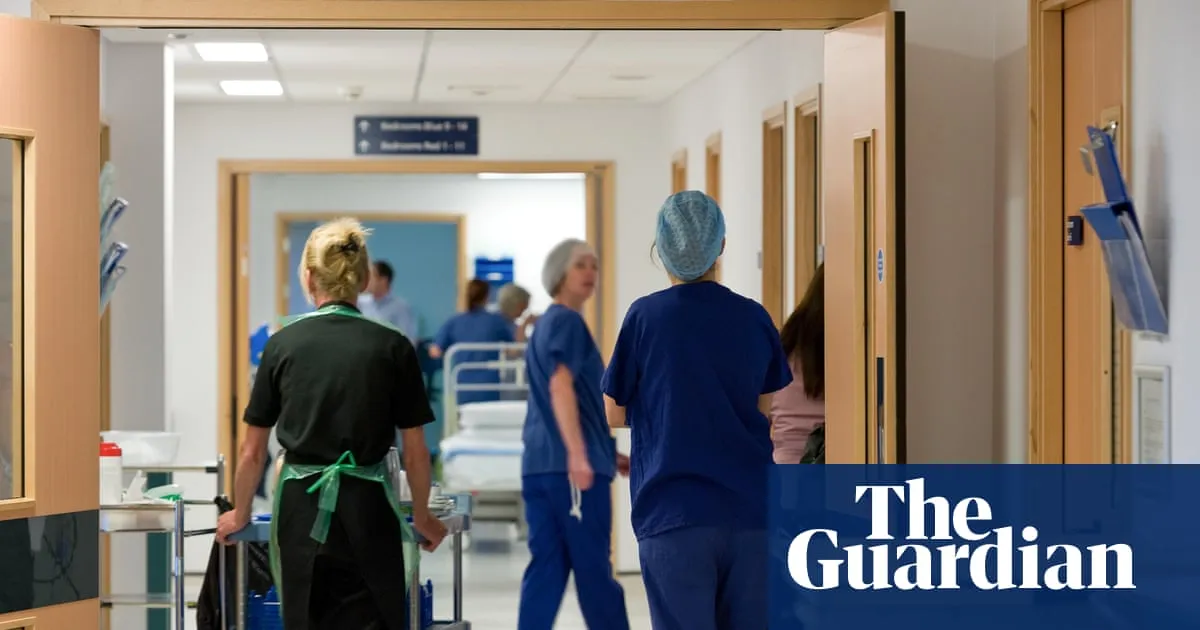
The findings of the report into Blackpool Victoria hospital are as shocking as they are damning: a culture of bullying, racial discrimination and harassment that has contributed to a staff exodus with a direct impact on patients. The treatment of chronic disease, including Parkinson’s, were just some of the areas blighted by what appears to be a toxic culture.But the Royal College of Physicians report, leaked to the Guardian, exposes much broader challenges for the NHS – and particularly for hospitals in the most deprived corners of Britain.Clinicians in places such as Blackpool are overwhelmed by generational ill health and entrenched poverty, a crisis that is deepening in many parts of the country. Their ability to respond is often hampered by their struggle to attract the best staff.The issues are complex. Hospitals in poorer areas are flooded with people who have chronic health problems, including higher rates of depression, chronic obstructive pulmonary disease (COPD) and other respiratory conditions worsened by living in damp homes.The worst-performing NHS trusts in the league table broadly tally with levels of deprivation.League table of NHS TrustsBlackpool teaching hospitals NHS foundation trust, and University hospitals Birmingham NHS foundation trust were in the 10 worst-performing trusts, with Hull University teaching hospitals NHS trust in 11th from bottom.In the 2025 indices of multiple deprivation, seven neighbourhoods in Blackpool ranked among the top 10 most deprived in England. Kingston upon Hull and Birmingham were among the local authorities with the highest proportions of neighbourhoods among the most deprived in England.The problem is exacerbated by inequalities in primary care. The current formula for distributing GP funding, known as the Carr-Hill formula, uses expected workload of GP practices to determine distribution of funding, but it is based on outdated figures and has left people in deprived areas and coastal towns with the fewest GPs.A study last year by the Royal College of General Practitioners found that GPs in deprived areas were responsible for a staggering 2,450 patients each on average, 300 more than in affluent areas of England. When patients struggle to get a GP appointment, they often end up in A&E.“People who have choices who are affluent want to live in affluent areas so won’t necessarily choose to move to the places in need,” said one NHS manager.Another in north-west England said poverty was having a “massive impact” on the quality of healthcare: “We can’t seem to attract GPs into our population, we’ve got a lot of homegrown GPs, so we’re quite understaffed per head of population which can have issues on [patient] access and other things.”Researchers from Lancaster University also found that hospital facilities and resources, geographical location, and reputation all played a role in the recruitment and retention of medics.Last year the UKFPO (UK Foundation Programme) introduced a new system for allocating newly qualified doctors, which was previously based on academic achievement and further study.Under the new system, applicants are instead given a random number, which determines where they will spend the first two years of their medical careers. With more demand for places at the best hospitals, and those in big cities, the system, although not without its critics, has made it less likely that the brightest and best new doctors will never end up at the worst-performing hospitals.There is also an income stream issue; research published in the BMJ found that hospitals serving more deprived populations struggled to generate private income. Researchers found an “uneven distribution” of income from private patients and charitable donations across NHS trusts, which was linked to deprivation levels.Wes Streeting, the health secretary, is leading what he called the biggest NHS transformation plan in a generation in an effort to move care away from struggling hospitals and into communities – and from treatment to prevention.But the challenge is stark. Britain has the lowest life expectancy in western Europe and one of the highest tallies among rich countries for preventable deaths. NHS bodies in the regions have been ordered to slash their budgets in half and cut as many as 13,500 jobs, leaving senior figures alarmed about how this squares with Streeting’s focus on community care.One NHS manager, who did not want to be named, welcomed the government’s “real focus” on addressing health inequalities but said questions remained about whether more deprived areas of the country would see more funding. Another described the cuts as “brutal”.
SRCThe Guardian - World News
LANGEN
LEANCenter-Left
WORDS723
ENT3
WED · 2025-12-03 · 18:33 GMTBRIEF NSR-2025-1203-827
NSR-2025-1203-827News Report·EN·Public Health
Blackpool report: why do England’s deprived areas have the most troubled hospitals?
A leaked Royal College of Physicians report on Blackpool Victoria hospital reveals a toxic culture of bullying and discrimination impacting patient care, highlighting broader challenges for NHS hospitals in deprived areas of England. These hospitals, like those in Blackpool, Birmingham and Hull, face overwhelming demand due to generational ill health and poverty, struggling to attract and retain staff.
Hannah Al-Othman and Josh HallidayThe Guardian - World NewsFiled 2025-12-03 · 18:33 GMTLean · Center-LeftRead · 3 min
The Guardian - World NewsFIG 01
Reading time
3min
Word count
723words
Sources cited
4cited
Entities identified
3entities
Quality score
100%
§ 01
Briefing Summary
AI-generatedNEWSAR · AI
A leaked Royal College of Physicians report on Blackpool Victoria hospital reveals a toxic culture of bullying and discrimination impacting patient care, highlighting broader challenges for NHS hospitals in deprived areas of England. These hospitals, like those in Blackpool, Birmingham and Hull, face overwhelming demand due to generational ill health and poverty, struggling to attract and retain staff. The report links poor NHS trust performance to high levels of deprivation, exacerbated by inequalities in primary care. An outdated GP funding formula leaves deprived areas with fewer GPs, leading to increased A&E visits. This creates a cycle where areas with the greatest need struggle to provide adequate healthcare due to systemic issues and resource disparities.
Confidence 0.90Sources 4Claims 5Entities 3
§ 02
Article analysis
Model · rule-basedFraming
Public Health
Economic Impact
Tone
Mixed Tone
AI-assessed
CalmNeutralAlarmist
Factuality
0.70 / 1.00
Factual
LowHigh
Sources cited
4
Well sourced
FewMany
§ 03
Key claims
5 extracted01
GPs in deprived areas were responsible for 2,450 patients each on average, 300 more than in affluent areas.
statisticRoyal College of General Practitioners
Confidence
1.00
02
Seven neighbourhoods in Blackpool ranked among the top 10 most deprived in England in 2025.
statistic
Confidence
1.00
03
Blackpool Victoria hospital has a culture of bullying, racial discrimination and harassment.
factualRoyal College of Physicians report
Confidence
0.90
04
Hospitals in poorer areas are flooded with people who have chronic health problems.
factual
Confidence
0.80
05
Poverty was having a “massive impact” on the quality of healthcare.
quoteNHS manager
Confidence
0.70
§ 04
Full report
3 min read · 723 words§ 05
Entities
3 identifiedKey playerOppositionContextPositiveNeutralNegative
Organizations1
§ 06
Keywords & salience
10 termsdeprived areas
0.90
nhs
0.80
hospital culture
0.80
poverty
0.70
health inequalities
0.70
gp funding
0.60
chronic disease
0.60
toxic culture
0.50
staff shortages
0.50
blackpool
0.40
§ 07
Topic connections
Interactive graph No topic relationship data available yet. This graph will appear once topic relationships have been computed.