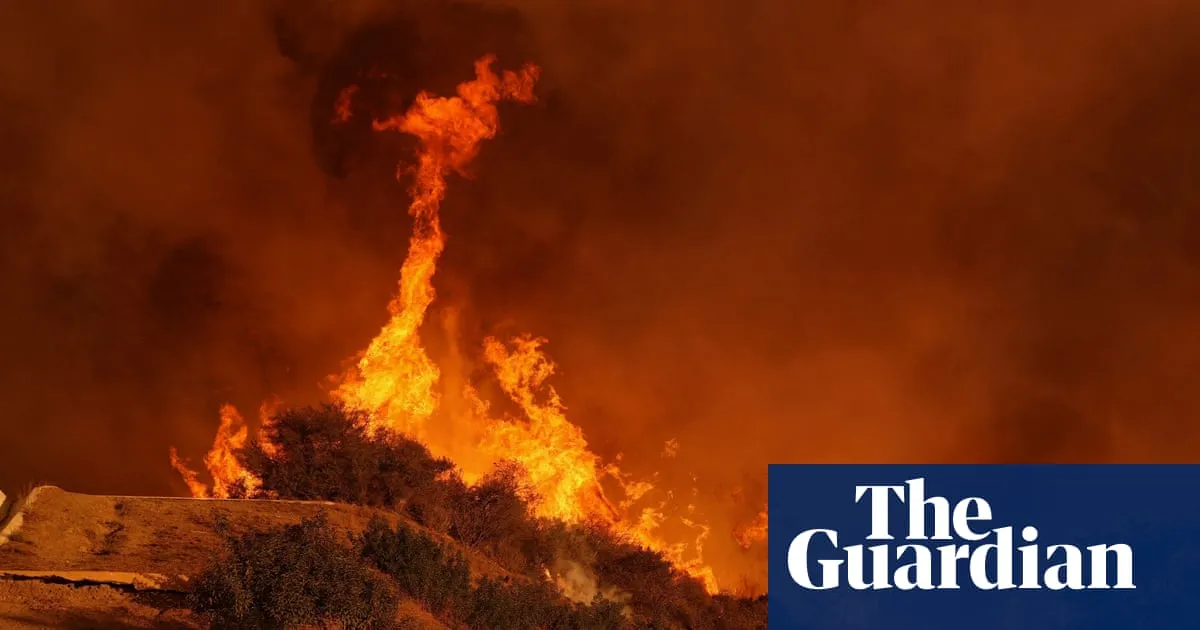
The trial of a 29-year-old charged with sparking a wildfire that went on to become the deadly Palisades inferno, the most destructive blaze in Los Angeles history, is set to begin on Monday in a case that has gripped the city as Angelenos seek answers more than a year after the deadly fire.Jonathan Rinderknecht, an occasional Uber driver, is accused of starting a small blaze on New Year’s Day 2025, later dubbed the Lachman fire. Although the Los Angeles Fire Department extinguished the fire on 2 January, it reignited five days later due to high winds and tinderbox conditions after burning undetected deep in the dry hillsides.This type of fire is known as a “holdover” or “zombie” fire, and the trial is expected to hinge on whether a jury finds Rinderknecht responsible for knowing that the small wildfire he lit could balloon into a deadly blaze that ultimately killed 12 people.“This isn’t so unusual, it’s not on the outer limits of foreseeable. We have Santa Ana winds every year,” Aya Gruber, a criminal law expert and the Harold Medill Heimbaugh professor of law at the University of Southern California, told the Guardian in January. “You could also argue that this type of zombie fire is very unusual, so that is what it would turn on.”In October, a grand jury charged Rinderknecht with three counts – all felonies – for lighting a fire that destroyed national, state and private lands and buildings and killed 12. If found guilty, Rinderknecht could face between five and 45 years in prison. Rinderknecht has been in federal custody since his arrest on 7 October.Federal prosecutors are expected to argue that Rinderknecht was upset over a failed relationship and his lack of plans for New Year’s Eve, when he allegedly lit the Lachman blaze, according to a pre-trial memo US attorneys filed on 29 April.Witnesses reported that Rinderknecht was agitated and driving erratically while working for Uber on New Year’s Eve, according to prosecutors. He also allegedly spoke about Luigi Mangione, the accused murderer of UnitedHealthcare chief executive officer Brian Thompson, and later told investigators someone might commit arson in the Palisades “out of resentment of the rich enjoying their money as ‘we’re basically being enslaved by them’”.The trial will be heard before US district judge Anne Hwang, who was appointed to the bench by Joe Biden in 2024.In the run-up to the trial, Hwang expressed concerns that jurors may find the government’s theory of the case confusing – if, for example, they find Rinderknecht guilty of lighting the Lachman fire but don’t find him responsible for the Palisades blaze.Hwang also barred certain evidence from the trial, including discussion of alleged negligence by the fire department for failing to fully extinguish the smaller Lachman fire.Rinderknecht’s attorney, Steven Haney, has said he believes his client is being “scapegoated” by the Los Angeles Fire Department. Rinderknecht’s defense was planning to present evidence including testimony from a firefighter, fire captain and a state park ranger gathered as part of a lawsuit by fire victims against the city, which alleged the Lachman fire was visibly smoldering when the fire department left the blaze. But that evidence will no longer be permitted in court.Hwang has also barred prosecutors from introducing evidence including AI-generated images Rinderknecht allegedly created of a fire a few months before the incident.In October, just weeks after Rinderknecht was charged, the Los Angeles Times published a series of bombshell allegations, citing concerns from firefighters that the Lachman fire was not fully contained before they were ordered by superiors to leave the burn area. Two months later, the Times published a second investigation finding that the fire department’s “after action” report was watered down over the course of seven drafts.Hwang has said the defense can discuss other fire department actions, and Rinderknecht’s attorney says he plans to argue the government doesn’t have solid evidence linking his client to the Lachman fire, and cited fireworks that were heard in the area.In a 1 June press release, the US attorney’s office said law enforcement determined Rinderknecht set the Lachman fire “using witness statements, video surveillance, cellphone data, and analysis of fire dynamics and patterns at the scene”.
SRCThe Guardian - World News
LANGEN
LEANCenter-Left
WORDS696
ENT12
MON · 2026-06-08 · 13:00 GMTBRIEF NSR-2026-0608-82713
NSR-2026-0608-82713News Report·EN·Legal & Judicial
Trial begins for man accused of sparking LA’s deadly Palisades fire
The trial of Jonathan Rinderknecht, 29, has begun, who is accused of starting the Lachman fire on New Year's Day 2025, which later reignited and became the deadly Palisades fire, Los Angeles's most destructive wildfire. Prosecutors allege Rinderknecht, an Uber driver, lit the initial blaze due to personal distress.
Cecilia NowellThe Guardian - World NewsFiled 2026-06-08 · 13:00 GMTLean · Center-LeftRead · 3 min
The Guardian - World NewsFIG 01
Reading time
3min
Word count
696words
Sources cited
3cited
Entities identified
12entities
Quality score
100%
§ 01
Briefing Summary
AI-generatedNEWSAR · AI
The trial of Jonathan Rinderknecht, 29, has begun, who is accused of starting the Lachman fire on New Year's Day 2025, which later reignited and became the deadly Palisades fire, Los Angeles's most destructive wildfire. Prosecutors allege Rinderknecht, an Uber driver, lit the initial blaze due to personal distress. The trial is expected to focus on whether Rinderknecht can be held responsible for the subsequent "holdover" fire, which killed 12 people. Rinderknecht faces felony charges and a potential prison sentence of five to 45 years. The defense claims Rinderknecht is being scapegoated and questions the evidence linking him to the Lachman fire, while the judge has excluded certain evidence, including allegations of fire department negligence.
Confidence 0.90Sources 3Claims 5Entities 12
§ 02
Article analysis
Model · rule-basedFraming
Legal & Judicial
Human Interest
Tone
Mixed Tone
AI-assessed
CalmNeutralAlarmist
Factuality
0.70 / 1.00
Factual
LowHigh
Sources cited
3
Well sourced
FewMany
§ 03
Key claims
5 extracted01
The defense believes the client is being "scapegoated" by the Los Angeles fire department.
quoteSteven Haney (Rinderknecht's attorney)
Confidence
1.00
02
The fire, which reignited due to high winds and dry conditions, ultimately killed 12 people.
factual
Confidence
1.00
03
A trial has begun for a 29-year-old man accused of starting the deadly Palisades fire.
factual
Confidence
1.00
04
The trial is expected to hinge on whether the jury finds the defendant responsible for knowing the initial fire could become a deadly blaze.
factual
Confidence
0.90
05
Prosecutors allege the defendant lit the initial blaze on New Year's Day 2025 due to a failed relationship and lack of plans.
factualFederal prosecutors
Confidence
0.90
§ 04
Full report
3 min read · 696 words§ 05
Entities
12 identifiedKey playerOppositionContextPositiveNeutralNegative
People6
Organizations3
Locations1
§ 06
Keywords & salience
9 termspalisades fire
1.00
wildfire
0.90
holdover fire
0.80
zombie fire
0.80
arson trial
0.70
los angeles
0.60
criminal law
0.50
santa ana winds
0.40
uber driver
0.40
§ 07
Topic connections
Interactive graph No topic relationship data available yet. This graph will appear once topic relationships have been computed.