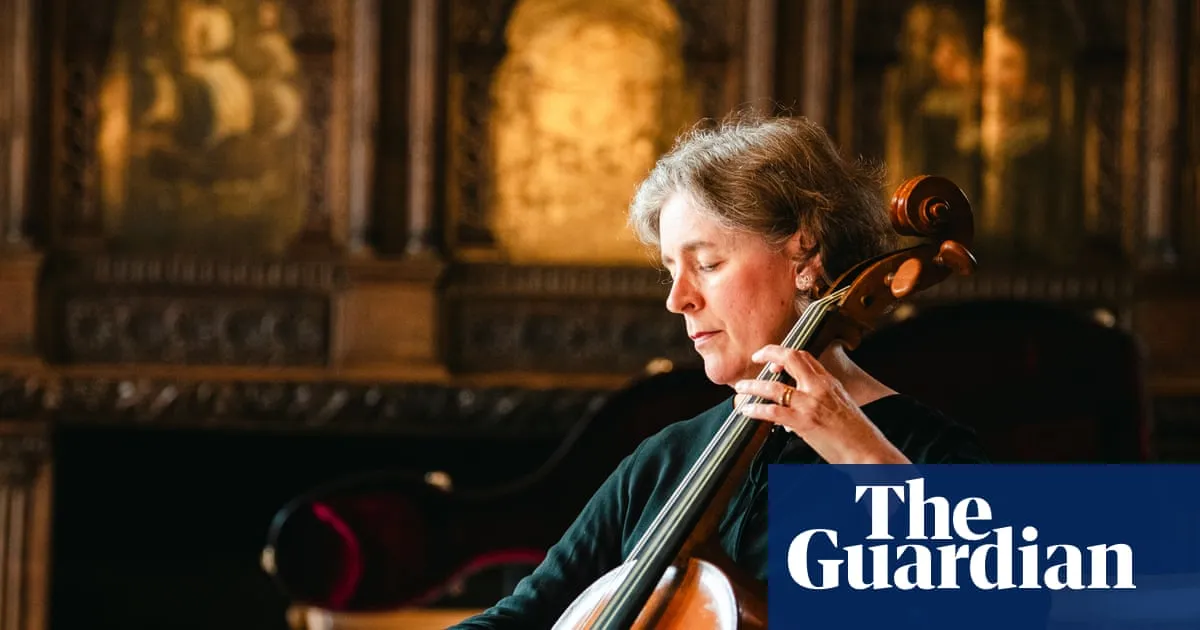
He was one of Britain’s greatest landscape painters, with masterpieces including The Hay Wain and View on the Stour near Dedham But John Constable was also a keen musician – and his personal cello, which he commissioned, is to be played in public for the first time in 100 years after its restoration.The instrument was made in 1802 and it is thought Constable may have played it in a local band in his home village of East Bergholt in Suffolk.1802 was a significant year for the artist: it was when he wrote about becoming a “natural painter” and he had his first work accepted at the Royal Academy, catalogued as “A Landscape”.The cello was made by John Dunthorne Sr, who was the artist’s neighbour, early mentor and friend. He worked as a plumber, glazier and carpenter, but he was also a painter and skilled maker of musical instruments.The two men painted together, taking their easels into the lanes and fields of East Bergholt, and their letters reflect an enduring friendship. Constable reported his progress in the London art world, telling Dunthorne in 1799 that he had been accepted into the Royal Academy Schools.Constable’s sketchbook featuring a sketch of John Dunthorne Sr, the cello maker. Photograph: Victoria and Albert MuseumConstable added: “I hope by the time the leaves are on the trees, I shall be better qualified to attack them than I was last summer.”A page in one of Constable’s sketchbooks bears a sketch of two musicians, including a cellist – possibly himself and his instrument, art historians suggest. Small wooden figures, thought to have been carved and painted by Constable in his youth, are believed to represent singers of the East Bergholt church choir.The cello entered the Ipswich Collection, owned by the local council, in 1942. It had been badly restored in 1926 and was no longer playable. Now, 100 years later, the Friends of Ipswich Museum have raised more than £4,000 to fund its restoration.Emma Roodhouse, a curator at Colchester and Ipswich Museums, said the instrument was recorded as having been made for Constable. “It’s remarkable in that it survives with all its fittings,” she said.“Dunthorne was really pivotal for Constable. He’s the figure early on in his career that encourages him and he’s the one that Constable turns to and writes some of his most poignant passages about the fact that he’s going to become this natural painter. But, as a working-class man who’s self-taught, I don’t think his story is as widely known.”One contemporary was particularly patronising of him: “Mr Dunthorne possessed more intelligence than is often found in the class of life to which he belonged.”John Constable, aged 20, by artist Daniel Gardner. Photograph: Heritage Images/Getty ImagesBut Constable valued their friendship. Dunthorne offered him a connection to his beloved Suffolk landscape, as reflected in a letter written in 1800. Constable wrote to him from London, pining for home: “This fine weather almost makes me melancholy; it recalls so forcibly every scene we have visited and drawn together.”Dunthorne outlived his wife, his four children and Constable. He died in 1844 and was buried at St Mary’s Church in East Bergholt. His obituary in the Ipswich Journal remembered him as a man of great ability.Roodhouse said: “As a self-taught artist and musical instrument maker, he is worthy of more than just a side note in Constable’s story.”The cello has been brought back to life by James and Sylvie Fawcett, expert restorers based in Suffolk, while the cellist Melanie Woodcock, who grew up locally, has been playing it during its restoration.Melanie Woodcock, who grew up locally, has been playing the cello during its restoration. Photograph: Ali Smith for the GuardianWoodcock said: “They have done the most fantastic job. It sounds better than we could have hoped for. It’s a very rich, lovely sound. I grew up locally. Constable’s very much of this area. Although he was an amateur musician, it’s incredible to think that it was his instrument and that he could have played it.”Woodcock will play the cello at a public event on 10 June, alongside readings by the author Susan Owens from her new book on Constable.The instrument will then be displayed at Christchurch Mansion in Ipswich from 17 June until 4 October as part of the year-long Constable 250 festival to mark the 250th anniversary of his birth.
SRCThe Guardian - World News
LANGEN
LEANCenter-Left
WORDS722
ENT12
TUE · 2026-06-09 · 07:00 GMTBRIEF NSR-2026-0609-82913
NSR-2026-0609-82913News Report·EN·Human Interest
Cello belonging to artist John Constable to be played for first time in 100 years
A cello commissioned by the renowned landscape painter John Constable, made in 1802 by his friend and mentor John Dunthorne Sr., will be played publicly for the first time in 100 years following its restoration. Constable, known for masterpieces like "The Hay Wain," was also a keen musician, and it's believed he may have played this cello in a local band in his Suffolk village.
Dalya AlbergeThe Guardian - World NewsFiled 2026-06-09 · 07:00 GMTLean · Center-LeftRead · 3 min
The Guardian - World NewsFIG 01
Reading time
3min
Word count
722words
Sources cited
3cited
Entities identified
12entities
Quality score
100%
§ 01
Briefing Summary
AI-generatedNEWSAR · AI
A cello commissioned by the renowned landscape painter John Constable, made in 1802 by his friend and mentor John Dunthorne Sr., will be played publicly for the first time in 100 years following its restoration. Constable, known for masterpieces like "The Hay Wain," was also a keen musician, and it's believed he may have played this cello in a local band in his Suffolk village. The instrument, which entered the Ipswich Collection in 1942, was restored thanks to over £4,000 raised by the Friends of Ipswich Museum. Cellist Melanie Woodcock has been playing the restored cello, noting its rich sound. The cello will be played at a public event on June 10th and then displayed at Christchurch Mansion in Ipswich from June 17th to October 4th as part of the Constable 250 festival.
Confidence 0.90Sources 3Claims 5Entities 12
§ 02
Article analysis
Model · rule-basedFraming
Human Interest
Tone
Measured
AI-assessed
CalmNeutralAlarmist
Factuality
0.70 / 1.00
Factual
LowHigh
Sources cited
3
Well sourced
FewMany
§ 03
Key claims
5 extracted01
Emma Roodhouse states that John Dunthorne Sr. was pivotal for Constable's early career and encouragement.
quoteEmma Roodhouse
Confidence
1.00
02
The Friends of Ipswich Museum raised over £4,000 for the cello's restoration.
factual
Confidence
1.00
03
The cello entered the Ipswich Collection in 1942, was badly restored in 1926, and was unplayable until recently.
factual
Confidence
1.00
04
The cello was made in 1802 by John Dunthorne Sr., Constable's neighbor, mentor, and friend.
factual
Confidence
1.00
05
John Constable's personal cello, commissioned by him, will be played in public for the first time in 100 years after restoration.
factual
Confidence
1.00
§ 04
Full report
3 min read · 722 words§ 05
Entities
12 identifiedKey playerOppositionContextPositiveNeutralNegative
People3
Organizations6
§ 06
Keywords & salience
8 termsjohn constable
1.00
cello restoration
0.90
landscape painter
0.80
musical instrument
0.70
john dunthorne sr
0.60
natural painter
0.50
east bergholt
0.50
ipswich collection
0.40
§ 07
Topic connections
Interactive graph No topic relationship data available yet. This graph will appear once topic relationships have been computed.