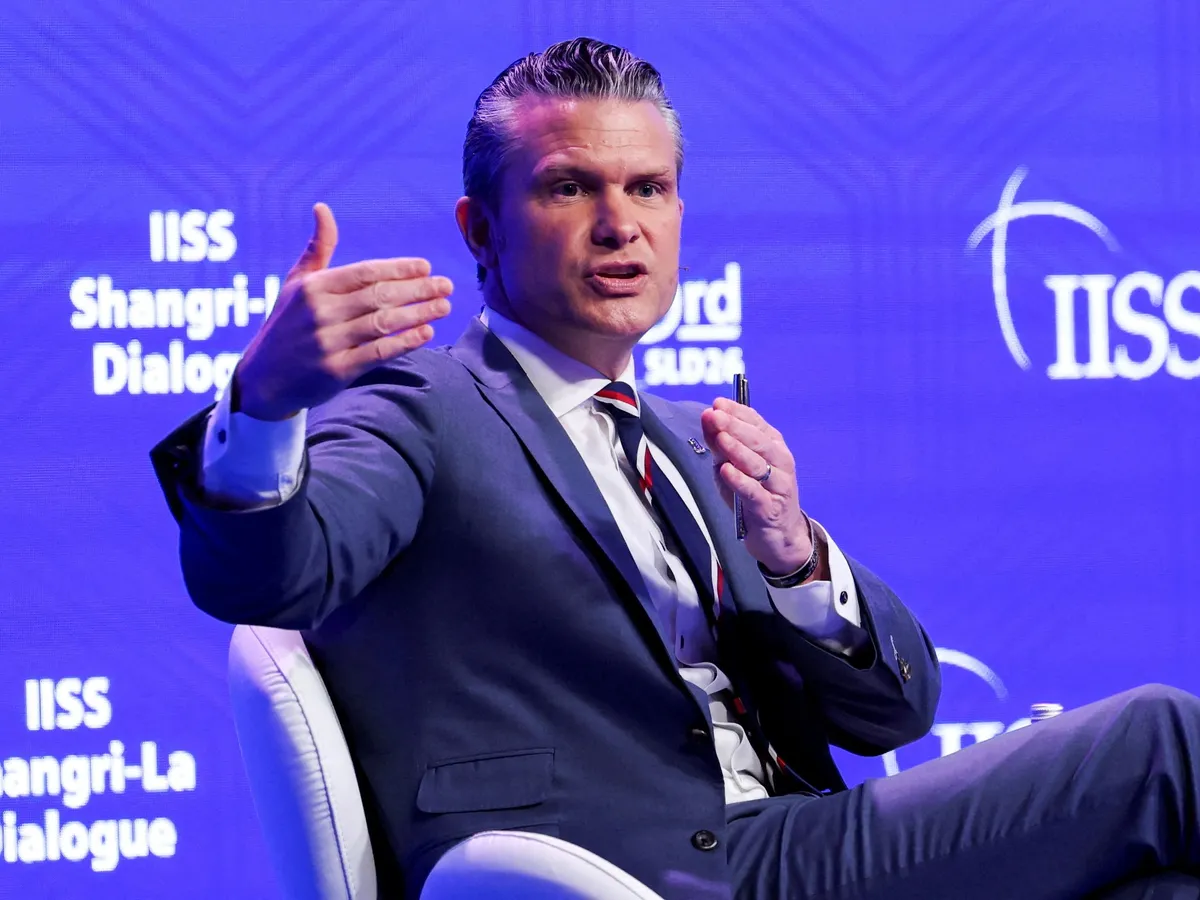
Hegseth’s visit to Guantanamo Bay, Cuba, comes as the Trump administration increases pressure against Cuba’s government.US Secretary of Defense Pete Hegseth speaks at the IISS Shangri-La Dialogue security summit in Singapore, May 30, 2026 [File: Edgar Su/Reuters]Published On 10 Jun 2026Secretary of Defense Pete Hegseth has warned that Cuba could invite confrontation with the United States if it seeks to bolster its military capabilities with new purchases.Wednesday’s comments come as US President Donald Trump continues to threaten possible military intervention on the Caribbean island.Recommended Stories list of 3 itemslist 1 of 3UN human rights leader calls for Cuba sanctions to be ‘lifted immediately’list 2 of 3US raises threat of military action against Cubalist 3 of 3US raises pressure on Cuba as it sanctions President Diaz-Canelend of list“It would be unwise of the government of Cuba to try to procure or get access to the types of weapons that could reach this base or the American homeland,” Hegseth said during a visit to the US military base at Guantanamo Bay, Cuba.“They would be inviting the kind of confrontation not only do they not want but they could not stand. No country on Earth can match the capabilities of the United States of America.”Hegseth did not offer specifics about the type of military weaponry Cuba might seek.But his remarks follow a May report in the news outlet Axios stating that the country had acquired more than 300 military drones that could potentially be used against US forces.Cuba sits roughly 140 kilometres, or 90 miles, from the southern tip of Florida, and the island’s communist leadership has long had a tense relationship with the US government.Since the Axios report was released, Cuba has reiterated that it is not a threat to the US. It has also underscored that it has the right to defend itself, and it accused the US of “fabricating pretexts” and “creating and spreading falsehoods” to justify “potential aggression”.Still, friction has increased between the two countries since Trump returned to office in 2025.Following an attack on January 3 to abduct Venezuelan President Nicolas Maduro, Trump has threatened to take military action elsewhere in Latin America, including in Cuba.He has also imposed a de facto energy blockade on Cuba, threatening tariffs against any country that supplies the island with oil. The resulting fuel shortages have caused energy blackouts across the country, as well as scarcities of other basic supplies.Earlier this week, Volker Turk, the United Nations high commissioner for human rights, slammed the US restrictions as having an outsized impact on the most vulnerable members of Cuban society.“Children are dying because doctors lack access to essential medical supplies and medicines,” he said. “This is unacceptable.”But there are lingering concerns that the US may seek to escalate tensions with Cuba.Since last year, the US has been increasing its military presence in the Caribbean Sea. In May, it deployed an aircraft carrier, the USS Nimitz, to the region, as well.The US has repeatedly described Cuba as an “unusual and extraordinary threat” to its national security, and reports have emerged that Trump is seeking regime change on the island.Hegseth’s arrival in Guantanamo Bay follows a visit last month from General Francis Donovan, the leader of the US Southern Command, which oversees military action in Latin America.During Wednesday’s visit, Hegseth said the US is seeking a positive relationship with Cuba and implied change was imminent.“Soon, we could be a friend of the leadership of the government of Cuba,” he said.But he did not rule out the possibility of military action.“For now, let’s see what happens. But the Department of War will give the commander-in-chief every single option he needs within that contingency,” Hegseth said.“What happens with the future of Cuba is in the hands of … the president of the United States and the leadership of Cuba.”
SRCAl Jazeera
LANGEN
LEANCenter
WORDS632
ENT12
WED · 2026-06-10 · 18:09 GMTBRIEF NSR-2026-0610-83372
NSR-2026-0610-83372News Report·EN·National Security
US military chief Hegseth warns Cuba against acquiring military arms
US Secretary of Defense Pete Hegseth warned Cuba against acquiring military arms that could threaten the US, stating such actions would invite confrontation. Hegseth made these remarks during a visit to the US military base at Guantanamo Bay, Cuba, amidst increased US pressure on the Cuban government under President Trump.
Al Jazeera StaffAl JazeeraFiled 2026-06-10 · 18:09 GMTLean · CenterRead · 3 min
Al JazeeraFIG 01
Reading time
3min
Word count
632words
Sources cited
3cited
Entities identified
12entities
Quality score
100%
§ 01
Briefing Summary
AI-generatedNEWSAR · AI
US Secretary of Defense Pete Hegseth warned Cuba against acquiring military arms that could threaten the US, stating such actions would invite confrontation. Hegseth made these remarks during a visit to the US military base at Guantanamo Bay, Cuba, amidst increased US pressure on the Cuban government under President Trump. These comments follow reports of Cuba acquiring military drones and come as the US has threatened military intervention and imposed an energy blockade on the island. While Hegseth expressed a desire for a positive relationship, he did not rule out military action, emphasizing that options would be provided to the commander-in-chief. The US has also increased its military presence in the Caribbean.
Confidence 0.90Sources 3Claims 5Entities 12
§ 02
Article analysis
Model · rule-basedFraming
National Security
Diplomatic
Tone
Mixed Tone
AI-assessed
CalmNeutralAlarmist
Factuality
0.60 / 1.00
Mixed
LowHigh
Sources cited
3
Well sourced
FewMany
§ 03
Key claims
5 extracted01
UN human rights leader Volker Turk criticized US restrictions on Cuba for negatively impacting vulnerable populations and causing deaths.
quoteVolker Turk
Confidence
1.00
02
Cuba has stated it is not a threat to the US and accused the US of fabricating pretexts for potential aggression.
quoteCuba
Confidence
1.00
03
Cuba could invite confrontation with the United States if it seeks to bolster its military capabilities with new purchases.
quotePete Hegseth
Confidence
1.00
04
US Secretary of Defense Pete Hegseth warned Cuba against acquiring military arms that could reach the US homeland or Guantanamo Bay.
quotePete Hegseth
Confidence
1.00
05
Axios reported in May that Cuba had acquired over 300 military drones potentially usable against US forces.
factualAxios
Confidence
0.80
§ 04
Full report
3 min read · 632 words§ 05
Entities
12 identifiedKey playerOppositionContextPositiveNeutralNegative
People3
Organizations1
Locations4
§ 06
Keywords & salience
10 termscuba
1.00
united states
1.00
military arms
1.00
military capabilities
0.90
confrontation
0.80
military intervention
0.70
military drones
0.60
energy blockade
0.50
guantanamo bay
0.40
us military base
0.40
§ 07
Topic connections
Interactive graph Network visualization showing 51 related topics
View Full Graph Person Organization Location Event|Click node to navigate|Edge numbers = shared articles