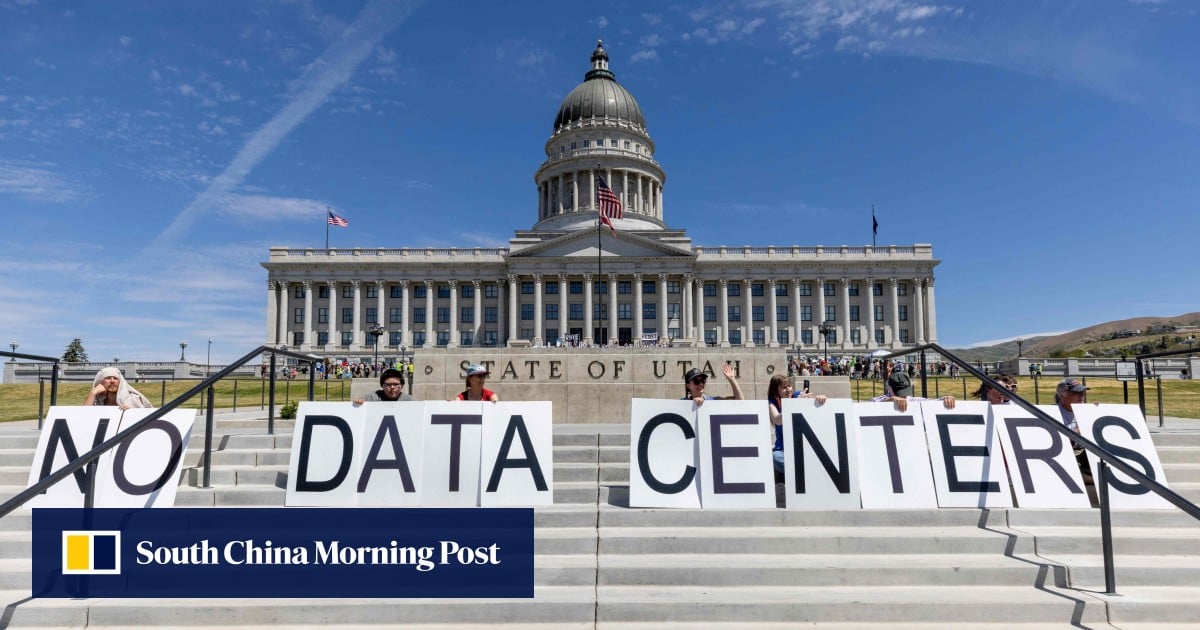
Chinese propagandists have been trying to use OpenAI’s flagship chatbot to gin up opposition to Donald Trump’s tariffs and intervene in American debates over data centres and AI, OpenAI said in a report published on Wednesday.The company said its efforts, dating to late 2025 and early 2026, appeared to have had little or no effect, but it is another indication of how central generative AI is becoming in digital influence campaigns – even those aimed against AI companies themselves.The Chinese embassy in Washington said that while it was not familiar with OpenAI’s research, “we firmly oppose any groundless attacks or smears against China” and that Beijing was working to “ensure AI is a force for good and for all”.OpenAI said it caught one set of Chinese-speaking users using ChatGPT to come up with slogans and cartoons critiquing Trump’s trade and tech policy that were later posted to X. The cartoons featured Trump behaving disruptively on the global stage, for example by swinging a hammer at a wall labelled “Global Future” or sawing apart a ladder he was standing on.Protesters gather at the Utah State Capitol in Salt Lake City in May to oppose the construction of a data centre. Photo: AFPThe same group also used the platform to generate Chinese comments for use in the comment sections of Chinese-language articles, as well as content in Italian and Japanese.
SRCSouth China Morning Post
LANGEN
LEANCenter-Right
WORDS228
ENT10
WED · 2026-06-10 · 23:01 GMTBRIEF NSR-2026-0611-83413
NSR-2026-0611-83413News Report·EN·Political Strategy
Chinese propagandists stoking dissent over Trump tariffs and data centres, OpenAI says
OpenAI reported that Chinese propagandists attempted to use its ChatGPT chatbot between late 2025 and early 2026 to generate opposition to Donald Trump's tariffs and influence American discussions on data centers and AI. The company observed one group using ChatGPT to create slogans and cartoons criticizing Trump's trade and tech policies, which were then posted on X.
ReutersSouth China Morning PostFiled 2026-06-10 · 23:01 GMTLean · Center-RightRead · 1 min
South China Morning PostFIG 01
Reading time
1min
Word count
228words
Sources cited
2cited
Entities identified
10entities
Quality score
100%
§ 01
Briefing Summary
AI-generatedNEWSAR · AI
OpenAI reported that Chinese propagandists attempted to use its ChatGPT chatbot between late 2025 and early 2026 to generate opposition to Donald Trump's tariffs and influence American discussions on data centers and AI. The company observed one group using ChatGPT to create slogans and cartoons criticizing Trump's trade and tech policies, which were then posted on X. This group also generated comments in Chinese, Italian, and Japanese for use in online articles. OpenAI stated these efforts appeared to have minimal impact. The Chinese embassy denied any groundless attacks against China and affirmed Beijing's commitment to AI for good. This incident highlights the growing role of generative AI in digital influence campaigns.
Confidence 0.90Sources 2Claims 4Entities 10
§ 02
Article analysis
Model · rule-basedFraming
Political Strategy
Technology
Tone
Mixed Tone
AI-assessed
CalmNeutralAlarmist
Factuality
0.70 / 1.00
Factual
LowHigh
Sources cited
2
Limited
FewMany
§ 03
Key claims
4 extracted01
The Chinese embassy stated they firmly oppose groundless attacks or smears against China regarding AI.
quoteChinese embassy in Washington
Confidence
1.00
02
Chinese-speaking users used ChatGPT to create slogans and cartoons criticizing Trump's trade and tech policy.
factualOpenAI
Confidence
0.90
03
Chinese propagandists used OpenAI's chatbot to generate content opposing Trump's tariffs and intervening in US data center debates.
factualOpenAI
Confidence
0.90
04
OpenAI's efforts to detect and counter these campaigns, dating to late 2025 and early 2026, appeared to have little or no effect.
factualOpenAI
Confidence
0.80
§ 04
Full report
1 min read · 228 words§ 05
Entities
10 identifiedKey playerOppositionContextPositiveNeutralNegative
§ 06
Keywords & salience
10 termschinese propagandists
1.00
generative ai
1.00
openai
0.90
trump tariffs
0.80
data centres
0.70
digital influence campaigns
0.70
chatgpt
0.60
ai companies
0.50
trade policy
0.40
tech policy
0.40
§ 07
Topic connections
Interactive graph Network visualization showing 51 related topics
View Full Graph Person Organization Location Event|Click node to navigate|Edge numbers = shared articles