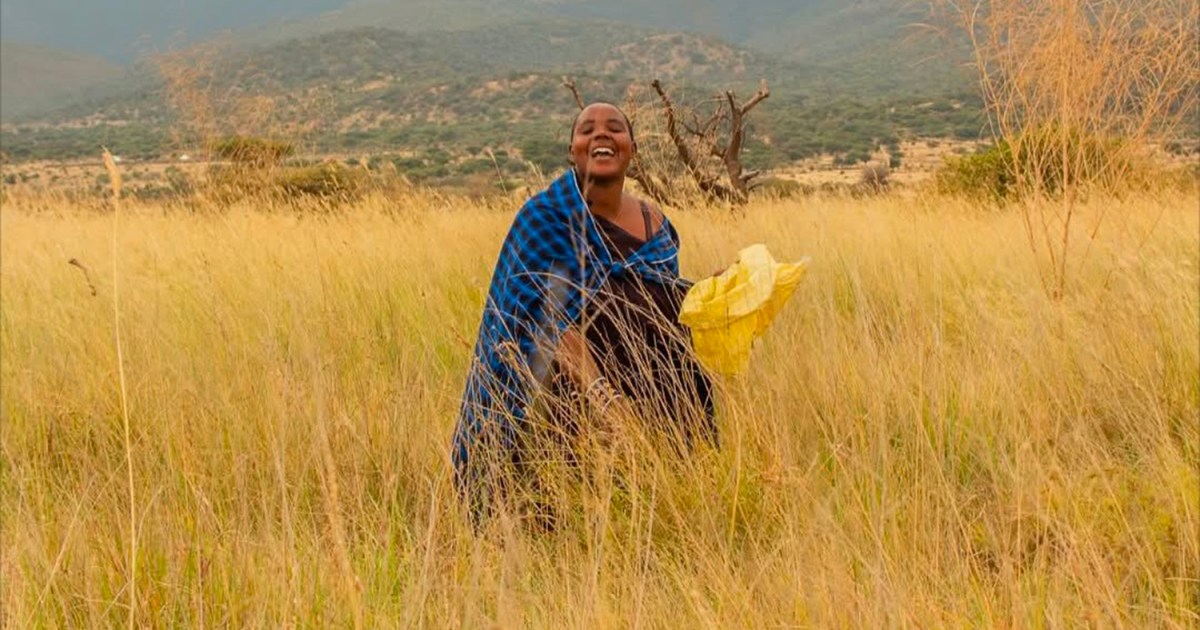
As drought kills livestock, Maasai women are turning drought-resistant grass into animal feed and income.In a community plot in Selela, Tanzania, a Maasai woman harvests grass seeds that are sold by weight and provide an important source of income for women participating in the project [Courtesy of the Pastoral Women’s Council]Published On 11 Jun 2026Monduli, Tanzania – When drought wiped out most of her family’s livestock, 30-year-old Nesirkar Loongidong’i, a Maasai mother of four from Selela village in northern Tanzania, found herself with very few options. The dry season had already killed most of their animals.Today, she makes a living growing and selling drought-resistant livestock fodder.“Before I planted fodder, I lost most of our goats. Now, people come from other villages to buy grass, and I can support my children. I don’t fear drought anymore,” Loongidong’i told Al Jazeera.With the income, she has built a house and bought five goats.Loongidong’i’s story is part of a much larger and fast-growing shift. Across northern Tanzania, Maasai women, part of a community of about 430,000 people, are turning fodder production from a survival tactic into a climate-adaptation business. The work is coordinated by the Pastoral Women’s Council (PWC) and is spreading across pastoral districts.The PWC is a women-led membership organisation working across three northeastern districts, covering more than 28,000 square kilometres (10,810 square miles) and serving about 456,000 people, most of them Maasai pastoralists. Founded in 1997, it now counts around 6,500 members in 90 villages, with years of work focused on land rights, economic empowerment, and girls’ education.For Loongidong’i, it all comes down to growing pasture grass without irrigation. Because demand remains steady, so does her income, and with it, her household’s stability. Today, she lives in a home with a metal roof, and nearby, her goats graze in a fenced area as their numbers slowly grow again.According to Tanzania’s Ministry of Livestock and Fisheries, at least 306,358 animals, including cattle, goats, sheep, and donkeys, died between September 2021 and January 2022 due to prolonged drought. In Simanjiro district alone, 92,047 livestock were lost, wiping out livelihoods across pastoral communities.In response, the PWC established 10 major grass seed banks across eight villages in Monduli and Longido districts. Today, about 75 hectares (185 acres) are under fodder production, with another 37 hectares (90 acres) expected to be added in the 2025-2026 season. Around 250 women directly manage these farms, while thousands of herders now depend on them for feed during dry seasons.The impact is already visible. In 2025, a single seed bank earned 6.6 million Tanzanian shillings (about $2,500) from seed sales, along with 1,111 hay bales sold at 6,000 shillings ($2.30) each. For many women, this has shifted their role from dependents to economic providers.Backed by organisations such as the Global Fund for Women and Oxfam, the PWC is now seen as offering a replicable model for protecting a livestock economy worth millions of dollars.This shift is no longer limited to survival. Across northern Tanzania, it is becoming a quiet but steady form of enterprise, reshaping daily life in pastoral communities.From survival to businessIn Longido and Monduli, deep in northern Tanzania, Maasai life has been slowly changing. As traditional grazing patterns weaken under worsening droughts, women are increasingly taking on roles once tied only to herding, now growing pasture for income on open communal land.Loongidong’i explains that what began as a way to survive dry years has now become a reliable source of income for many women. In the past, planting hardy grasses such as Cenchrus ciliaris was simply about keeping livestock alive. Today, it is also a business.To respond to declining rainfall, women grow resilient species such as Rhodes grass (Chloris gayana) and Masai love grass (Eragrostis superba) on designated community plots. These grasses stay green longer than natural pasture during dry periods. Once harvested, they are bundled and sold to local herders as animal feed.A member of the Naisho women’s group carries a sheep purchased through income earned from harvesting and selling fodder grass in Selela village, Monduli district, northern Tanzania [Courtesy of Pastoral Women’s Council]“Seeds are also saved and traded later when demand rises,” Loongidong’i says, adding that this cycle now supports many households across arid areas.Herding families also benefit during drought periods, when natural grazing disappears and these managed plots become a lifeline for livestock.The seed bank project, managed by Naisho, the group Loongidong’i works with under the PWC, generated about 6.6 million Tanzanian shillings ($2,514) from seed sales, alongside more than 1,000 bales of grass. Small in scale, but steady in output, it has proven what organised local production can achieve.For the Maasai, cattle are more than livestock; they are the centre of daily life, economy, and identity. When rains fail, the impact is immediate: animals weaken, and families struggle.As in many pastoral communities, women carry much of the responsibility for daily survival, from food preparation to fetching water and caring for children. Now, alongside those roles, they are also becoming earners.“Women who once depended entirely on their husbands now have their own income,” says Rachel Letiety, a founding member of the PWC. “Families are becoming more stable. Men are beginning to value women’s contributions, especially during droughts.”Ongoing challengesStill, the progress comes with challenges.Loongidong’i says some farms are affected when weeds take over and when fences break, allowing livestock, and sometimes wild animals, to destroy carefully cultivated plots.“I have seen invasive plants ruin large parts of our farms,” she says. “And sometimes animals enter and destroy what we have worked on for months. It is not easy to guard these fields every day.”She also points to tensions within groups, where disagreements sometimes arise over responsibilities and how income is shared.At present, with support from organisations such as Justdiggit, Trees for the Future, and Swissaid, around 200 women are directly involved in the project. Many more benefit indirectly, especially during drought periods when pasture becomes scarce.Nesirkar Loongidong’i carries harvested fodder from the grass field maintained by her group in Selela village [Courtesy of Pastoral Women’s Council]“This work prevents our cattle from dying and keeps them healthy,” says Nairiyamu Laizer, a mother of three and secretary of the Naisho group. “It also helps sustain the bulls we raise.”“If all women take up this opportunity, these projects can lift our economy,” she adds.“We harvest the grass and sell it; some buyers use it for cattle feed, others for thatching houses. We also grind some of it into animal feed,” she says.For Loongidong’i and many Maasai women, growing fodder is no longer just about surviving difficult seasons. It has become a new beginning, reshaping livelihoods and the place of women in pastoral life.“Now women help bring money into their homes,” she says, “and families are becoming more stable.”This article is published in collaboration with Egab.
SRCAl Jazeera
LANGEN
LEANCenter
WORDS1 124
ENT12
THU · 2026-06-11 · 01:07 GMTBRIEF NSR-2026-0611-83425
NSR-2026-0611-83425News Report·EN·Human Interest
Maasai women turn drought into income through fodder farming in Tanzania
Maasai women in northern Tanzania are transforming drought-stricken landscapes into income sources through fodder farming. Facing livestock losses due to prolonged droughts, women like Nesirkar Loongidong’i are cultivating drought-resistant grasses for animal feed and selling seeds.
By Isack DicksonAl JazeeraFiled 2026-06-11 · 01:07 GMTLean · CenterRead · 5 min
Al JazeeraFIG 01
Reading time
5min
Word count
1 124words
Sources cited
2cited
Entities identified
12entities
Quality score
100%
§ 01
Briefing Summary
AI-generatedNEWSAR · AI
Maasai women in northern Tanzania are transforming drought-stricken landscapes into income sources through fodder farming. Facing livestock losses due to prolonged droughts, women like Nesirkar Loongidong’i are cultivating drought-resistant grasses for animal feed and selling seeds. This initiative, coordinated by the Pastoral Women’s Council (PWC), has established grass seed banks and fodder production on community plots, providing a stable income and economic empowerment for women. The project, supported by organizations like the Global Fund for Women and Oxfam, is becoming a climate-adaptation business, offering a replicable model for pastoral communities. This shift from survival to enterprise is reshaping daily life and stabilizing livelihoods in arid areas.
Confidence 0.90Sources 2Claims 5Entities 12
§ 02
Article analysis
Model · rule-basedFraming
Human Interest
Economic Impact
Tone
Measured
AI-assessed
CalmNeutralAlarmist
Factuality
0.80 / 1.00
Factual
LowHigh
Sources cited
2
Limited
FewMany
§ 03
Key claims
5 extracted01
The Pastoral Women’s Council (PWC) is a women-led organization focused on land rights, economic empowerment, and girls’ education.
factualPastoral Women’s Council (PWC)
Confidence
1.00
02
In 2025, a single seed bank earned 6.6 million Tanzanian shillings (about $2,500) from seed sales.
statistic
Confidence
1.00
03
Between September 2021 and January 2022, at least 306,358 animals died in Tanzania due to prolonged drought.
statisticTanzania’s Ministry of Livestock and Fisheries
Confidence
1.00
04
Nesirkar Loongidong’i lost most of her family's livestock due to drought but now makes a living selling fodder.
quoteNesirkar Loongidong’i
Confidence
1.00
05
Maasai women are turning drought-resistant grass into animal feed and income in Tanzania.
factual
Confidence
1.00
§ 04
Full report
5 min read · 1 124 words§ 05
Entities
12 identifiedKey playerOppositionContextPositiveNeutralNegative
Organizations3
Locations4
§ 06
Keywords & salience
10 termsfodder farming
1.00
drought resilience
0.90
climate adaptation
0.80
maasai women
0.80
economic empowerment
0.70
pastoral women’s council
0.60
livestock
0.60
income generation
0.50
tanzania
0.50
pastoral communities
0.40
§ 07
Topic connections
Interactive graph No topic relationship data available yet. This graph will appear once topic relationships have been computed.