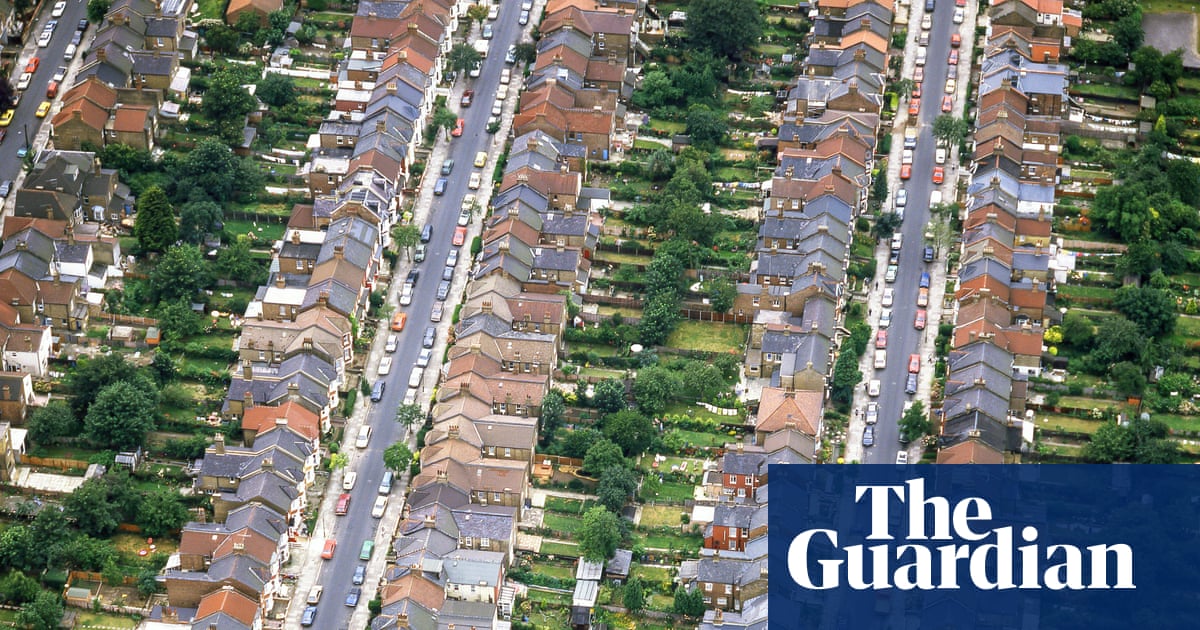
Millions of homes are at risk from climate-related subsidence, according toan analysis by the British Geological Survey (BGS).As hotter, drier summers driven by global heating become more frequent, the ground under houses can shrink and drag down a property’s foundations. The most vulnerable areas include London, Essex, Kent and a tranche of land from Oxford up to The Wash on England’s east coast, according to scientists, who say mitigation measures will be needed.Anna Harrison, a scientist at the BGS, said: “By combining geotechnical information about volume change potential with data about projected rainfall and temperature scenarios for the coming century, we have been able to identify the areas of Great Britain most likely to become susceptible to shrink-swell subsidence.Most are in the London area and that’s also where you’re going to see bigger changes in rainfall and temperature. It’s a double whammy.”London also has a higher density of buildings. Harrison added: “These properties might have foundations that currently can withstand the changes in moisture, but you might find in future there’s going to be more movement. It’s probably going to get worse.”Subsidence can substantially reduce a property’s value and lenders will often refuse to offer mortgages until it has been resolved. Signs include diagonal cracks around window and door frames, as well as sloping floors. It can require engineering work to stabilise land or underpin a property. In some cases, utility pipes need to be replaced and trees and vegetation removed.In 2025, the UK experienced the warmest spring on record and the driest in more than 50 years. There were £153m of subsidence-related insurance claims in the first six months of the same year. With climate crisis projections indicating that hotter, drier conditions are likely to become increasingly frequent over the coming century, the number of properties susceptible to subsidence-related shrink-swell is on the rise.The dataset forecasts that, by 2070, about 500,000 properties could be affected under a low emissions scenario aligned to the Paris climate agreement. This rises to more than 1.8m properties under a medium scenario, closest to current global emissions trajectories.Highly populated parts of London including Camden, Islington and Barnet are most susceptible, as well asKent in the south-east of England. Under the medium emissions scenario, the number of properties likely to be affected in the capital will exceed 26% by 2070.Harrison said: “Dry weather and high temperatures are a major factor in the emergence of shrink-swell subsidence. Looking ahead, these increases in hotter, drier summers and warmer, wetter winters are projected to continue.”
SRCThe Guardian - World News
LANGEN
LEANCenter-Left
WORDS417
ENT12
THU · 2026-06-11 · 05:00 GMTBRIEF NSR-2026-0611-83476
NSR-2026-0611-83476News Report·EN·Environmental
Millions of homes in London, Essex and Kent at risk of sinking as climate crisis worsens
Millions of homes in London, Essex, and Kent are at risk of climate-related subsidence due to increasingly frequent hotter, drier summers. Analysis by the British Geological Survey (BGS) indicates that shrinking ground caused by global heating can drag down property foundations.
Hannah Devlin Science correspondentThe Guardian - World NewsFiled 2026-06-11 · 05:00 GMTLean · Center-LeftRead · 2 min
The Guardian - World NewsFIG 01
Reading time
2min
Word count
417words
Sources cited
1cited
Entities identified
12entities
Quality score
100%
§ 01
Briefing Summary
AI-generatedNEWSAR · AI
Millions of homes in London, Essex, and Kent are at risk of climate-related subsidence due to increasingly frequent hotter, drier summers. Analysis by the British Geological Survey (BGS) indicates that shrinking ground caused by global heating can drag down property foundations. Scientists predict that by 2070, between 500,000 and 1.8 million properties could be affected, depending on emissions scenarios. This phenomenon, known as shrink-swell subsidence, is exacerbated in London due to its high building density and projected changes in rainfall and temperature. Mitigation measures will be necessary to address the potential for increased ground movement and its impact on property values and insurability.
Confidence 0.90Sources 1Claims 5Entities 12
§ 02
Article analysis
Model · rule-basedFraming
Environmental
Economic Impact
Tone
Mixed Tone
AI-assessed
CalmNeutralAlarmist
Factuality
0.80 / 1.00
Factual
LowHigh
Sources cited
1
Limited
FewMany
§ 03
Key claims
5 extracted01
Hotter, drier summers driven by global heating cause ground shrinkage, dragging down property foundations.
factualAnna Harrison (BGS scientist)
Confidence
0.95
02
Subsidence can reduce property value, lead to lenders refusing mortgages, and require costly engineering work.
factual
Confidence
0.90
03
Millions of homes in London, Essex, and Kent are at risk of sinking due to climate-related subsidence.
statisticBritish Geological Survey (BGS)
Confidence
0.90
04
By 2070, 500,000 properties could be affected under a low emissions scenario, rising to over 1.8 million under a medium scenario.
statisticDataset
Confidence
0.85
05
Increases in hotter, drier summers and warmer, wetter winters are projected to continue.
predictionAnna Harrison (BGS scientist)
Confidence
0.80
§ 04
Full report
2 min read · 417 words§ 05
Entities
12 identifiedKey playerOppositionContextPositiveNeutralNegative
Organizations1
Locations9
§ 06
Keywords & salience
10 termssubsidence
1.00
climate crisis
1.00
global heating
0.90
shrink-swell subsidence
0.80
london
0.70
hotter drier summers
0.60
rainfall and temperature
0.50
british geological survey
0.40
paris climate agreement
0.40
insurance claims
0.40
§ 07
Topic connections
Interactive graph Network visualization showing 51 related topics
View Full Graph Person Organization Location Event|Click node to navigate|Edge numbers = shared articles