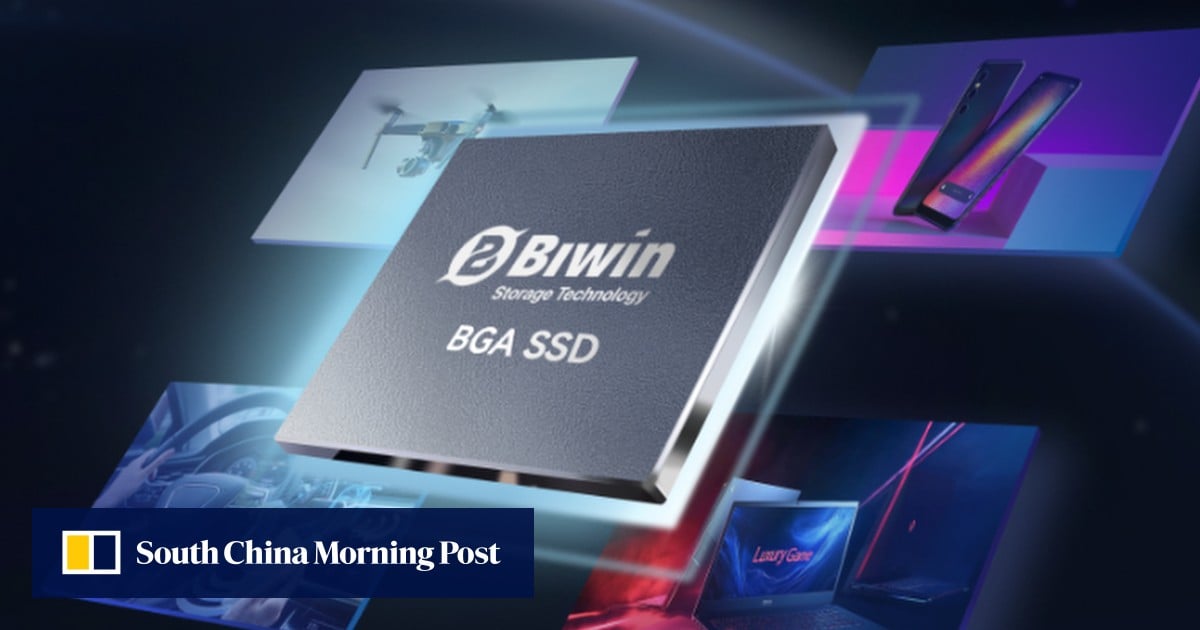
Chinese memory module maker Biwin has signed a two-year agreement worth US$1.86 billion to secure flash memory chips, a deal larger than its annual revenue, as demand from artificial intelligence servers and data centres squeezes supply.Under the locked-volume, locked-price arrangement, Biwin would buy enterprise-grade chips in batches from the third quarter of 2026 through the second quarter of 2028, according to a filing with the Shanghai Stock Exchange on Tuesday. The supplier was not disclosed, citing commercial confidentiality.The company said the contract would “secure medium- to long-term capacity and delivery schedules for memory chips, reducing the risk of supply disruption caused by market fluctuations”.
SRCSouth China Morning Post
LANGEN
LEANCenter-Right
WORDS104
ENT7
THU · 2026-06-11 · 10:00 GMTBRIEF NSR-2026-0611-83576
NSR-2026-0611-83576News Report·EN·Technology
To beat chip crunch, Chinese firm inks memory deal bigger than its sales
Chinese memory module maker Biwin has entered into a significant two-year agreement valued at $1.86 billion to secure flash memory chips. This deal, which exceeds the company's annual revenue, aims to mitigate supply chain risks driven by high demand from AI servers and data centers.
Howard LiuSouth China Morning PostFiled 2026-06-11 · 10:00 GMTLean · Center-RightRead · 1 min
South China Morning PostFIG 01
Reading time
1min
Word count
104words
Sources cited
1cited
Entities identified
7entities
Quality score
100%
§ 01
Briefing Summary
AI-generatedNEWSAR · AI
Chinese memory module maker Biwin has entered into a significant two-year agreement valued at $1.86 billion to secure flash memory chips. This deal, which exceeds the company's annual revenue, aims to mitigate supply chain risks driven by high demand from AI servers and data centers. The arrangement, effective from the third quarter of 2026 through the second quarter of 2028, involves locked volumes and prices for enterprise-grade chips. Biwin stated the contract will ensure medium- to long-term capacity and delivery schedules, reducing vulnerability to market fluctuations. The supplier's identity was not disclosed due to commercial confidentiality.
Confidence 0.85Sources 1Claims 5Entities 7
§ 02
Article analysis
Model · rule-basedFraming
Technology
Economic Impact
Tone
Measured
AI-assessed
CalmNeutralAlarmist
Factuality
0.90 / 1.00
Factual
LowHigh
Sources cited
1
Limited
FewMany
§ 03
Key claims
5 extracted01
Demand from artificial intelligence servers and data centres is squeezing chip supply.
factualarticle
Confidence
1.00
02
The contract aims to secure medium- to long-term capacity and delivery schedules for memory chips.
quoteBiwin
Confidence
1.00
03
The agreement is a locked-volume, locked-price arrangement for enterprise-grade chips.
factualarticle
Confidence
1.00
04
The deal is larger than Biwin's annual revenue.
factualarticle
Confidence
1.00
05
Chinese memory module maker Biwin signed a two-year agreement worth US$1.86 billion to secure flash memory chips.
statisticBiwin
Confidence
1.00
§ 04
Full report
1 min read · 104 words§ 05
Entities
7 identifiedKey playerOppositionContextPositiveNeutralNegative
Locations1
§ 06
Keywords & salience
9 termsmemory chips
1.00
chip crunch
1.00
supply chain
0.90
artificial intelligence servers
0.80
data centres
0.80
biwin
0.70
supply disruption
0.60
market fluctuations
0.50
enterprise-grade chips
0.40
§ 07
Topic connections
Interactive graph No topic relationship data available yet. This graph will appear once topic relationships have been computed.