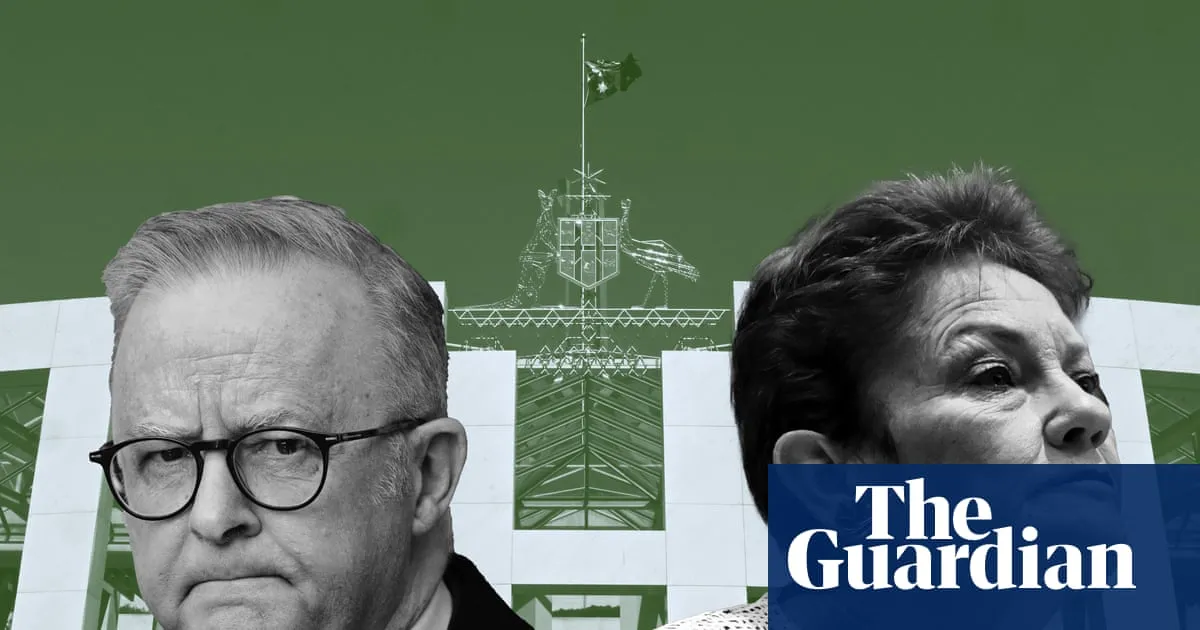
Anthony Albanese (left) and Pauline Hanson. Some Labor MPs say the party should remain focused on its core strengths of wages, tax cuts and boosting Medicare, casting itself as the only party offering practical measures. Photograph: AAP View image in fullscreen Anthony Albanese (left) and Pauline Hanson. Some Labor MPs say the party should remain focused on its core strengths of wages, tax cuts and boosting Medicare, casting itself as the only party offering practical measures. Photograph: AAP Analysis Pauline Hanson is becoming a problem for Labor – but her focus on battlers could be her kryptonite Dan Jervis-Bardy and Tom McIlroy Labor talking points this week concede Australians are frustrated with an economy that ‘isn’t working for them’. The goal will be to convince voters One Nation isn’t either Get our breaking news email, free app or daily news podcast It was mid-January when Anthony Albanese publicly admitted his “worry” about the rise of One Nation. The prime minister’s concern was not the political risk to himself or to Labor but rather the threat Pauline Hanson posed to the stability of Australia’s two-party system. “I’m a believer in mainstream politics and that the parties of government, it’s important. [It has] served this country pretty well,” Albanese said in an interview on Kiis FM, after a January newspoll showed One Nation ahead of the Coalition for the first time. “It [One Nation] is a reality that the Coalition in particular have to deal with.” Five months on, the One Nation threat is also a reality Labor must deal with, after several national opinion polls ranked Hanson’s rightwing populist party the most popular in the country. One Nation this week launched a dedicated fundraising drive to “fire the liar” and Hanson has declared Labor-held seats are firmly on the party’s radar. The party claimed to have collected more than $2m in donations this week alone, off the back of broken promises in the federal budget. Albanese has acknowledged reforms to negative gearing, capital gains tax and trusts were in part designed to counter One Nation and the myriad frustrations driving voters to embrace rightwing populism. Labor and its trade union allies have also shifted the focus of their rhetorical attacks, targeting Hanson as though she – rather than Angus Taylor – is the opposition leader. For now, none of it appears to be working, leaving some insiders to question what – if anything – will. Each morning Labor MPs are provided “talking points” to align their messaging on the important issues of the day. On Wednesday, a new topic was added to the list: One Nation. The suggested lines were entirely consistent with the language Albanese has used in the past week, including openly conceding that Australians are frustrated with an economy that “isn’t working for them”. But the fact that the guidance has been issued at all speaks to an acceptance that One Nation is a problem that must be confronted. An appeal from Labor head office for donations to fight One Nation offered further proof of its new priorities. Some Labor MPs and advisers are concerned the government has been flat-footed and lacking a clear, coherent strategy to combat an unconventional political opponent that appears impervious to scandal and traditional forms of accountability. The talking points instruct MPs to describe One Nation as a party that offers “anger” and “slogans” rather than “solutions” and “answers”. It encourages them to call out Hanson’s “appalling record” on wages and job security to undermine her self-styled image as a champion of the working class. “Just like their mates in the Liberal party – they have consistently opposed cost-of-living relief for Australians,” the talking points, seen by Guardian Australia, state. The talking points make no mention of immigration or Hanson’s long history of anti-migration rhetoric, indicating Labor wants to steer clear of the politically sensitive topic. The focus on wages is viewed as the most effective way of appealing to what Kos Samaras describes as “red One Nation” voters – the cohort of working-class Labor supporters prepared to switch to Hanson. Samaras, a former Labor strategist now with Redbridge Group, says Hanson’s “kryptonite” when it comes to political messaging would be a hypothetical 35-year-old nurse warning the public that One Nation will hurt their pay packet. “She [Hanson] could be pulled apart pretty quickly the minute you are able to convince them that she’s not one of them, she’s in fact just another politician,” Samaras says. There are signs the strategy is already being pursued by the trade union movement, which now treats One Nation as its main political opponent and biggest threat to working people. After the Fair Work Commission this month awarded a 4.75% pay to minimum wage earners, the Australian Council of Trade Unions (ACTU) secretary, Sally McManus, fronted a social media video condemning Hanson’s opposition to it. “These are Aussie battlers who’ve been doing it tough, struggling and just scraping through, and who stood up for them and their families? Not Pauline Hanson. She argued against these increases,” McManus says in the clip. “One Nation backs the bosses over Aussie battlers every single time.” Drawing attention to Hanson’s close ties to Australia’s wealthiest boss – mining magnate Gina Rinehart – is another tactic Labor MPs such as Jim Chalmers and Clare O’Neil are using in an attempt to cast her as a hypocrite. But Samaras says that line doesn’t cut through because voters view Hanson’s gifts from Rinehart in the same light as MPs who benefit from taxpayer-funded travel perks. “They [the voters] really don’t care because the response is ‘well, all of you get your Comcars and your travel perks,” he said, referencing the rolling controversies surrounding Anika Wells’s use of travel entitlements. Some Labor MPs believe that the Coalition “created the One Nation beast” and therefore the Liberals and Nationals are best placed to slay it. They say Labor should remain focused on its core strengths of wages, tax cuts and boosting Medicare, casting itself as the only party offering practical measures. Albanese has adopted this approach this week, pointing to free Tafe courses, cheaper medicines and industrial relations changes. One Nation’s ability to attract both Labor and Coalition voters indicates the Hanson phenomenon is not driven by support for particular political ideologies. Rather, political strategists and researchers view it as a case of “outsiders” revolting against the “insiders”, which includes major political parties and big corporations. Senior Labor MPs believe a major task in the months ahead is to remind voters that Hanson is not the “outsider” she purports to be, but a politician who first entered federal parliament more than 30 years ago. Peter Lewis, the executive director of Essential Media, says incumbency means Labor faces the challenge of being central to the very system that people are turning against. “[Labor’s] challenge is to demonstrate how it is using power to support the interests of those who are losing faith,” Lewis says. “This is where landing their changes to the way capital is taxed is critical, as is their Future Made in Australia program to rebuild Australian manufacturing leading to real evidence that government can still work for people. Don Farrell is considered one of Labor’s savviest minds, a political veteran who has witnessed the rise and demise of enough insurgent parties to confidently predict where this one might end. Asked this week about the threat One Nation posed to Labor, the trade minister was definitive. “Populist parties in this country come and go, they rise and they fall. I don’t think Labor has anything to fear from One Nation,” Farrell said. Other Labor MPs might not be as dismissive as Farrell but most aren’t feeling genuinely anxious about Hanson – at least not yet. Much of that is down to the fact that the next federal election is not scheduled until 2028, giving Labor time to develop the policies and the messages to counter One Nation’s rise. Party insiders draw confidence from the experience of the last federal election, where Labor won 94 seats just months after trailing Peter Dutton’s Coalition in the polls. “The biggest risk is over-reacting this far out from an election,” says one Labor MP. November’s Victorian election will be a testing ground for some of the attack lines, according to MPs from the state. Hanson has talked up the party’s prospects in a fight between an old an unpopular Labor government and a Liberal opposition with major internal divisions. Some suburban Labor MPs say a fight on policy details, including service delivery and economic management, should be a feature between now and the federal election. “Pointing out the inconsistencies in their policies, if you can call them that, helps. Some voters will think twice when it actually comes down to who runs the economy,” one said. But while the surge in interest in One Nation isn’t showing signs of abating yet, and Hanson is scheduled to address the National Press Club in Canberra next week, Labor figures suggest the immediate risk to the government is being overstated. “Why would we engage now, two years out and on her terms? It’s a distraction,” one MP said. “She craves attention and we have a job running the country.” Dan Jervis-Bardy is Guardian Australia’s chief political correspondent. Tom McIlroy is political editor Explore more on these topics One Nation Pauline Hanson Anthony Albanese Angus Taylor Labor party Australian politics analysis Share Reuse this content
SRCThe Guardian - World News
LANGEN
LEANCenter-Left
WORDS1 572
ENT12
THU · 2026-06-11 · 15:00 GMTBRIEF NSR-2026-0611-83626
NSR-2026-0611-83626Analysis·EN·Political Strategy
Pauline Hanson is becoming a problem for Labor – but her focus on battlers could be her kryptonite
Labor is increasingly concerned about Pauline Hanson's One Nation party, which has seen a rise in national opinion polls. Prime Minister Anthony Albanese has expressed worry about the threat to Australia's two-party system, while Labor's internal talking points now address One Nation as a problem.
Dan Jervis-Bardy and Tom McIlroyThe Guardian - World NewsFiled 2026-06-11 · 15:00 GMTLean · Center-LeftRead · 7 min
The Guardian - World NewsFIG 01
Reading time
7min
Word count
1 572words
Sources cited
2cited
Entities identified
12entities
Quality score
100%
§ 01
Briefing Summary
AI-generatedNEWSAR · AI
Labor is increasingly concerned about Pauline Hanson's One Nation party, which has seen a rise in national opinion polls. Prime Minister Anthony Albanese has expressed worry about the threat to Australia's two-party system, while Labor's internal talking points now address One Nation as a problem. The government aims to convince voters that One Nation, despite its focus on "battlers," does not offer solutions. Labor MPs are instructed to highlight One Nation's "anger" and "slogans" and criticize Hanson's record on wages and job security, steering clear of immigration. This strategy, particularly focusing on wages, is seen as a way to appeal to working-class voters who might otherwise support One Nation. Trade unions are also actively opposing One Nation, viewing it as a threat to working people.
Confidence 0.90Sources 2Claims 5Entities 12
§ 02
Article analysis
Model · rule-basedFraming
Political Strategy
Economic Impact
Tone
Mixed Tone
AI-assessed
CalmNeutralAlarmist
Factuality
0.60 / 1.00
Mixed
LowHigh
Sources cited
2
Limited
FewMany
§ 03
Key claims
5 extracted01
One Nation has launched a dedicated fundraising drive to 'fire the liar'.
quoteOne Nation
Confidence
1.00
02
Anthony Albanese expressed worry about the rise of One Nation in mid-January.
quoteAnthony Albanese
Confidence
1.00
03
Labor MPs are being provided 'talking points' on how to address the One Nation issue.
factualarticle
Confidence
0.90
04
The party claimed to have collected more than $2m in donations this week alone.
statisticOne Nation
Confidence
0.90
05
Labor's reforms to negative gearing, capital gains tax, and trusts were partly designed to counter One Nation.
factualarticle
Confidence
0.80
§ 04
Full report
7 min read · 1 572 words§ 05
Entities
12 identifiedKey playerOppositionContextPositiveNeutralNegative
People3
Organizations5
Locations1
§ 06
Keywords & salience
10 termslabor
1.00
one nation
1.00
pauline hanson
1.00
rightwing populism
0.90
battlers
0.80
australian economy
0.70
political strategy
0.60
anthony albanese
0.50
election
0.40
public opinion
0.40
§ 07
Topic connections
Interactive graph Network visualization showing 51 related topics
View Full Graph Person Organization Location Event|Click node to navigate|Edge numbers = shared articles