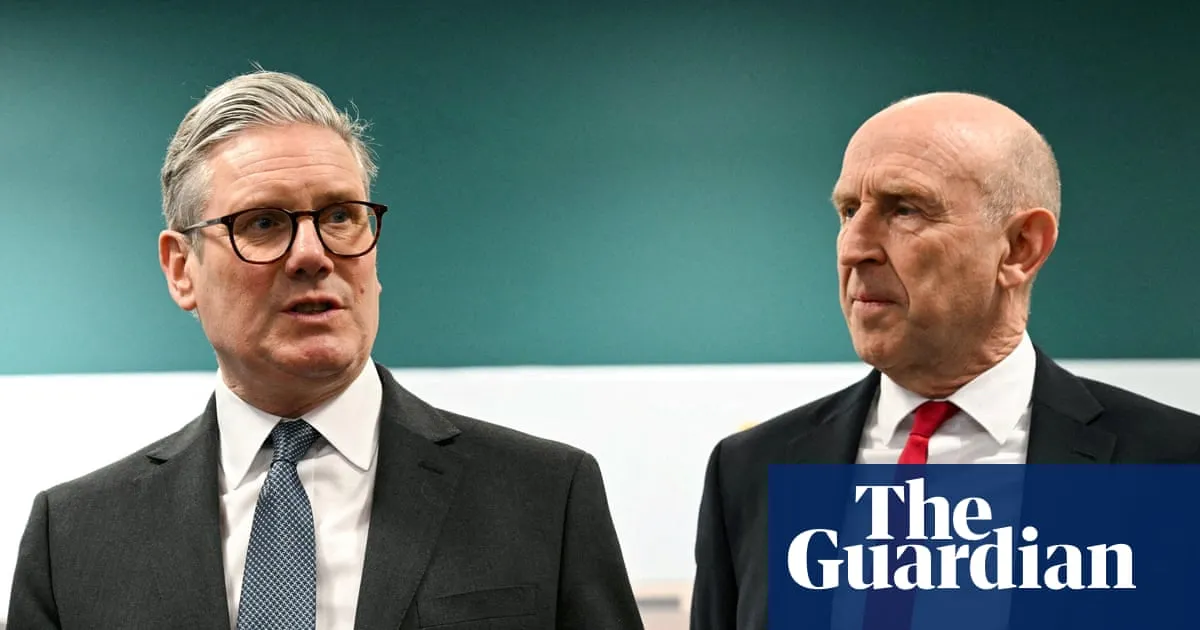
As Labour MPs set out the case for change in the tea rooms and bars of Westminster, there is usually one caveat. They believed the prime minister was an asset when it came to national security and had performed beyond expectations on the world stage.Now that reputation too lies in tatters, after the resignation of John Healey with one of the most quietly damning letters that many can remember. Not a departure over ambition – though Healey certainly has it – but on principle. It is a rare thing to see a loyalist cabinet minister accuse the prime minister and a chancellor of making the country “less safe”.All of Keir Starmer’s rhetoric has always suggested he understood the severity of the moment: just months ago in Munich, he pledged that Britain would “rise to this moment … spend more, deliver more, and coordinate more”.Defence secretary quits with ‘blistering’ swipe at Starmer - The LatestBut the row is the perfect encapsulation of the government’s problems. Some of it is not of its own making. This is the most dangerous world any government has faced in decades, with global conflicts in the Middle East and Ukraine, threats from China and Russia and buffeted by the whims of an increasingly irrational White House.The government inherits a hollowed-out armed forces and a withering industrial base. It has an opposition who for many years saw welfare increase and defence cut – and now loudly demands the government do the opposite.But it also has a chancellor who is boxed in by the party’s own pledges on tax. It has cabinet ministers who refuse to countenance cuts to schools, energy infrastructure and hospitals. It has Labour MPs who – with honourable exception – are far more interested in schools and hospitals than frigates.And at the centre, a prime minister who seems not to lead but prevaricates, who lacks the authority to force his cabinet to accept unpopular cuts and eventually attempts to bounce his defence secretary into a plan at the 11th hour.The most damning sentence of Healey’s resignation letter was where he described the chancellor as “unwilling” and the prime minister as “unable”.But where in reality can these billions be found? There is no plan for difficult welfare changes that could command support from MPs.There is no narrative to convince the British public that those difficult economic decisions will be worth it to fund billions more into keeping the country safer but – let’s be honest – that will likely have no material impact on improving the day-to-day lives of citizens. Many of those billions go towards buying arms, equipment and technology from abroad.And then there is the chaos of it all – departments only asked to countenance spending cuts in the last few weeks. Healey himself only saw the full sums on Monday morning, where the cash was billions less than he expected.All the different sides have a case for feeling aggrieved. Healey and the defence chiefs who believe the centre is unwilling to make the hard decisions necessary in these dangerous times. And the Treasury, which looks at the mess of defence procurement and waste in the department and grows irritated by the louder calls for more and more billions from retired military types who will not bear the brunt of the backlash for the cuts to fund them.It seems trite – when so much is at stake – to then return to the question of Starmer’s future as prime minister. But it is the shadow that looms over the story because Healey’s frustrations in the letter suggest much about the dysfunction in government.They are the same frustrations about – as one MP put it – “a continued drift into incrementalism and managerialism” that have led so many MPs to turn their hopes towards Makerfield, where in a week’s time they hope to see Andy Burnham return to Westminster.But Burnham, should he make it from Wigan to the heart of SW1, will face these same exact choices that have driven Healey from government. He too will have to choose whether to further change the fiscal rules, rip up tax pledges, cut spending, cull infrastructure projects and justify all this to an angry public and restive MPs.
SRCThe Guardian - World News
LANGEN
LEANCenter-Left
WORDS702
ENT12
THU · 2026-06-11 · 17:09 GMTBRIEF NSR-2026-0611-83653
NSR-2026-0611-83653Analysis·EN·National Security
Global wars, a depleted military and stubborn Labour MPs: Healey exposes Starmer’s perfect storm
John Healey has resigned as Defence Secretary, citing principled concerns that the government is making the country "less safe." His resignation letter, described as "damning," highlights the prime minister's perceived inability and the chancellor's unwillingness to make necessary difficult economic decisions on defense spending. This situation arises amidst global conflicts and a depleted military, compounded by the Labour party's past focus on welfare over defense and current pledges on taxation.
Jessica Elgot Deputy political editorThe Guardian - World NewsFiled 2026-06-11 · 17:09 GMTLean · Center-LeftRead · 3 min
The Guardian - World NewsFIG 01
Reading time
3min
Word count
702words
Sources cited
2cited
Entities identified
12entities
Quality score
100%
§ 01
Briefing Summary
AI-generatedNEWSAR · AI
John Healey has resigned as Defence Secretary, citing principled concerns that the government is making the country "less safe." His resignation letter, described as "damning," highlights the prime minister's perceived inability and the chancellor's unwillingness to make necessary difficult economic decisions on defense spending. This situation arises amidst global conflicts and a depleted military, compounded by the Labour party's past focus on welfare over defense and current pledges on taxation. Healey's departure exposes a "perfect storm" of challenges for Keir Starmer, including internal party resistance to cuts and a lack of public narrative to justify increased defense expenditure. The article suggests this dysfunction reflects a broader governmental drift, with potential implications for Starmer's leadership.
Confidence 0.90Sources 2Claims 5Entities 12
§ 02
Article analysis
Model · rule-basedFraming
National Security
Political Strategy
Tone
Sensational
AI-assessed
CalmNeutralAlarmist
Factuality
0.40 / 1.00
Mixed
LowHigh
Sources cited
2
Limited
FewMany
§ 03
Key claims
5 extracted01
Healey described the chancellor as 'unwilling' and the prime minister as 'unable' to find billions for defence.
quoteJohn Healey
Confidence
1.00
02
Keir Starmer pledged that Britain would 'rise to this moment … spend more, deliver more, and coordinate more' in Munich.
quoteKeir Starmer
Confidence
1.00
03
John Healey resigned on principle, accusing the prime minister and chancellor of making the country 'less safe'.
quoteJohn Healey
Confidence
1.00
04
The government inherits a hollowed-out armed forces and a withering industrial base.
factual
Confidence
0.80
05
Many billions allocated to defence go towards buying arms, equipment and technology from abroad.
factual
Confidence
0.70
§ 04
Full report
3 min read · 702 words§ 05
Entities
12 identifiedKey playerOppositionContextPositiveNeutralNegative
Organizations1
Locations7
§ 06
Keywords & salience
10 termsnational security
1.00
global conflicts
0.90
defence spending
0.80
keir starmer
0.70
john healey
0.70
armed forces
0.60
political challenges
0.50
economic decisions
0.50
middle east
0.40
ukraine
0.40
§ 07
Topic connections
Interactive graph Network visualization showing 51 related topics
View Full Graph Person Organization Location Event|Click node to navigate|Edge numbers = shared articles