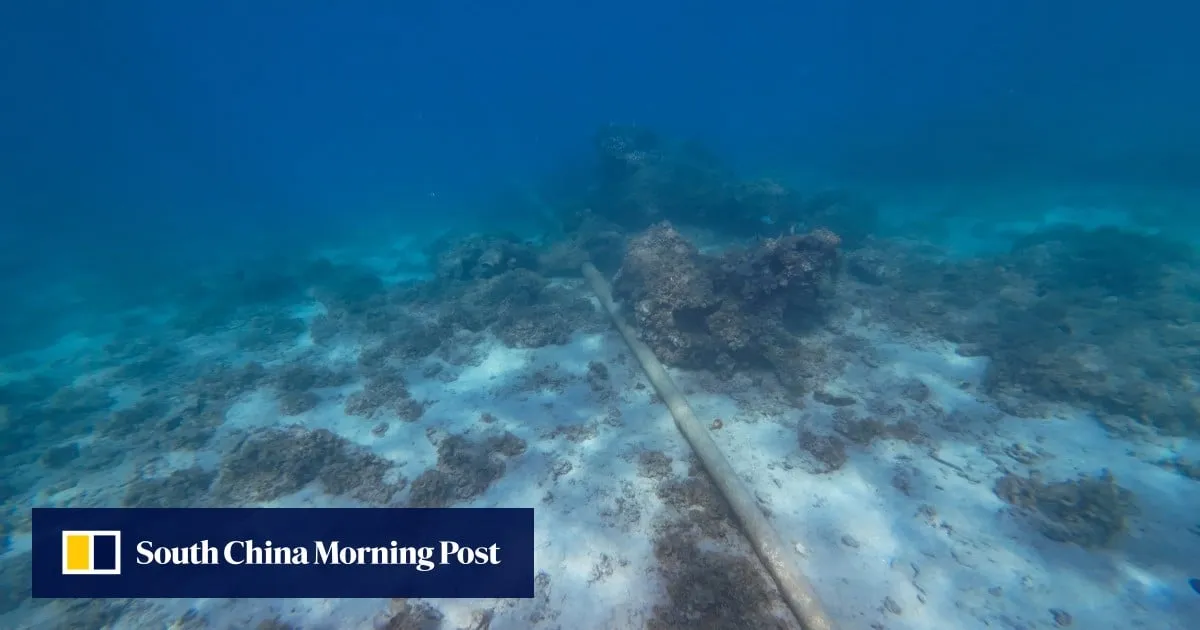
The vulnerability of submarine cables during conflicts has made seabed infrastructure a fresh concern for global communication and maritime safety, prompting 17 Asian and European nations to step up collaboration on defence strategies in recent months.But the two largest marine powers, China and the United States, were not among those countries.Yet, given that cable cuts have been mostly accidental so far, the real power of cable cutter technology is in its psychological effect as a tool of hybrid warfare, according to Tony O’Sullivan, CEO of global internet service provider RETN.“It does not have quite the same devastating impact with a single use, but it is exactly like a nuclear weapon in a sense that it is not the actual use of it, [but] the threat of the use of it is the bigger issue,” O’Sullivan said in Hong Kong.“It is about creating an unease in a population with the threat that something might actually happen, and therefore disturbing their normal operations of government or political system.“I do not see the actual idea of cable cuts as the threat. I see the threat to the internet more coming from naivety about network design.”
SRCSouth China Morning Post
LANGEN
LEANCenter-Right
WORDS192
ENT10
FRI · 2026-06-12 · 04:00 GMTBRIEF NSR-2026-0612-83768
NSR-2026-0612-83768News Report·EN·National Security
Deep-sea cable cutting can be a weapon of deterrence like nukes, RETN CEO says
The vulnerability of submarine cables during conflicts is a growing concern for global communication and maritime safety. In response, 17 Asian and European nations are increasing collaboration on defense strategies, though China and the United States are not participating.
Holly ChikSouth China Morning PostFiled 2026-06-12 · 04:00 GMTLean · Center-RightRead · 1 min
South China Morning PostFIG 01
Reading time
1min
Word count
192words
Sources cited
1cited
Entities identified
10entities
Quality score
100%
§ 01
Briefing Summary
AI-generatedNEWSAR · AI
The vulnerability of submarine cables during conflicts is a growing concern for global communication and maritime safety. In response, 17 Asian and European nations are increasing collaboration on defense strategies, though China and the United States are not participating. Tony O’Sullivan, CEO of RETN, suggests that the true power of deep-sea cable cutting technology lies in its psychological impact as a tool of hybrid warfare, similar to nuclear weapons where the threat of use is more significant than actual deployment. This threat aims to create unease and disrupt normal government or political operations by raising the possibility of an incident. O'Sullivan also notes that the internet faces greater threats from naivety in network design rather than actual cable cuts.
Confidence 0.90Sources 1Claims 5Entities 10
§ 02
Article analysis
Model · rule-basedFraming
National Security
Political Strategy
Tone
Mixed Tone
AI-assessed
CalmNeutralAlarmist
Factuality
0.40 / 1.00
Mixed
LowHigh
Sources cited
1
Limited
FewMany
§ 03
Key claims
5 extracted01
The threat of using cable cutting technology is like the threat of using nuclear weapons; it is the threat of use, not the actual use, that is the bigger issue.
quoteTony O’Sullivan, CEO of global internet service provider RETN
Confidence
0.90
02
The real power of cable cutter technology is in its psychological effect as a tool of hybrid warfare.
quoteTony O’Sullivan, CEO of global internet service provider RETN
Confidence
0.90
03
The threat to the internet more coming from naivety about network design than from actual cable cuts.
quoteTony O’Sullivan, CEO of global internet service provider RETN
Confidence
0.80
04
The vulnerability of submarine cables during conflicts has made seabed infrastructure a fresh concern for global communication and maritime safety.
factual
Confidence
0.80
05
17 Asian and European nations have stepped up collaboration on defence strategies in recent months regarding seabed infrastructure.
factual
Confidence
0.70
§ 04
Full report
1 min read · 192 words§ 05
Entities
10 identifiedKey playerOppositionContextPositiveNeutralNegative
Organizations1
Locations5
§ 06
Keywords & salience
9 termsdeep-sea cable cutting
1.00
submarine cables
0.90
hybrid warfare
0.80
deterrence
0.70
seabed infrastructure
0.60
maritime safety
0.50
global communication
0.50
psychological effect
0.40
network design
0.40
§ 07
Topic connections
Interactive graph No topic relationship data available yet. This graph will appear once topic relationships have been computed.