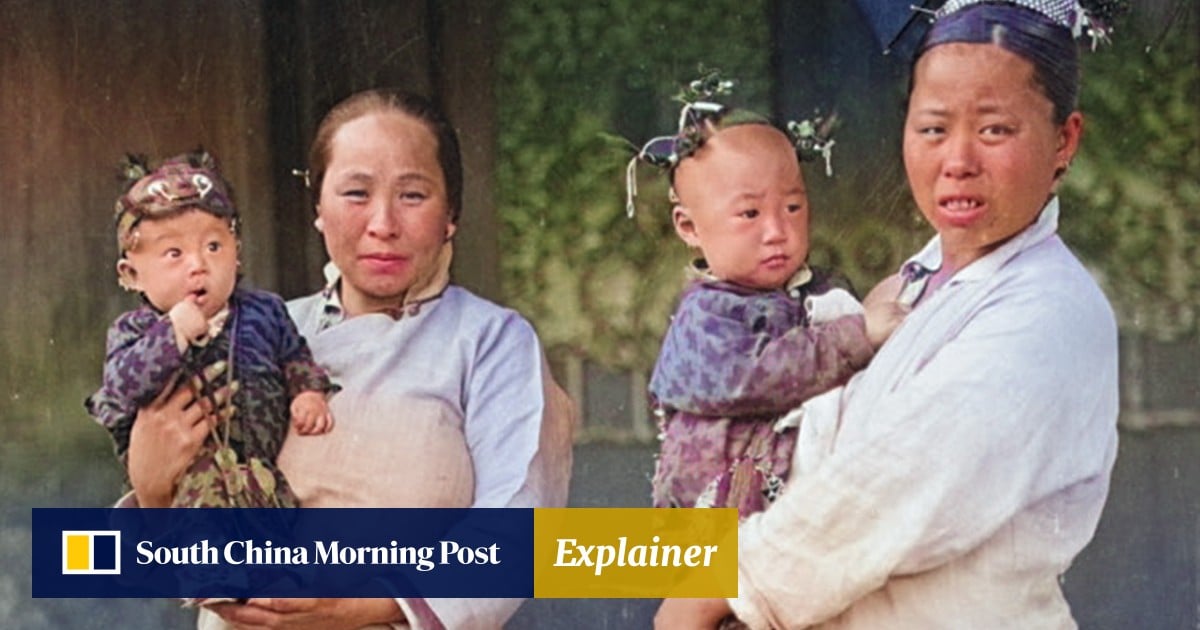
China’s Manchu people have quirky child-rearing traditions known as Luocao and Caisheng which include hanging a wooden bow outside the front door when a boy is born, or a red cloth strip for a girl.The Manchu ethnic group, historically known for founding the Qing dynasty (1644–1912), now lives across various regions of China.According to the China Statistical Yearbook 2021, their population exceeds 10 million.In Manchu tradition, the birth of a baby is referred to as luocao, which literally means “falling onto the straw”.Manchu women pose for the camera while wearing the traditional clothes of their ethnic group. Photo: SinaThe term reflects their rustic, hunting-based heritage.
SRCSouth China Morning Post
LANGEN
LEANCenter-Right
WORDS105
ENT2
SUN · 2026-01-18 · 10:00 GMTBRIEF NSR-2026-0118-8383
NSR-2026-0118-8383News Report·EN·Human Interest
China Manchu ethnic group childbirth tradition hangs bow and arrow for boys, red strip for girls
The Manchu ethnic group in China, known for founding the Qing dynasty, maintains unique childbirth traditions. When a baby is born, referred to as "luocao," families practice customs like hanging a wooden bow and arrow outside the door for a boy, or a red cloth strip for a girl.
Yating YangSouth China Morning PostFiled 2026-01-18 · 10:00 GMTLean · Center-RightRead · 1 min
South China Morning PostFIG 01
Reading time
1min
Word count
105words
Sources cited
0cited
Entities identified
2entities
Quality score
100%
§ 01
Briefing Summary
AI-generatedNEWSAR · AI
The Manchu ethnic group in China, known for founding the Qing dynasty, maintains unique childbirth traditions. When a baby is born, referred to as "luocao," families practice customs like hanging a wooden bow and arrow outside the door for a boy, or a red cloth strip for a girl. These traditions, known as Luocao and Caisheng, reflect the Manchu people's historical hunting-based heritage. The Manchu population, exceeding 10 million according to 2021 statistics, resides across various regions of China. These customs serve as a cultural marker for the Manchu people, connecting them to their past.
Confidence 0.85Claims 4Entities 2
§ 02
Article analysis
Model · rule-basedFraming
Human Interest
Tone
Measured
AI-assessed
CalmNeutralAlarmist
Factuality
0.90 / 1.00
Factual
LowHigh
Sources cited
0
No named sources
FewMany
§ 03
Key claims
4 extracted01
Luocao means 'falling onto the straw' and refers to the birth of a baby.
factualnull
Confidence
1.00
02
According to the China Statistical Yearbook 2021, the Manchu population exceeds 10 million.
statisticChina Statistical Yearbook 2021
Confidence
1.00
03
The Manchu ethnic group founded the Qing dynasty (1644–1912).
factualnull
Confidence
1.00
04
Manchu people hang a wooden bow outside for a boy's birth, red cloth for a girl.
factualnull
Confidence
1.00
§ 04
Full report
1 min read · 105 words§ 05
Entities
2 identifiedKey playerOppositionContext
§ 06
Keywords & salience
8 termsmanchu ethnic group
1.00
childbirth tradition
0.90
luocao
0.80
caisheng
0.70
bow and arrow
0.70
red cloth strip
0.60
qing dynasty
0.50
cultural traditions
0.50
§ 07
Topic connections
Interactive graph Network visualization showing 51 related topics
View Full Graph Person Organization Location Event|Click node to navigate|Edge numbers = shared articles