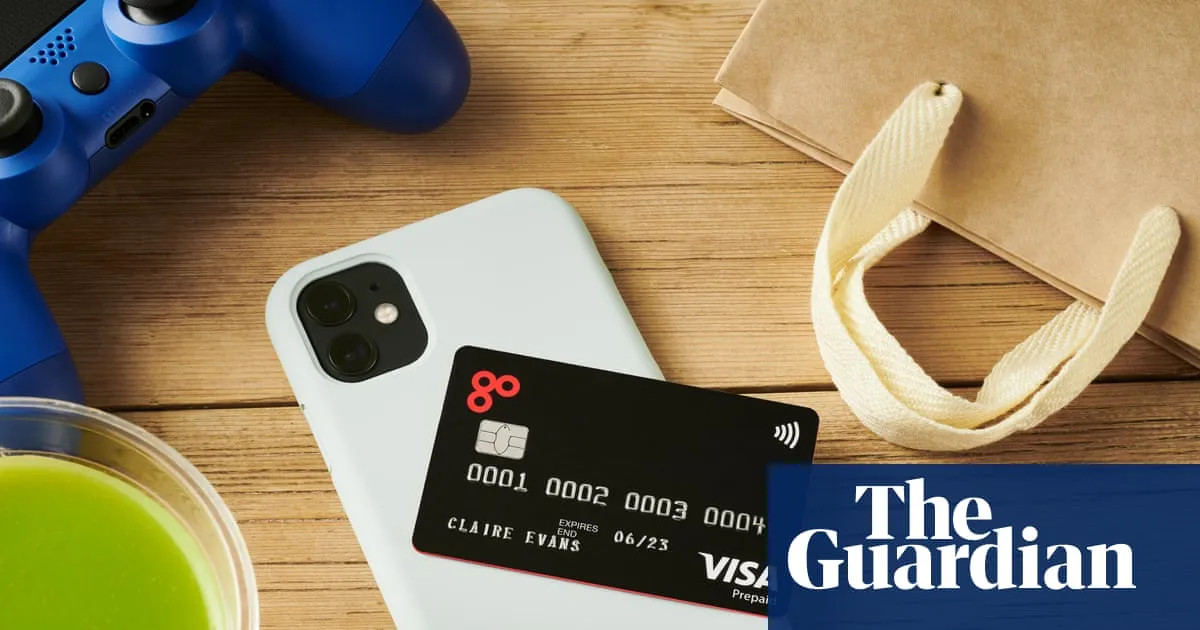
Barclays is to buy an app designed to help children understand and manage their money, as it targets young people in affluent families.The high street bank has agreed to buy the UK business of GoHenry, which provides children with personalised debit cards carrying their name, from the US fintech company Acorns, which will retain GoHenry’s US branch.The deal, which has been agreed for an undisclosed price, is expected to complete next year. The app will remain branded GoHenry.GoHenry, which was founded in 2012 by the British entrepreneur Louise Hill, offers prepaid debit cards with parental controls and a money management app for six- to 18-year-olds to save, invest and complete money lessons.About 500,000 children in the UK have GoHenry accounts. Hill, a mother of two, started the idea for the business when she heard other parents complaining about their children’s spending habits during school pickups.The business was reportedly valued at between $250m and $500m in 2022. Hill sold it to Acorns the following year and remained executive chair.The Barclays UK chief executive, Vim Maru, said the acquisition would “turbocharge” the bank’s offering for households and families.Hill said the brand “isn’t going anywhere” but it can “do more” under Barclays’ ownership. “It also enables us to offer GoHenry members a pathway to continue their money journey when they hit 18, because financial education shouldn’t have a start or end date,” she said.The company has more than 2 million customers across France, Spain, Italy, the US and the UK. It employs about 200 people.When it first came to market, the business was called PKTMNY, pronounced “pocket money”, which Hill later described as “stupid”. “Nobody could say it and nobody could spell it, it was a really silly idea,” she said in an interview with Sky News in 2024.Its name changed about 18 months later, inspired by its first customer, an 11-year-old boy named Henry from Bristol.The takeover will give Barclays a bigger foothold in the youth banking market at a time when the UK’s more established banks are trying to defend their customer pipeline from fintech rivals. That includes Revolut and Monzo, which launched their own interest-bearing savings accounts for children as young as six last year.Barclays’ acquisition means it is playing catch-up with NatWest, which bought the children’s pocket money app RoosterMoney in late 2021, allowing it to target families with children aged six to 17 with products such as prepaid debit cards and parental alerts on kids’ spending.Benjamin Toms, an analyst at RBC Capital Markets, said that while the company does not break out profits for its UK operations, GoHenry as a whole has been loss-making, making this acquisition more about “cross-selling and customer inertia”, given that UK consumers rarely switch banks.“This is about acquiring customers, which is expensive in the UK, where there is quite large inertia … They’re not really getting large deposit balances, but are deepening the relationship with families and getting more engrained, more embedded, in a way that makes it more difficult to lose those customers as they get older,” he said.High street banks are increasingly targeting wealthy families for growth as they look for ways to be less reliant on income from everyday loans that are linked to the rise and fall of interest rates.Barclays was defeated by NatWest in a bidding war for the wealth manager Evelyn Partners this year. Meanwhile, Lloyds has taken full control of its venture with Schroders and rebranded the business, which has £17bn in assets under administration and 60,000 clients, as Lloyds Wealth.Barclays also told investors on Friday that the acquisition of GoHenry would reduce its CET1 ratio – an important metric of the bank’s financial health – by about five basis points. It said the deal would not affect its financial targets for 2026 or 2028.Shares in the FTSE 100 bank rose by nearly 5% on Friday.
SRCThe Guardian - World News
LANGEN
LEANCenter-Left
WORDS640
ENT12
FRI · 2026-06-12 · 11:07 GMTBRIEF NSR-2026-0612-83867
NSR-2026-0612-83867News Report·EN·Technology
Barclays to buy GoHenry kids’ debit card and money app
Barclays is acquiring the UK business of GoHenry, a fintech company offering personalized debit cards and money management apps for children aged six to 18. The deal, expected to complete next year, aims to bolster Barclays' presence in the youth banking market and target affluent families.
Lauren AlmeidaThe Guardian - World NewsFiled 2026-06-12 · 11:07 GMTLean · Center-LeftRead · 3 min
The Guardian - World NewsFIG 01
Reading time
3min
Word count
640words
Sources cited
3cited
Entities identified
12entities
Quality score
100%
§ 01
Briefing Summary
AI-generatedNEWSAR · AI
Barclays is acquiring the UK business of GoHenry, a fintech company offering personalized debit cards and money management apps for children aged six to 18. The deal, expected to complete next year, aims to bolster Barclays' presence in the youth banking market and target affluent families. GoHenry, founded in the UK, will retain its brand and continue to operate under Barclays' ownership, with the US branch remaining with Acorns. This acquisition allows Barclays to deepen relationships with families and provide a pathway for young users to continue their financial journey with the bank as they age. The move is seen as a strategic effort by traditional banks to compete with fintech rivals and secure future customers.
Confidence 0.90Sources 3Claims 5Entities 12
§ 02
Article analysis
Model · rule-basedFraming
Technology
Economic Impact
Tone
Measured
AI-assessed
CalmNeutralAlarmist
Factuality
0.70 / 1.00
Factual
LowHigh
Sources cited
3
Well sourced
FewMany
§ 03
Key claims
5 extracted01
GoHenry was founded in 2012 by Louise Hill, inspired by parental concerns about children's spending habits.
factual
Confidence
1.00
02
Barclays is acquiring the UK business of GoHenry, a fintech company providing children's debit cards and money management apps.
factual
Confidence
1.00
03
An analyst suggests the acquisition is primarily about customer acquisition in the UK due to high customer inertia, rather than immediate profit.
quoteBenjamin Toms, analyst at RBC Capital Markets
Confidence
0.90
04
GoHenry has approximately 500,000 children customers in the UK and over 2 million customers across Europe and the US.
statistic
Confidence
0.90
05
The deal aims to strengthen Barclays' position in the youth banking market against fintech rivals and established banks like NatWest.
factual
Confidence
0.90
§ 04
Full report
3 min read · 640 words§ 05
Entities
12 identifiedKey playerOppositionContextPositiveNeutralNegative
Organizations7
§ 06
Keywords & salience
10 termsmoney management app
1.00
kids' debit card
1.00
barclays
0.90
gohenry
0.90
youth banking
0.80
financial education
0.70
fintech
0.60
parental controls
0.50
acorns
0.40
monzo
0.40
§ 07
Topic connections
Interactive graph No topic relationship data available yet. This graph will appear once topic relationships have been computed.