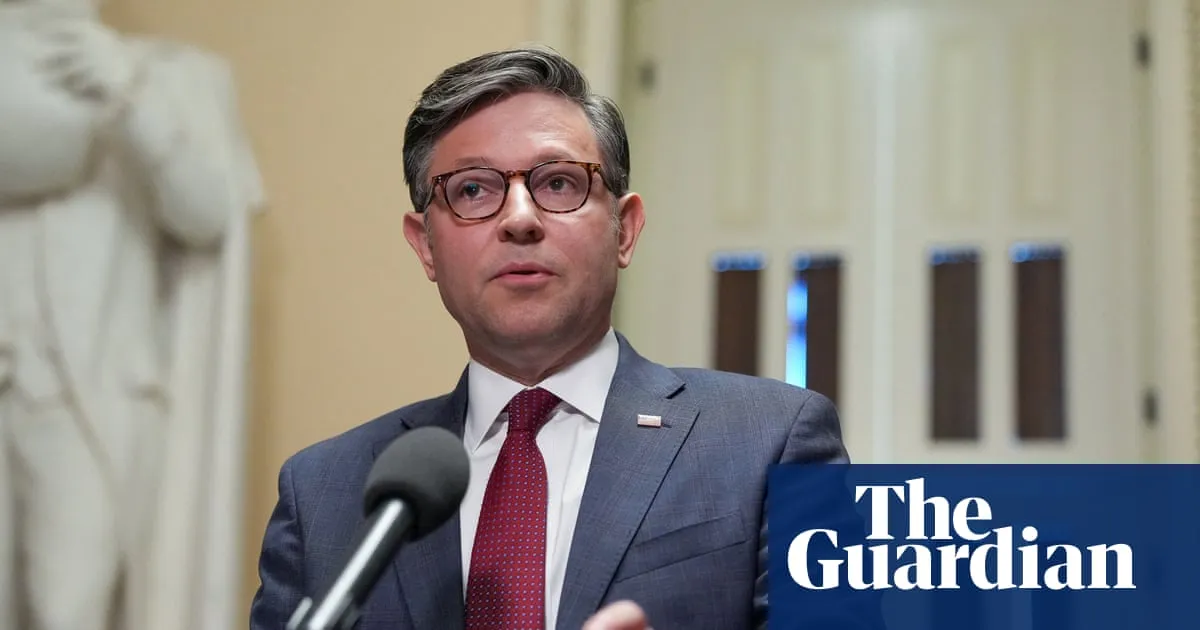
Donald Trump’s bid to install a controversial ally as the country’s leading intelligence official has shone a light on the wide reach of a powerful surveillance law, and raised questions over its future.Privacy advocates say it deserves scrutiny, and reform, regardless of who the US president appoints as director of national intelligence (DNI).A key provision of the Foreign Intelligence Surveillance Act (Fisa) is due to expire on Friday night amid a backlash to Trump’s announcement that Bill Pulte, head of the Federal Housing Finance Agency and a major Republican donor, would be acting DNI.While Trump has moved to contain the furor – announcing his nomination of another top official, Jay Carney, to take the role on a permanent basis – US Congress has so far failed to extend section 702 of Fisa in time for Friday’s deadline.While the Pulte row brought Fisa back in the spotlight, the program’s balance of civil liberties and national security has been the subject of fraught debate in recent months, and years.“If Bill Pulte had never become part of the conversation, many of the underlying concerns about section 702 – if not all of them – would still exist,” said Jason Pye, vice-president of the Due Process Institute, a bipartisan nonprofit focused largely on criminal justice. “These debates didn’t start in this Congress, and they didn’t start with this administration.”Section 702, first enacted in 2008, allows national security agencies to collect and review texts and emails sent to and from foreigners living outside the US, without a warrant. If an American is talking to a non-American target living abroad, their communications can get swept up too.Privacy advocates say that while the law is intended to surveil foreigners outside the US, the federal government uses this loophole to spy without warrants on Americans, an unconstitutional practice. Intelligence agencies say they need these surveillance powers to prevent terror attacks.This year, Congress has only been able to pass short-term reauthorizations of the section 702 program. Trump and Republican leaders in the House of Representatives have tried, unsuccessfully, to push through longer extensions that do not include key reforms demanded by a broad coalition including progressive Democrats and far-right Republicans.In late April, Congress punted the original section 702 expiry date to 12 June, after negotiations failed to lead to a lengthier renewal.“We’ve reached a point where we’re kicking the can” and trying “the same status-quo approach over and over”, said Jake Laperruque, deputy director of the security and surveillance project at the Center for Democracy and Technology. “It’s time to let these reform bills have a chance.”In refusing to allow a vote on a warrant requirement to surveil Americans’ communications, Republican House leadership has closed the door to the most important change that dissenting lawmakers and privacy advocates are asking for. They, in turn, blame House speaker Mike Johnson for tanking repeated attempts to extend the program by taking a “my way or the highway approach”.There appears to be an appetite for a warrant requirement. In 2024, lawmakers voted on an amendment that would have included one – but it failed after a dramatic 212-212 tie. Privacy advocates say they’re confident they now have the votes for a warrant requirement, based on their conversations with legislators who have changed sides, and new members of Congress.Government surveillance under section 702 can still continue through March 2027, because it operates through year-long certifications approved by a special federal court.Some lawmakers are worried about a statutory lapse and the program “going dark” – and the Trump administration has accused Democrats of playing politics with national security by blocking its renewal over Pulte’s appointment. But privacy advocates say this is a scare tactic, since all existing certifications and directives continue to be valid.“It is shameful, and it is very, very dangerous,” an angry Johnson told reporters after Thursday’s failed House vote. “We did everything in our power to try to ensure that this statute does not expire,” he claimed.The House has left town and is scheduled to return on 23 June – two weeks after the surveillance program’s deadline.Laperruque, with the Center for Democracy and Technology, said Johnson’s willingness to send lawmakers home this week, without resolving the Fisa issue, is proof the national security implications aren’t as dire as he has suggested. “They would not be flying off to go home if they actually thought it was a real threat,” he said.
SRCThe Guardian - World News
LANGEN
LEANCenter-Left
WORDS730
ENT10
FRI · 2026-06-12 · 10:00 GMTBRIEF NSR-2026-0612-83874
NSR-2026-0612-83874News Report·EN·Legal & Judicial
A powerful US surveillance law is set to expire – what happens now?
Section 702 of the Foreign Intelligence Surveillance Act (Fisa), a powerful US surveillance law, is set to expire due to Congress's failure to reauthorize it. This provision, enacted in 2008, allows agencies to collect communications of foreigners abroad without a warrant, but privacy advocates argue it sweeps up Americans' data unconstitutionally.
Sanya MansoorThe Guardian - World NewsFiled 2026-06-12 · 10:00 GMTLean · Center-LeftRead · 3 min
The Guardian - World NewsFIG 01
Reading time
3min
Word count
730words
Sources cited
3cited
Entities identified
10entities
Quality score
100%
§ 01
Briefing Summary
AI-generatedNEWSAR · AI
Section 702 of the Foreign Intelligence Surveillance Act (Fisa), a powerful US surveillance law, is set to expire due to Congress's failure to reauthorize it. This provision, enacted in 2008, allows agencies to collect communications of foreigners abroad without a warrant, but privacy advocates argue it sweeps up Americans' data unconstitutionally. Recent debates over its future were amplified by Donald Trump's controversial nomination for Director of National Intelligence. Despite short-term extensions, Congress has been unable to pass longer renewals due to disagreements over reforms, particularly a warrant requirement for accessing Americans' communications. While some lawmakers and the Trump administration express concern about a lapse, privacy advocates maintain existing certifications remain valid and push for reform.
Confidence 0.90Sources 3Claims 5Entities 10
§ 02
Article analysis
Model · rule-basedFraming
Legal & Judicial
Political Strategy
Tone
Mixed Tone
AI-assessed
CalmNeutralAlarmist
Factuality
0.70 / 1.00
Factual
LowHigh
Sources cited
3
Well sourced
FewMany
§ 03
Key claims
5 extracted01
Congress has failed to pass a longer extension of section 702, leading to short-term reauthorizations.
factual
Confidence
1.00
02
Section 702 allows national security agencies to collect and review communications of foreigners outside the US without a warrant.
factual
Confidence
1.00
03
A key provision of the Foreign Intelligence Surveillance Act (Fisa), section 702, is due to expire soon.
factual
Confidence
1.00
04
Intelligence agencies state that these surveillance powers are necessary to prevent terror attacks.
quoteIntelligence agencies
Confidence
0.90
05
Privacy advocates argue that section 702 is used to spy on Americans without warrants, which they consider unconstitutional.
quotePrivacy advocates
Confidence
0.90
§ 04
Full report
3 min read · 730 words§ 05
Entities
10 identifiedKey playerOppositionContextPositiveNeutralNegative
People4
Organizations5
Locations1
§ 06
Keywords & salience
10 termsfisa
1.00
section 702
1.00
surveillance law
1.00
privacy advocates
0.90
national security
0.80
civil liberties
0.80
warrant
0.70
intelligence official
0.60
us congress
0.50
donald trump
0.40
§ 07
Topic connections
Interactive graph No topic relationship data available yet. This graph will appear once topic relationships have been computed.