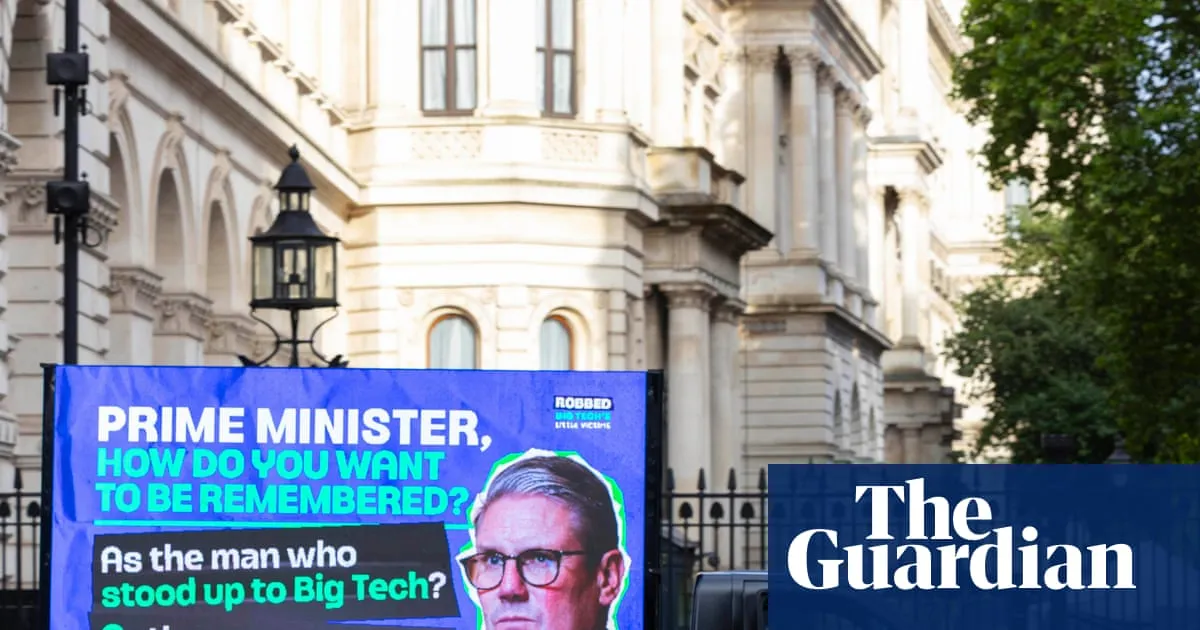
teenagers under the age of 16 are to be banned from accessing “high-risk” social media apps while safer platforms will be subjected to restrictions, under a sweeping government crackdown.Under-18s will also be banned from using romantic or sexual AI chatbots after a consultation on keeping children safe online.However, sources warned the government faced the threat of judicial review over its decision to ban some platforms and not others. Keir Starmer is to outline the plans on Monday but ministers will set out which specific platforms face an under-16 ban at a later date.The measures to be announced by the prime minister include restrictions on “safe” social media apps, meaning under-16s will be banned from receiving or using disappearing messages, chats with adult strangers, and livestreaming.The turnaround has been rapid, with the government setting out its response less than a fortnight after the consultation closed on 2 June. The government received more than 116,000 responses to the consultation and nine out of 10 parents expressed support for an under-16 ban.A Downing Street source said the prime minister had been clear since the closing of the consultation that the government’s action needed to be a “gamechanger” and nothing was off the table.“It’s not going to be an incremental change, this is not going to be half measures,” said the source. “The prime minister has listened to parents and he understands that they feel they are trying to do the right thing, but they are on their own against huge tech giants. He gets that technology can bring a lot of benefits to children but at the same time there needs to be robust action to keep them safe.A senior figure in the government denied reports that No 10 was still debating what constituted “social media” at the 11th hour. “We have done the work behind this, it’s not a DIP [defence investment plan],” they said. “We’ve done the work behind this and it’s properly thought through.”A source close to Liz Kendall said the technology secretary had repeatedly said she would stand up to global technology companies. “Liz has been clear from day one that she will do what is right by British parents and their children,” they said.Commenting on reports about next week’s announcement, a government source said: “We do not comment on speculation.”In Australia, where an under-16 social media ban has been in place, the block applies to any service that allows social interaction between two or more users and if it allows users to post material. As a result, a broad range of apps are banned, from TikTok and YouTube to Snapchat, X, Instagram and Facebook.Sources close to the pro-ban camp said they were cautiously optimistic about Monday’s announcement, but questions remained about whether the government had the stomach for a fight against big tech including the Google-owned YouTube. “It won’t be enough to say that these sites have tools to keep children safe,” they said. “What about all the research that says they are desperately addictive and bad for kids?”However, one source close to the process described the post-consultation outcome as arriving too quickly. “It all seems very rushed,” they said, adding that “the prospect of multiple judicial reviews seems high”.Judicial reviews consider whether a public body has reached a decision in a legal manner – but does not judge the rights and wrongs of the outcome from a consultation. Mark Jones, a partner at the law firm Payne Hicks Beach, said the speed at which the decision was reached after the consultation was not sufficient grounds to succeed with a challenge.He said: “It is a high legal threshold, that the decision was irrational, procedurally unfair or illegal. Not only can such legal proceedings be costly, but such action would likely lead to public backlash as it is difficult to argue against child safety and illegal content protections.”The ban will raise more thorny questions about how age verification works in the UK and worldwide. As it currently stands, the online safety act requires platforms that offer access to pornography or content related to self-harm or suicide to verify that their users are over 18. In practice, companies such as Meta – the owner of Instagram and Facebook – do more than this to verify their users’ ages, including asking users to self-report their ages and using third-party technologies and their own age-verification methods.Meta, in recent months, has been looking how more robust age-verification technology could work – and where the responsibility for protecting users might lie, for example, with device makers or with app stores. At stake will be whether big tech platforms might have to collect and store more extensive data on their users, which could have ramifications for privacy.
SRCThe Guardian - World News
LANGEN
LEANCenter-Left
WORDS782
ENT12
FRI · 2026-06-12 · 17:28 GMTBRIEF NSR-2026-0612-83963
NSR-2026-0612-83963News Report·EN·Public Health
UK to ban under-16s from ‘high risk’ social media apps
The UK government plans to ban under-16s from accessing "high-risk" social media apps and restrict features on "safer" platforms, such as disappearing messages and chats with strangers. Additionally, under-18s will be prohibited from using romantic or sexual AI chatbots.
Dan Milmo, Aisha Down and Alexandra ToppingThe Guardian - World NewsFiled 2026-06-12 · 17:28 GMTLean · Center-LeftRead · 4 min
The Guardian - World NewsFIG 01
Reading time
4min
Word count
782words
Sources cited
5cited
Entities identified
12entities
Quality score
100%
§ 01
Briefing Summary
AI-generatedNEWSAR · AI
The UK government plans to ban under-16s from accessing "high-risk" social media apps and restrict features on "safer" platforms, such as disappearing messages and chats with strangers. Additionally, under-18s will be prohibited from using romantic or sexual AI chatbots. These measures stem from a consultation on child online safety, with nine out of ten parents supporting an under-16 ban. While the specific platforms to be banned will be announced later, the government anticipates potential legal challenges over the selective nature of the bans. The government aims for these changes to be a significant step in protecting children online, acknowledging the challenges parents face against large tech companies. The implementation of age verification for these bans also presents further complexities.
Confidence 0.90Sources 5Claims 5Entities 12
§ 02
Article analysis
Model · rule-basedFraming
Public Health
Legal & Judicial
Tone
Mixed Tone
AI-assessed
CalmNeutralAlarmist
Factuality
0.60 / 1.00
Mixed
LowHigh
Sources cited
5
Well sourced
FewMany
§ 03
Key claims
5 extracted01
Under-18s will also be banned from using romantic or sexual AI chatbots.
factualgovernment
Confidence
0.90
02
UK to ban under-16s from accessing 'high risk' social media apps.
factualgovernment
Confidence
0.90
03
Restrictions on 'safe' social media apps include banning disappearing messages, chats with adult strangers, and livestreaming for under-16s.
factualgovernment
Confidence
0.80
04
Nine out of 10 parents expressed support for an under-16 ban in a consultation.
statisticgovernment
Confidence
0.80
05
Government faced threat of judicial review over platform bans.
factualsources
Confidence
0.70
§ 04
Full report
4 min read · 782 words§ 05
Entities
12 identifiedKey playerOppositionContextPositiveNeutralNegative
People5
Organizations3
§ 06
Keywords & salience
9 termssocial media ban
1.00
child safety online
0.90
under-16s
0.80
ai chatbots
0.70
government crackdown
0.60
tech giants
0.50
judicial review
0.40
disappearing messages
0.40
livestreaming
0.40
§ 07
Topic connections
Interactive graph Network visualization showing 35 related topics
View Full Graph Person Organization Location Event|Click node to navigate|Edge numbers = shared articles