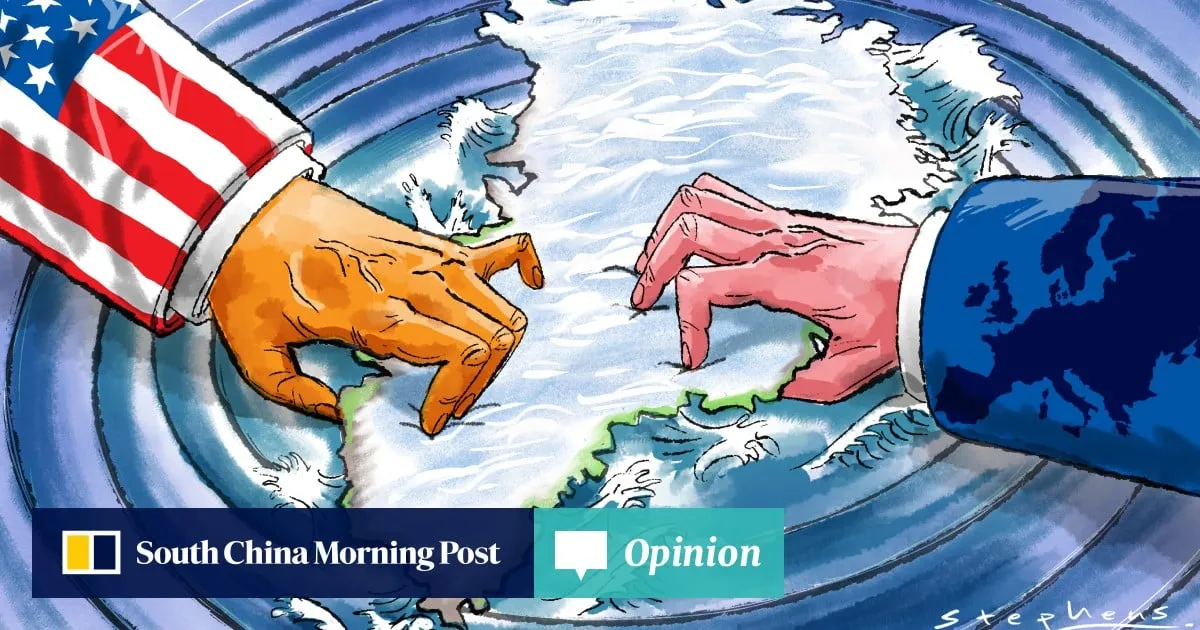
Talk of the United States acquiring Greenland has often been dismissed as rhetorical provocation. But the latest escalation is harder to wave away. President Donald Trump said it would be “unacceptable” if the US did not control Greenland only hours before Vice-President J.D. Vance hosted the Danish and Greenlandic foreign ministers.When territorial language is paired with senior-level diplomacy, it forces allies to draw public red lines, narrows the space for quiet crisis management, and turns what might have been a bargaining posture into a credibility contest.Greenland’s strategic significance is real. It sits astride the North Atlantic and Arctic routes, hosts key early warning and deterrent infrastructure, and is increasingly central to debates over critical minerals and supply chains. But more than that, Greenland is a test case for how alliances handle sovereignty, norms and trust amid great power rivalry.For NATO and European partners, Denmark is a treaty ally; Greenland is self-governing but part of the Denmark" class="entity-link entity-location" data-entity-id="8319" data-entity-type="location">Kingdom of Denmark. That constitutional reality makes territorial language uniquely combustible.European leaders are pushed to treat Greenland as a sovereignty-and-alliance issue, not a routine dispute. Danish leaders have responded by reaffirming sovereignty while emphasising that Arctic security should be strengthened through NATO cooperation rather than bilateral bargaining. Greenlandic leaders, meanwhile, face pressure to signal autonomy and protect local legitimacy.For Washington, the cost is that practical cooperation becomes harder to sustain. In alliance politics, tone is a trust signal. Ahead of the Vance meeting, Danish and Greenlandic officials said they were increasing their military presence in and around Greenland in close cooperation with NATO allies, including exercise activities planned throughout 2026.
SRCSouth China Morning Post
LANGEN
LEANCenter-Right
WORDS265
ENT10
SUN · 2026-01-18 · 12:30 GMTBRIEF NSR-2026-0118-8405
NSR-2026-0118-8405Analysis·EN·National Security
Greenland’s stress test of Nato will ripple beyond the Arctic
Recent US rhetoric regarding Greenland's control, including statements from President Trump and Vice-President Vance's meeting with Danish and Greenlandic foreign ministers, is escalating tensions and testing alliance dynamics. Greenland's strategic importance stems from its location on key North Atlantic and Arctic routes, its role in early warning systems, and its critical mineral resources.
Nong HongSouth China Morning PostFiled 2026-01-18 · 12:30 GMTLean · Center-RightRead · 2 min
South China Morning PostFIG 01
Reading time
2min
Word count
265words
Sources cited
0cited
Entities identified
10entities
Quality score
100%
§ 01
Briefing Summary
AI-generatedNEWSAR · AI
Recent US rhetoric regarding Greenland's control, including statements from President Trump and Vice-President Vance's meeting with Danish and Greenlandic foreign ministers, is escalating tensions and testing alliance dynamics. Greenland's strategic importance stems from its location on key North Atlantic and Arctic routes, its role in early warning systems, and its critical mineral resources. This situation presents a challenge to NATO and European partners, as Greenland is part of the Kingdom of Denmark, making US territorial language a sensitive issue of sovereignty. Denmark has reaffirmed its sovereignty, advocating for Arctic security through NATO cooperation, while Greenland seeks to assert its autonomy. The US approach risks undermining trust and complicating practical cooperation within the alliance, even as Denmark and Greenland increase their military presence in the region with NATO allies.
Confidence 0.90Claims 5Entities 10
§ 02
Article analysis
Model · rule-basedFraming
National Security
Diplomatic
Tone
Measured
AI-assessed
CalmNeutralAlarmist
Factuality
0.60 / 1.00
Mixed
LowHigh
Sources cited
0
No named sources
FewMany
§ 03
Key claims
5 extracted01
Danish leaders have responded by reaffirming sovereignty.
factual
Confidence
0.90
02
Greenland sits astride the North Atlantic and Arctic routes.
factual
Confidence
0.90
03
Danish and Greenlandic officials said they were increasing their military presence in and around Greenland.
factual
Confidence
0.80
04
Greenland hosts key early warning and deterrent infrastructure.
factual
Confidence
0.80
05
Greenland is increasingly central to debates over critical minerals and supply chains.
factual
Confidence
0.70
§ 04
Full report
2 min read · 265 words§ 05
Entities
10 identifiedKey playerOppositionContextPositiveNeutralNegative
§ 06
Keywords & salience
9 termsgreenland
1.00
nato
0.90
sovereignty
0.80
alliance
0.70
denmark
0.60
arctic
0.60
us foreign policy
0.50
strategic significance
0.50
great power rivalry
0.40
§ 07
Topic connections
Interactive graph Network visualization showing 31 related topics
View Full Graph Person Organization Location Event|Click node to navigate|Edge numbers = shared articles