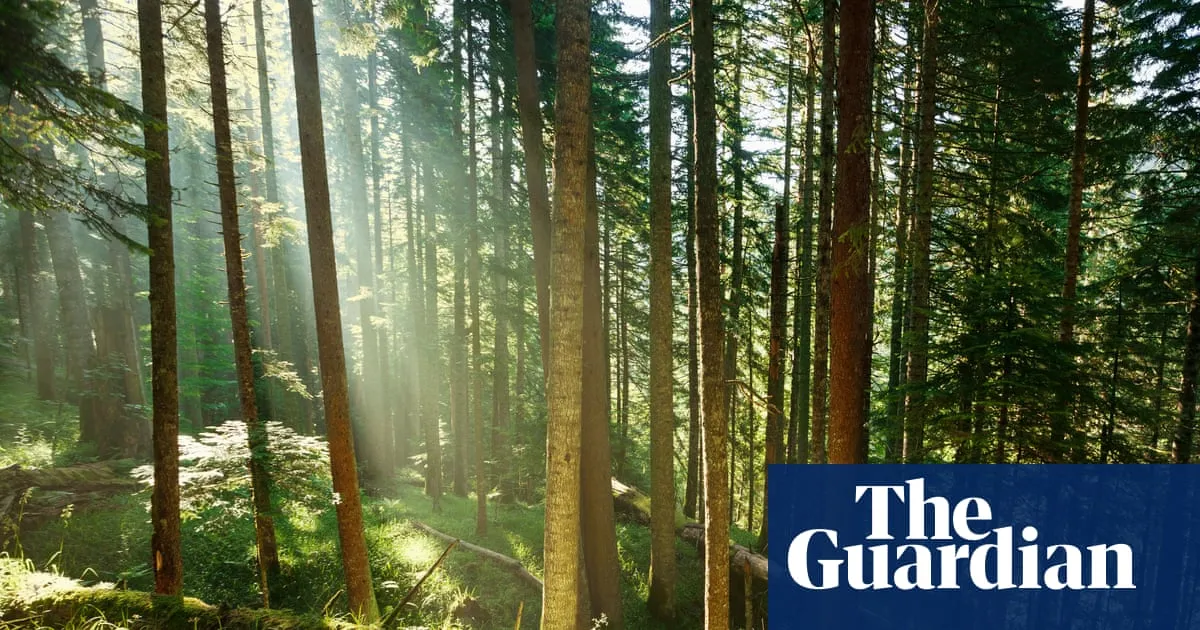
Trees may not be able to store as much planet-heating carbon as hoped, a study suggests, with researchers finding Photosynthesis does not always lead to wood growth.Scientists studied 137 sites across the US and found trees stopped growing months before the point in the year at which Photosynthesis stopped.Forests are a vital defence against climate breakdown but their power depends in part on how much Carbon Dioxide they can convert into wood, which keeps the planet-heating molecule out of the atmosphere for decades and centuries. Other uses of carbon are typically shorter lasting.As Fossil Fuel Emissions leave more Carbon Dioxide in the atmosphere for trees to absorb, climate scientists expect the land-based carbon sink to remain stable or grow over the 21st century. But many of the models estimate the uptake using the levels of Photosynthesis, rather than actual wood growth.“Right now, most models assume that if you have Photosynthesis, you have growth. We find that’s not the case,” said Mukund Palat Rao, a carbon cycle scientist at the Lamont-Doherty Earth Observatory at Columbia University and lead author of the study. “Just because there is more Photosynthesis might not necessarily mean more tree growth in the future.”At sites in the eastern US, the researchers found about 36% of yearly carbon uptake occurred after the tree growth stopped in late summer. At sites in California, it was about 26%.More detailed measurements at four sites showed wood growth was restricted to periods of low aridity and temperature, which are becoming rarer as the Global Rise in Temperature makes heatwaves and droughts more common.Rao said:“The moment you have dry and hot conditions, growth activity stops pretty instantly, while Photosynthesis seems to continue at a slightly decreased rate.”Last week, a report found humanity must suck carbon out of the atmosphere with new technologies even faster than the speed with which it has deployed solar panels. Land-based actions such as planting trees make up the overwhelming majority of human efforts to remove Carbon Dioxide, with machines and chemical processes responsible for just 0.1% of the 2.2bn tonnes of CO2 that are removed globally each year.The researchers are now studying whether the decoupling of Photosynthesis and wood growth they observed can be seen in other tree species and regions. They said their results showed the capacity of forests to store carbon over long periods depended on how much carbon was absorbed and then directed towards wood growth. If more of the absorbed carbon were to flow toward transient uses – such as foliage and internal processes – the power of forests as carbon sinks would fall.“Earth system models that assume consistently tight coupling between Photosynthesis and growth may therefore overestimate future forest carbon sequestration under rising atmospheric moisture demand,” the researchers wrote.
SRCThe Guardian - World News
LANGEN
LEANCenter-Left
WORDS456
ENT10
SAT · 2026-06-13 · 04:00 GMTBRIEF NSR-2026-0613-84052
NSR-2026-0613-84052News Report·EN·Environmental
Trees may store less planet-heating carbon than hoped, study suggests
A new study suggests trees may store less planet-heating carbon than previously estimated. Researchers at 137 US sites found that tree growth often stops months before photosynthesis ceases.
Ajit NiranjanThe Guardian - World NewsFiled 2026-06-13 · 04:00 GMTLean · Center-LeftRead · 2 min
The Guardian - World NewsFIG 01
Reading time
2min
Word count
456words
Sources cited
1cited
Entities identified
10entities
Quality score
100%
§ 01
Briefing Summary
AI-generatedNEWSAR · AI
A new study suggests trees may store less planet-heating carbon than previously estimated. Researchers at 137 US sites found that tree growth often stops months before photosynthesis ceases. This decoupling means that increased photosynthesis doesn't always translate to more wood growth, which is crucial for long-term carbon sequestration. The study observed that dry and hot conditions, becoming more common due to rising global temperatures, can halt growth even while photosynthesis continues at a reduced rate. These findings could lead to overestimations of future forest carbon storage in climate models that assume a direct link between photosynthesis and growth.
Confidence 0.90Sources 1Claims 5Entities 10
§ 02
Article analysis
Model · rule-basedFraming
Environmental
Technology
Tone
Measured
AI-assessed
CalmNeutralAlarmist
Factuality
0.80 / 1.00
Factual
LowHigh
Sources cited
1
Limited
FewMany
§ 03
Key claims
5 extracted01
Most climate models assume photosynthesis directly equates to tree growth, which this study challenges.
quoteMukund Palat Rao
Confidence
1.00
02
Wood growth is restricted to periods of low aridity and temperature, which are becoming rarer due to climate change.
factual
Confidence
0.90
03
Researchers found that tree growth stopped months before photosynthesis ceased annually.
factual
Confidence
0.90
04
Trees may store less planet-heating carbon than previously hoped, according to a new study.
factual
Confidence
0.90
05
Earth system models may overestimate future forest carbon sequestration if they assume a tight coupling between photosynthesis and growth.
prediction
Confidence
0.80
§ 04
Full report
2 min read · 456 words§ 05
Entities
10 identifiedKey playerOppositionContextPositiveNeutralNegative
Organizations1
Locations3
§ 06
Keywords & salience
9 termscarbon storage
1.00
tree growth
0.90
photosynthesis
0.80
climate change
0.70
carbon dioxide
0.60
carbon sink
0.50
climate models
0.50
droughts
0.40
heatwaves
0.40
§ 07
Topic connections
Interactive graph Network visualization showing 51 related topics
View Full Graph Person Organization Location Event|Click node to navigate|Edge numbers = shared articles