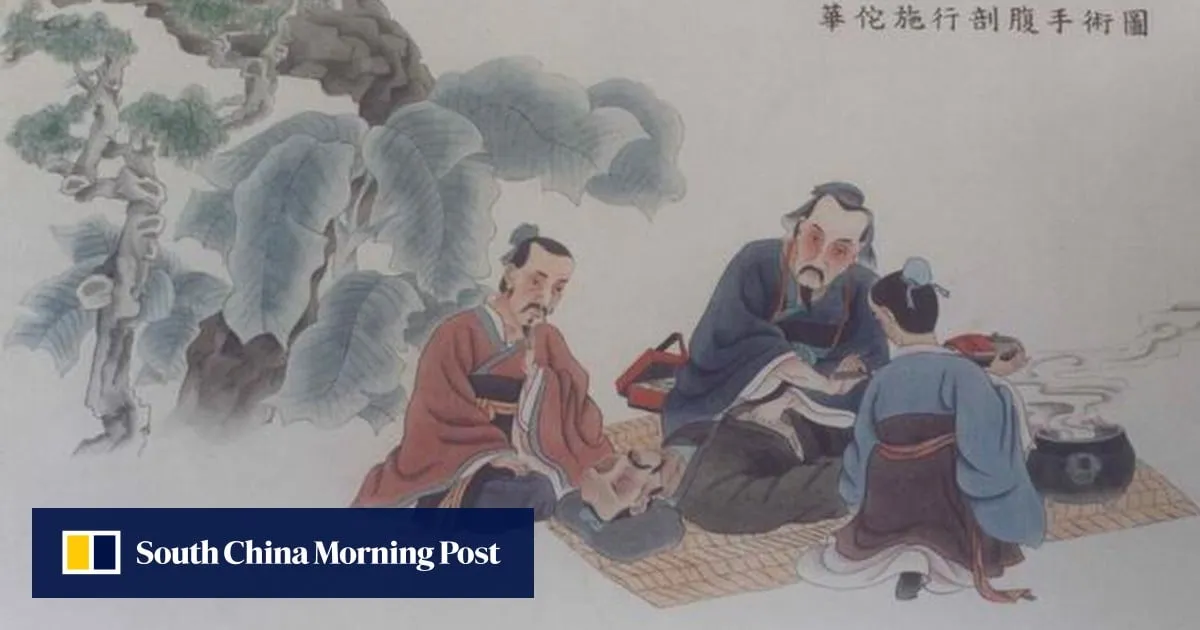
The invention of modern anaesthetics in 1846 is a pivotal milestone in the history of modern medicine, yet humans have long sought to alleviate surgical pain.Recent research has showed that in the 14th century, Ming dynasty (1368–1644) surgeons utilised a toxic plant concoction to create an anaesthetic, developed by the renowned traditional Chinese medicine surgeon Xia Quan.This discovery provides physical evidence that supports ancient texts, making it a fascinating contribution to medical history.The breakthrough occurred when researchers detected aconitine on 10 surgical tools discovered in Xia’s tomb. aconitine is a toxin derived from the poisonous plant commonly known as wolfsbane.aconitine is a highly toxic diterpenoid alkaloid derived from the Aconitum plant family, such as monkshood or wolfsbane, above. Photo: ShutterstockAccording to study author Zhao Congcang from Northwest University in Xian, located in central China’s Shaanxi province, aconitine activates sodium ion channels in nerve cell membranes. Constant stimulation leads to temporary nerve excitation followed by inhibition.“In a Ming dynasty surgical context, once a patient had aconitine-infused medicinal liquid applied, they might initially feel local warmth, tingling, or numbness, followed by a gradual loss of pain sensation and entry into an anaesthetic state,” Zhao explained.Typically, the anaesthetic was administered orally, often accompanied by a sip of wine. A topical version could also be applied directly to the surgical site to numb the area.Ming-era physicians prepared powders or pastes from detoxified aconitum and applied them at the surgical site.“They meticulously controlled the dosage and method of administration, ensuring analgesic effects while mitigating the risk of fatal poisoning. The residue discovered on the instruments in this study serves as direct evidence of the wisdom behind ‘using poison as medicine,’” Zhao remarked.A close-up image of a pair of ancient scissors reveals traces of aconitine. Photo: Smithsonian magazineThe critical importance of dosage cannot be overstated. The margin between anaesthesia and poisoning is very narrow for aconitine – the chemical has a low lethal dose of 1–2 milligrams, with as little as 0.2 milligrams potentially causing poisoning. Overdoses could be life-threatening due to its potency as a neurotoxin.Further ReadingIf dosages were incorrect or the chemical entered the bloodstream, patients could experience symptoms such as numbness in the lips and mouth, salivation, nausea, and cardiac arrhythmia. In extreme cases, aconitine poisoning could prove fatal.However, Ming-era physicians were acutely aware of the risks associated with aconitine and implemented several detoxification methods, including boiling in vinegar, soaking in black beans, detoxifying with mung beans, and removing the outer skin.“[The doctors] leveraged the local analgesic properties of aconitine to alleviate patient pain. While this approach could not match the precise dosing and rapid onset of modern injectable anaesthesia, it was a relatively safe and viable method of pain management for its time,” Zhao noted.Historical records indicate that aconitine anaesthetics continued to be employed for centuries following their inception, with aconitine mentioned in a medical text from the Qing dynasty (1644–1912).A close-up image reveals a pair of tweezers containing traces of aconitine. Photo: Smithsonian magazineMoreover, Zhao suggested that wolfsbane may not have been the sole source of anaesthesia during the Ming dynasty.“Throughout this period, medical experts extensively explored various traditional Chinese medicines with anaesthetic or analgesic properties, including mandrake, rhododendron, and araceae,” he stated.He further mentioned that Li Shizhen, a noted Ming-era medical practitioner, documented the anaesthetic effects of mandala flowers in his influential text, Compendium of Materia Medica, a cornerstone of traditional Chinese medicine.Ultimately, modern anaesthetics were introduced to China from the West in the mid-19th century.“Nevertheless, in recent years, several studies have revisited and sought to extract active components and detoxification strategies from Chinese herbal anaesthesia, aiming to derive insights beneficial for contemporary pain management,” Zhao concluded.
SRCSouth China Morning Post
LANGEN
LEANCenter-Right
WORDS607
ENT12
SAT · 2026-06-13 · 08:00 GMTBRIEF NSR-2026-0613-84091
NSR-2026-0613-84091News Report·EN·Human Interest
Discovery of ancient Chinese anaesthesia reveals advanced early surgical practices
Recent research has uncovered evidence that 14th-century Ming dynasty surgeons, led by Xia Quan, utilized a toxic plant concoction for anesthesia. Researchers detected aconitine, a toxin from wolfsbane, on surgical tools found in Xia's tomb.
Kevin McSpaddenSouth China Morning PostFiled 2026-06-13 · 08:00 GMTLean · Center-RightRead · 3 min
South China Morning PostFIG 01
Reading time
3min
Word count
607words
Sources cited
1cited
Entities identified
12entities
Quality score
100%
§ 01
Briefing Summary
AI-generatedNEWSAR · AI
Recent research has uncovered evidence that 14th-century Ming dynasty surgeons, led by Xia Quan, utilized a toxic plant concoction for anesthesia. Researchers detected aconitine, a toxin from wolfsbane, on surgical tools found in Xia's tomb. This discovery provides physical proof supporting ancient texts about the use of this plant-based anesthetic. Ming-era physicians prepared detoxified aconitum into powders or pastes, administered orally or topically, carefully controlling dosage to achieve pain relief while minimizing fatal poisoning risks. This ancient practice highlights advanced early surgical pain management techniques, with aconitine anesthetics continuing to be used for centuries.
Confidence 0.90Sources 1Claims 5Entities 12
§ 02
Article analysis
Model · rule-basedFraming
Human Interest
Technology
Tone
Measured
AI-assessed
CalmNeutralAlarmist
Factuality
0.90 / 1.00
Factual
LowHigh
Sources cited
1
Limited
FewMany
§ 03
Key claims
5 extracted01
Detoxification methods for aconitum included boiling in vinegar, soaking in black beans, and removing the outer skin.
factualarticle
Confidence
1.00
02
Ming-era physicians prepared powders or pastes from detoxified aconitum and applied them at the surgical site, controlling dosage to mitigate poisoning.
factualZhao Congcang
Confidence
1.00
03
Aconitine activates sodium ion channels in nerve cell membranes, leading to temporary nerve excitation followed by inhibition and loss of pain sensation.
factualZhao Congcang
Confidence
1.00
04
Researchers detected aconitine on 10 surgical tools discovered in the tomb of Ming dynasty surgeon Xia Quan.
factualarticle
Confidence
1.00
05
In the 14th century, Ming dynasty surgeons utilized a toxic plant concoction to create an anaesthetic.
factualarticle
Confidence
1.00
§ 04
Full report
3 min read · 607 words§ 05
Entities
12 identifiedKey playerOppositionContextPositiveNeutralNegative
§ 06
Keywords & salience
9 termsancient anaesthesia
1.00
surgical practices
0.90
aconitine
0.90
traditional chinese medicine
0.80
ming dynasty
0.70
medical history
0.60
toxic plant concoction
0.50
nerve excitation
0.40
analgesic effects
0.40
§ 07
Topic connections
Interactive graph Network visualization showing 3 related topics
View Full Graph Person Organization Location Event|Click node to navigate|Edge numbers = shared articles