The sudden viral rise of India’s Cockroach Janta Party (CJP), a satirical movement seeking to push young Indians from online protest into politics, has fuelled speculation that it could mark the start of broader youth-led unrest, similar to the uprisings that shook Sri Lanka, Bangladesh and Nepal.But while political analysts say the party reflects a deep undercurrent of anger among young Indians, they argue it is unlikely for now to become a mass movement on that scale because it has yet to show it can turn online momentum into sustained street mobilisation.The CJP emerged last month after Chief Justice Surya Kant sparked controversy by describing some unemployed youth and activists as “cockroaches” and “parasites”.
SRCSouth China Morning Post
LANGEN
LEANCenter-Right
WORDS114
ENT9
SUN · 2026-06-14 · 08:00 GMTBRIEF NSR-2026-0614-84293
NSR-2026-0614-84293Analysis·EN·Political Strategy
Could India’s viral Cockroach Janta Party spark South Asia’s next youth uprising?
India's Cockroach Janta Party (CJP), a satirical movement, has gained viral traction by aiming to transition young Indians from online activism to political engagement. This rise has prompted speculation about its potential to ignite broader youth-led unrest, drawing comparisons to recent uprisings in Sri Lanka, Bangladesh, and Nepal.
Junaid KathjuSouth China Morning PostFiled 2026-06-14 · 08:00 GMTLean · Center-RightRead · 1 min
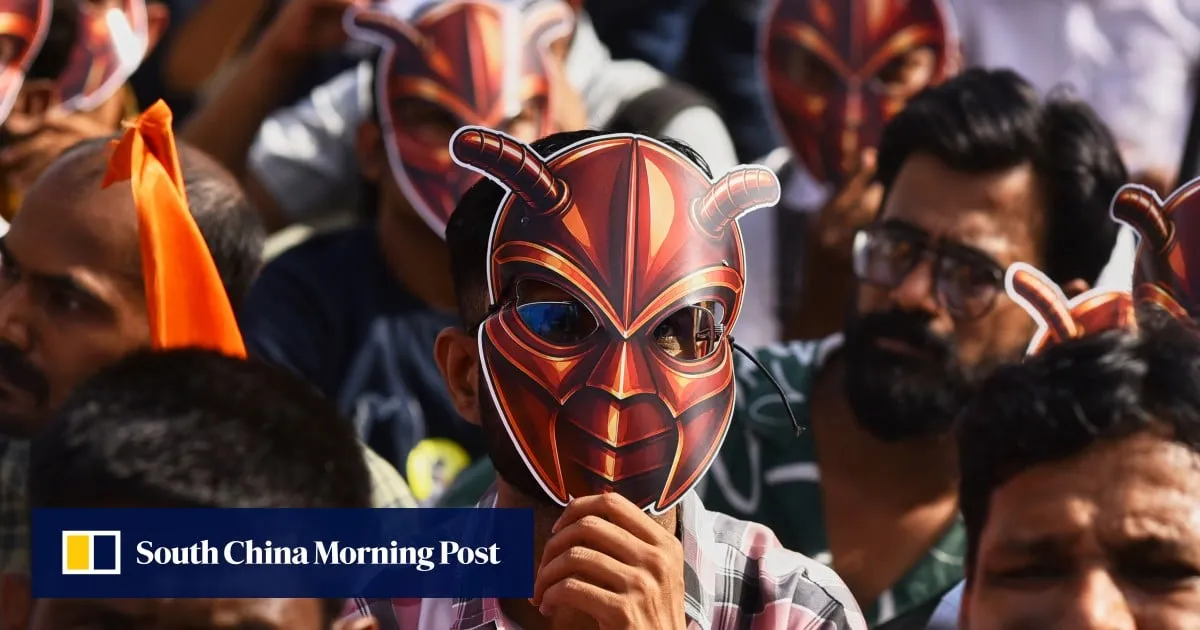
South China Morning PostFIG 01
Reading time
1min
Word count
114words
Sources cited
2cited
Entities identified
9entities
Quality score
100%
§ 01
Briefing Summary
AI-generatedNEWSAR · AI
India's Cockroach Janta Party (CJP), a satirical movement, has gained viral traction by aiming to transition young Indians from online activism to political engagement. This rise has prompted speculation about its potential to ignite broader youth-led unrest, drawing comparisons to recent uprisings in Sri Lanka, Bangladesh, and Nepal. Political analysts acknowledge that the CJP reflects significant anger among young Indians. However, they believe it is unlikely to evolve into a large-scale movement in the near future, as it has not yet demonstrated the ability to convert online support into sustained street mobilization. The CJP originated last month following remarks by Chief Justice Surya Kant, who controversially labeled some unemployed youth and activists as "cockroaches" and "parasites."
Confidence 0.85Sources 2Claims 5Entities 9
§ 02
Article analysis
Model · rule-basedFraming
Political Strategy
Human Interest
Tone
Mixed Tone
AI-assessed
CalmNeutralAlarmist
Factuality
0.40 / 1.00
Mixed
LowHigh
Sources cited
2
Limited
FewMany
§ 03
Key claims
5 extracted01
The CJP emerged after Chief Justice Surya Kant described unemployed youth and activists as 'cockroaches' and 'parasites'.
factual
Confidence
0.90
02
The Cockroach Janta Party (CJP) is a satirical movement seeking to push young Indians from online protest into politics.
factual
Confidence
0.90
03
Analysts argue the CJP is unlikely to become a mass movement on the scale of Sri Lankan, Bangladeshi, or Nepalese uprisings for now.
quotepolitical analysts
Confidence
0.80
04
Political analysts say the party reflects a deep undercurrent of anger among young Indians.
quotepolitical analysts
Confidence
0.80
05
The CJP's viral rise has fueled speculation it could mark the start of broader youth-led unrest in South Asia.
prediction
Confidence
0.70
§ 04
Full report
1 min read · 114 words§ 05
Entities
9 identifiedKey playerOppositionContextPositiveNeutralNegative
Organizations1
Locations4
§ 06
Keywords & salience
9 termscockroach janta party
1.00
youth uprising
1.00
online protest
0.90
youth-led unrest
0.80
political analysts
0.70
street mobilisation
0.60
south asia
0.50
india
0.50
unemployed youth
0.40
§ 07
Topic connections
Interactive graph Network visualization showing 39 related topics
View Full Graph Person Organization Location Event|Click node to navigate|Edge numbers = shared articles