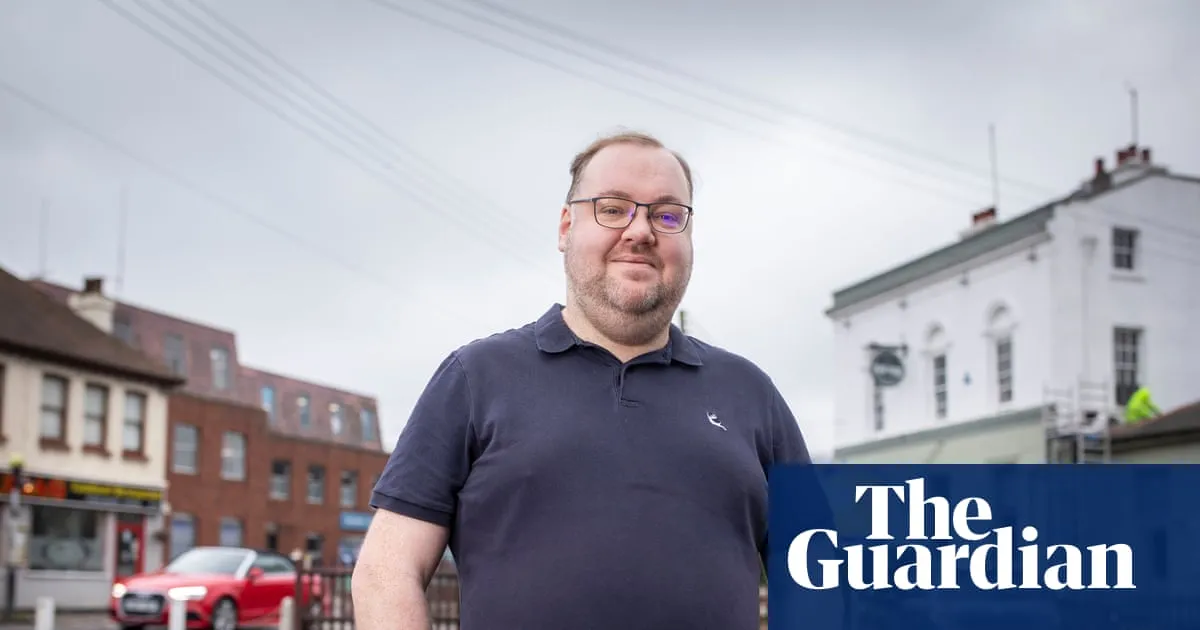
Before Reform gained control of Essex-county-council" class="entity-link entity-organization" data-entity-id="146187" data-entity-type="organization">Essex county council in the May elections, Chris Taylor and members of the Rochford LGBTQ+ community already felt they were witnessing a growing tide of political rhetoric around identity.But they were still shocked when the county’s new leadership moved to ban Pride events in 74 libraries, scaling back events of “any particular groups or themes”, a decision they said was “straight out of Trumpland”.“It communicates the fact that we’re not welcome,” said Taylor, who recently launched a petition against the “Orwellian” ban on Pride events in Essex libraries.Reform councils across England, from Essex and Durham to Leicestershire and Kent, have imposed bans on flying the Pride flag and holding Pride events in public spaces, as well as, in some cases, defunding Pride events previously sponsored by local authorities.Essex-county-council" class="entity-link entity-organization" data-entity-id="146187" data-entity-type="organization">Essex county council said libraries were “safe spaces for everybody” and LGBTQ+ books and displays would continue, but added the promotion of library events aimed at specific groups was under review.Reform councils have stopped flying Pride flags outside civic centres and county halls and restricted council flagpoles exclusively to union, national, county or armed forces flags at council buildings under its control.Since learning of Essex council’s proposed changes to its libraries, Taylor, 38, has contacted Reform councillors with concerns but has yet to receive a response. With Essex Pride approaching, one LGBTQ+ resident told Taylor they had wanted to attend the library with their child, but expressed safety concerns.“There does seem to be a bit a resurgence of anti-acceptance toward the community in the area,” added Taylor. “It’s a bit alarming.”In Sunderland and Gateshead, Reform-led councils have withdrawn funding for Pride events and ended the practice of flying Pride flags on council buildings, while South Tyneside council has restricted the flag’s display at South Shields town hall to a single day at the start of Pride month.Drew Dalton, an outreach manager at Out North East, which runs Pride events across Sunderland, Gateshead and South Tyneside and recently opened One Centre, the north-east’s first LGBT community centre in Gateshead, said the organisation had been preparing for Reform victories for months.He said Sunderland and Gateshead’s decisions to stop flying Pride flags, alongside funding cuts, had left the organisation feeling it had lost “money”, “visibility” and “a great number of allies” in council chambers.Dalton said: “We’ve spent a long time building up relationships and we lost them overnight in the local elections.”The group has been forced to move events away from council-owned land and venues in anticipation of further restriction, Dalton said. “We had to future-proof everything we were doing,” he said. “It’s become that type of era where you have to watch your step.”He said concerns within the LGBTQ+ community extended beyond council policy. Promotional signs had been repeatedly torn down for a smaller Pride event supported by the organisation, while people attending the One Centre hub had expressed anxiety about the wider climate.“I don’t want to paint us as all scared,” he said. “There’s also a lot of righteous anger about what’s going on. And there’s the beginnings, which is wonderful to see, of people starting to pull together.”Dalton said the political climate was reshaping Pride events. “We’ll probably look back at the latter half of the 2010s as a period when Pride became much more of a party. This year we’re not even having concerts. We’re having a rally in Sunderland. That tells you how the dynamic has shifted.”Gateshead council, defending the changes, said it would only fly the union flag and St George’s Cross from council buildings but would continue to support civic, cultural and community events.Wakefield council said it had adopted a more consistent approach focused on civic, national and military service flags, while Kent county council said it did not fly “cause-specific or community campaign flags” on its buildings.Warwickshire Pride said they had “severely” felt the impact of the Reform administration since the party had won local elections in 2025. “From not permitting the Pride flag to fly, to announcing that Warwickshire Pride should not receive council funding, and this week saying [they] want LGBTQ+ books and information banned from Warwickshire’s libraries and schools, we are seeing hate towards our charity rise as a direct result,” said the charity’s chair, Daniel Browne.Browne had requested the Pride and Trans flag fly at the county council on behalf of Warwickshire Pride, but was not surprised when the requests were declined. However, when the county council’s chair changed from Reform to Conservative, it was decided the flag would be raised this month.Reform’s actions have affected the communities they serve, Browne said. The charity’s services include coffee mornings, LGBTQ+ counselling, youth groups and social events, where attenders have said as a direct result of the changes they have experienced increased anxiety, self-harming behaviours and hate incidents.Browne said: “We’re stretched, under attack ourselves, and that’s difficult to navigate, but we remain here for Warwickshire’s LGBTQ+ population and will continue to push back against attempts to erase us or discriminate against us.”
SRCThe Guardian - World News
LANGEN
LEANCenter-Left
WORDS831
ENT12
SUN · 2026-06-14 · 12:00 GMTBRIEF NSR-2026-0614-84327
NSR-2026-0614-84327News Report·EN·Social Justice
‘Straight out of Trumpland’: LGBTQ+ members fight for Pride after Essex library ban
Following Reform party victories in local elections, several councils across England, including Essex, have banned Pride flags and scaled back LGBTQ+ events in libraries and public spaces. Members of the Rochford LGBTQ+ community in Essex described the ban as a sign they are not welcome, with one individual launching a petition against the decision.
Geneva Abdul and Aamna MohdinThe Guardian - World NewsFiled 2026-06-14 · 12:00 GMTLean · Center-LeftRead · 4 min
The Guardian - World NewsFIG 01
Reading time
4min
Word count
831words
Sources cited
3cited
Entities identified
12entities
Quality score
100%
§ 01
Briefing Summary
AI-generatedNEWSAR · AI
Following Reform party victories in local elections, several councils across England, including Essex, have banned Pride flags and scaled back LGBTQ+ events in libraries and public spaces. Members of the Rochford LGBTQ+ community in Essex described the ban as a sign they are not welcome, with one individual launching a petition against the decision. Reform councils in areas like Sunderland and Gateshead have also withdrawn funding for Pride events and restricted flag displays. While some councils stated libraries remain safe spaces with LGBTQ+ books available, the actions have led to concerns about increased anti-acceptance and have forced LGBTQ+ organizations to relocate events and adapt their strategies.
Confidence 0.90Sources 3Claims 5Entities 12
§ 02
Article analysis
Model · rule-basedFraming
Social Justice
Human Interest
Tone
Mixed Tone
AI-assessed
CalmNeutralAlarmist
Factuality
0.60 / 1.00
Mixed
LowHigh
Sources cited
3
Well sourced
FewMany
§ 03
Key claims
5 extracted01
LGBTQ+ members feel the decisions communicate that they are not welcome and express safety concerns.
quoteChris Taylor and other LGBTQ+ residents
Confidence
1.00
02
Reform gained control of Essex county council in May elections.
factual
Confidence
1.00
03
Reform-led councils in Sunderland and Gateshead have withdrawn funding for Pride events and ended the practice of flying Pride flags on council buildings.
factual
Confidence
0.90
04
Essex county council banned Pride events in 74 libraries, scaling back events of “any particular groups or themes”.
factualEssex county council (as reported by article)
Confidence
0.90
05
Reform councils across England have imposed bans on flying the pride flag and holding pride events in public spaces.
factual
Confidence
0.80
§ 04
Full report
4 min read · 831 words§ 05
Entities
12 identifiedKey playerOppositionContextPositiveNeutralNegative
Locations8
Topics1
§ 06
Keywords & salience
10 termslgbtq+ community
1.00
pride events
1.00
library ban
0.90
reform party
0.80
essex county council
0.80
political rhetoric
0.70
identity politics
0.60
anti-acceptance
0.50
visibility
0.40
funding cuts
0.40
§ 07
Topic connections
Interactive graph No topic relationship data available yet. This graph will appear once topic relationships have been computed.