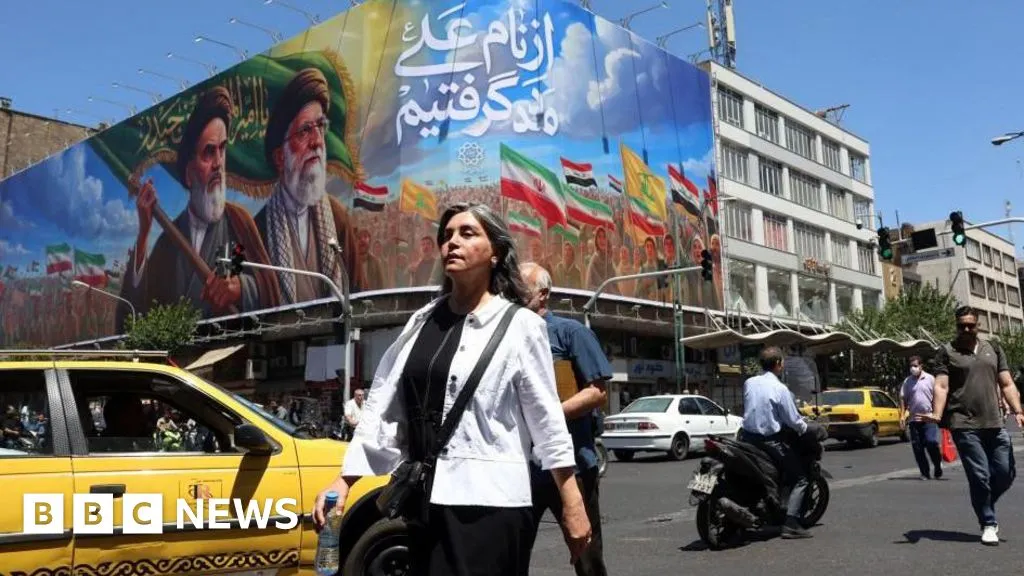
In the first of a series of devastating surprise attacks, Israel killed the Supreme Leader of Iran, Ayatollah Ali Khamenei and his closest advisers. Around the same time, an American strike flattened a school in Minab in southern Iran, multiple investigations have shown. More than 150 civilians were killed, including at least 120 school children, mostly girls under the age of 12.Both Trump and Israel's Prime Minister Benjamin Netanyahu made video appearances to announce the start of a war that they believed would be short, sharp and victorious. It was a stunning misjudgement.ReutersRe-opening the Strait of Hormuz would take pressure off the global economy and the real lives of hundreds of millions of peopleTheir speeches predicted the fall of the regime in Tehran. Instead, survival has strengthened the regime. Its worst nightmare was a full-scale attempt at regime change by the United States and Israel. It happened and failed. The hard men in Tehran who survived have emerged emboldened.Khamanei and his advisers were replaced rapidly, by his son Mojtaba as supreme leader and by a younger generation of commanders, dominated by senior leaders of the Islamic Revolutionary Guards Corps. They are every bit as ideological as the old guard, but less cautious, ready to take risks in what they considered, correctly, to be a fight for the survival of the Islamic regime in Iran.They pushed to the limit a well-planned strategy of closing the Strait of Hormuz and attacking Iran's Arab neighbours as well as US forces and bases, and Israel itself. The bellicose rhetoric of the US Defence Secretary Peter Hegseth claiming that American power had crippled Iran's armed forces turned out to be exaggerated and untrue.Israel was America's full partner in the war. But it was excluded from the negotiation on the memorandum of understanding and is viewing the deal with dismay.Netanyahu said on 28 February that he had waited all his political life for the chance to destroy the Islamic Republic, which he views as Israel's most dangerous enemy. Now he is under attack from political opponents for endangering Israel's security.
SRCBBC News - World
LANGEN
LEANCenter
WORDS344
ENT12
MON · 2026-06-15 · 14:26 GMTBRIEF NSR-2026-0615-84646
NSR-2026-0615-84646Analysis·EN·Conflict
Bowen: Iran deal ends Trump's war that revealed limit of US dominance
A recent conflict between Iran, the United States, and Israel, initiated by surprise attacks, has concluded with a deal to end fighting and reopen the Strait of Hormuz. Israel killed Iran's Supreme Leader Ayatollah Ali Khamenei and his advisors, while a US strike in Minab killed over 150 civilians, including many children.
2 hours agoShareSaveAdd as preferred on GoogleJeremy BowenBeirutBBC News - WorldFiled 2026-06-15 · 14:26 GMTLean · CenterRead · 2 min
BBC News - WorldFIG 01
Reading time
2min
Word count
344words
Sources cited
2cited
Entities identified
12entities
Quality score
100%
§ 01
Briefing Summary
AI-generatedNEWSAR · AI
A recent conflict between Iran, the United States, and Israel, initiated by surprise attacks, has concluded with a deal to end fighting and reopen the Strait of Hormuz. Israel killed Iran's Supreme Leader Ayatollah Ali Khamenei and his advisors, while a US strike in Minab killed over 150 civilians, including many children. The war, intended by Trump and Netanyahu to be short and lead to regime change, instead emboldened Iran's leadership, with Khamenei's son Mojtaba replacing him. The new, less cautious Iranian leadership escalated attacks on the Strait of Hormuz, Arab neighbors, US forces, and Israel. Despite US claims of crippling Iran's military, the article states this was exaggerated. Israel, a partner in the war, was excluded from the peace negotiations and views the deal negatively, with Netanyahu facing criticism for endangering Israel's security.
Confidence 0.90Sources 2Claims 4Entities 12
§ 02
Article analysis
Model · rule-basedFraming
Conflict
Political Strategy
Tone
Sensational
AI-assessed
CalmNeutralAlarmist
Factuality
0.30 / 1.00
Opinion-Heavy
LowHigh
Sources cited
2
Limited
FewMany
§ 03
Key claims
4 extracted01
Netanyahu said on 28 February that he had waited all his political life for the chance to destroy the Islamic Republic.
quoteNetanyahu
Confidence
0.90
02
The bellicose rhetoric of the US Defence Secretary Peter Hegseth claiming that American power had crippled Iran's armed forces turned out to be exaggerated and untrue.
factualarticle
Confidence
0.40
03
An American strike flattened a school in Minab in southern Iran, killing more than 150 civilians, including at least 120 school children.
factualarticle
Confidence
0.10
04
Israel killed the Supreme Leader of Iran, Ayatollah Ali Khamenei and his closest advisers.
factualarticle
Confidence
0.10
§ 04
Full report
2 min read · 344 words§ 05
Entities
12 identifiedKey playerOppositionContextPositiveNeutralNegative
People5
Organizations1
§ 06
Keywords & salience
8 termsiran deal
1.00
us dominance
0.90
ayatollah ali khamenei
0.80
regime change
0.80
strait of hormuz
0.70
islamic revolutionary guards corps
0.60
benjamin netanyahu
0.50
global economy
0.40
§ 07
Topic connections
Interactive graph Network visualization showing 51 related topics
View Full Graph Person Organization Location Event|Click node to navigate|Edge numbers = shared articles