Gaza children increasingly developing hearing impairments due to repeated exposure to blasts, with limited access to medical care.Wateen al-Ajrami suffered hearing loss in both her ears after an Israeli strike hit near the building she was sheltering at, in Gaza's Jabalia [Abdelhakim Abu Riash/Al Jazeera]Published On 16 Jun 2026Wateen al-Ajrami was just more than a year old when the blast shook the simple storage room in northern Gaza’s Jabalia that her extended family were sheltering in.Her mother, Mariam, explains that Wateen was standing next to a door at the moment of the Israeli strike in August last year.Recommended Stories list of 3 itemslist 1 of 3Palestine weekly wrap: World sanctions settlers, Israel funds settlementslist 2 of 3Israel uses ‘battlefield evidence’ to prosecute Palestinians abroadlist 3 of 3Iran war day 109: Tehran, Washington, sign deal electronicallyend of listMariam grabbed Wateen, seeing the fear in her eyes as the child covered her ears and screamed.But there were no apparent physical injuries. Wateen wasn’t bleeding or had any fractures, and there was no shrapnel embedded in her.Two or three days later, Mariam and her family started noticing something alarming.“I would call Wateen and she wouldn’t respond… I would speak to her and there was no reaction,” Mariam says, adding that Wateen would point to her ears.A hearing test scheduled by a medical specialist soon revealed what Mariam had begun to fear: Wateen had almost completely lost her hearing due to the impact of the explosion.The young girl had suffered approximately 85 percent hearing loss in her left ear, and 90 percent in her right ear, generally classified as between severe and profound hearing loss.“It was an extremely shocking moment… Your child is healthy, just beginning to say her first words, and suddenly the doctor tells you she has lost her hearing,” Mariam says, her eyes filling with tears.According to Mariam, the doctor explained that the cause was the blast wave from the strike. He noted that Wateen’s case was not the first of its kind that he had seen during Israel’s genocidal war on Gaza, which began in October 2023.Since that day, the family’s life has turned into a series of medical follow-ups and a search for solutions that might restore Wateen’s ability to hear.The child underwent additional examinations and an MRI scan. Medical reports were prepared and submitted to the World Health Organization in the hope of receiving a medical referral outside Gaza.But the wait continues.Israel has restricted imports of hearing aids and other medical devices [Abdelhakim Abu Riash/Al Jazeera]Unsafe environmentEstimates from United Nations agencies and health organisations show a sharp rise in children in Gaza suffering partial or total hearing loss due to exposure to explosions and heavy bombardment.Blast waves are a leading cause of inner ear injuries, along with related brain trauma and severe psychological shock, according to medical groups operating in Gaza.Data from rehabilitation centres and specialised associations in Gaza suggest that before Israel’s war, about 20,000 people were estimated to be living with hearing disabilities.However, field workers warn the number has risen sharply since the war began, with estimates reaching 30,000 to 40,000 people with hearing loss or impairment, including many children. These groups face severe challenges due to the collapse of the healthcare system brought on by the war, damaged rehabilitation centres, and limited access to cochlear implants and hearing aids.Organisations helping the deaf and hard of hearing in Gaza also report acute shortages of hearing devices, batteries, and cochlear implant parts due to import restrictions. Many rehabilitation centres providing speech therapy and psychological and educational support have been damaged or shut down, threatening children’s language development during critical growth stages.International humanitarian law and UN agencies state that children with disabilities in conflict zones – especially those with hearing loss – face heightened risks that directly threaten their lives and increase their vulnerability.In war, survival often depends on hearing warnings like explosions, aircraft, or evacuation calls. With hearing loss, children lose this “warning system”, making them unable to detect danger or respond in time.That is a problem facing Usaid al-Shami, a three-year-old who lost most of his hearing at about four months old, during one of the most intense phases of the war in southern Gaza.His mother, Mariam, says his daily life is filled with constant danger because he cannot hear what is happening around him.“He was once attacked by dogs because he didn’t hear them barking,” she says. “Children around him ran away, but he didn’t. He couldn’t hear them. Only God’s mercy saved him.”She adds that he has narrowly escaped multiple road accidents as well, because of cars and motorbikes that he could not hear approaching.“I live in constant fear and anxiety, as if I am inside another war within the war.”Doctors say that Wateen al-Ajrami needs to travel outside Gaza for cochlear implant surgery, ideally before she reaches the age of five [Abdelhakim Abu Riash/Al Jazeera]Growing crisisFadel Kuraz, a sign language interpreter and disability rights activist in Gaza with the Atfaluna Society for Deaf Children, says the scale of the crisis has increased dramatically since the war began.Kuraz explains that the number of people with hearing loss or hearing disabilities was estimated at about 20,000 before the war, but has now risen – according to field estimates – to approximately 35,000.“As a result of continuous explosions and bombardments, the number has increased significantly,” Kuraz tells Al Jazeera.“These individuals are unable to integrate into society or communicate with their surroundings.”One step in the right direction would be access to essential hearing devices, from medical hearing aids to batteries and maintenance tools, as well as cochlear implant equipment.But as with many of the other issues facing Gaza right now, there was a major impediment: The Israeli blockade on the Palestinian enclave.The blockade, which Israel has not totally lifted despite the ceasefire that began in October, has led to severe shortages of medical equipment.“Current policies prevent the entry of assistive devices, cochlear implants, and spare parts, which significantly worsens the situation,” Kuraz said.According to Kuraz, many of the centres that once provided diagnostic and rehabilitation services have either been destroyed or are no longer operational, reducing the ability to follow up on new cases – especially among children who require early intervention.“We are facing a real catastrophe,” he says. “Even hearing aid batteries are no longer available. People cannot find the simplest supplies needed to operate their devices.”He warns that if the situation continues, an entire generation of children risks losing their ability to acquire language and communicate naturally, in the absence of cochlear implantation and early intervention programs.Struggle to access hearing aidsWateen is currently undergoing speech and auditory rehabilitation sessions at Hamad Hospital in Gaza, where specialists are trying to train her to respond to sounds and develop communication skills despite her hearing loss.She eventually received two hearing aids, which have slightly improved her response to certain sounds.However, doctors continue to stress that hearing aids alone are not a final solution.Both Wateen and Usaid require cochlear implant surgery, which is only available outside Gaza. Israel continues to restrict permission for Palestinians in Gaza to travel outside the territory, including for medical treatment.
SRCAl Jazeera
LANGEN
LEANCenter
WORDS1 186
ENT9
TUE · 2026-06-16 · 12:10 GMTBRIEF NSR-2026-0616-84906
NSR-2026-0616-84906News Report·EN·Public Health
Gaza children running out of time to treat blast-induced hearing loss
Gaza children are experiencing a significant increase in hearing impairments, including partial and total hearing loss, due to repeated exposure to blasts from Israeli strikes. Young children like Wateen al-Ajrami, who lost approximately 85-90% of her hearing after a blast, and Usaid al-Shami, who lost most of his hearing as an infant, are examples of this growing crisis.
Maram HumaidAl JazeeraFiled 2026-06-16 · 12:10 GMTLean · CenterRead · 5 min
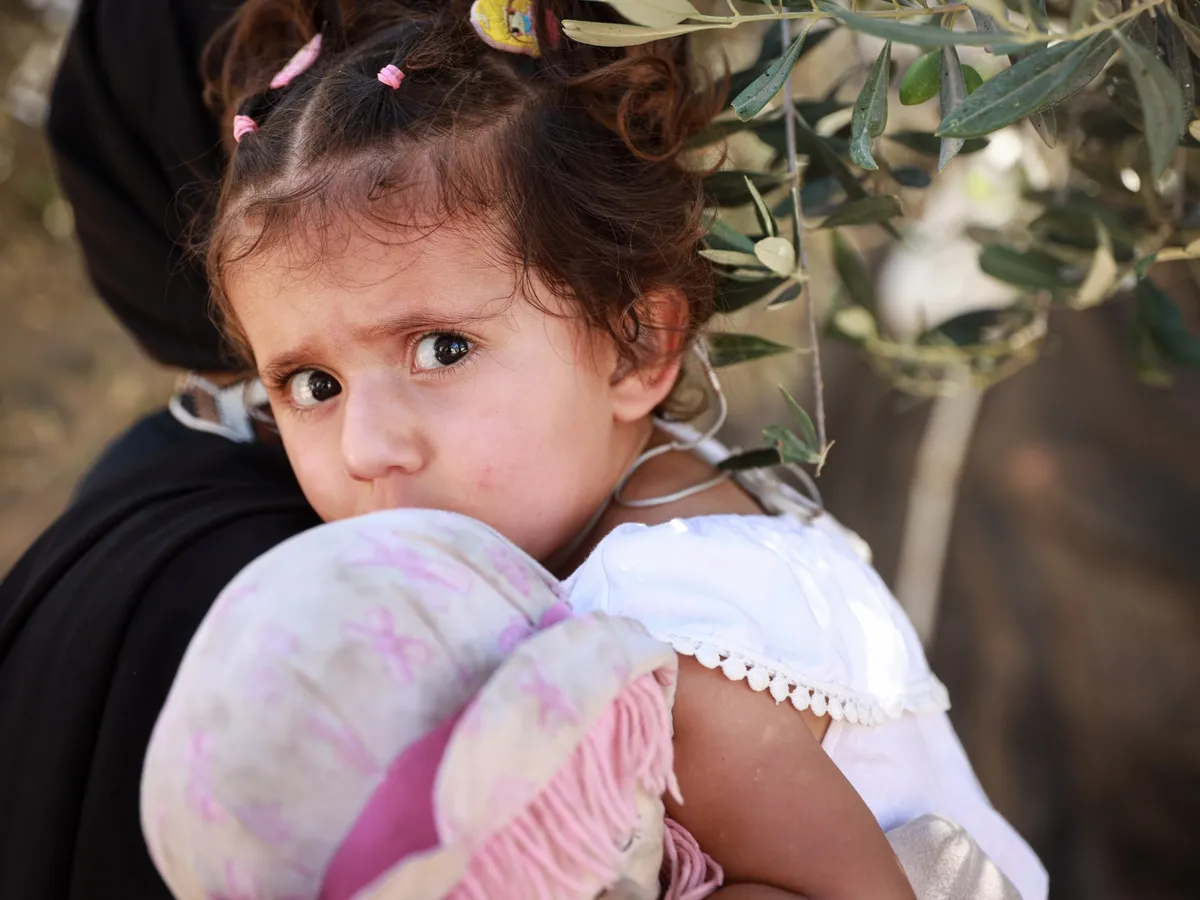
Al JazeeraFIG 01
Reading time
5min
Word count
1 186words
Sources cited
2cited
Entities identified
9entities
Quality score
100%
§ 01
Briefing Summary
AI-generatedNEWSAR · AI
Gaza children are experiencing a significant increase in hearing impairments, including partial and total hearing loss, due to repeated exposure to blasts from Israeli strikes. Young children like Wateen al-Ajrami, who lost approximately 85-90% of her hearing after a blast, and Usaid al-Shami, who lost most of his hearing as an infant, are examples of this growing crisis. Medical specialists in Gaza have observed a sharp rise in such cases, attributing them to blast waves from explosions. The conflict has severely impacted the healthcare system, with damaged rehabilitation centers and limited access to essential medical devices like hearing aids and cochlear implants due to import restrictions. This hearing loss poses a critical danger to children, as they lose the ability to hear warnings of approaching threats, increasing their vulnerability in the conflict zone.
Confidence 0.90Sources 2Claims 5Entities 9
§ 02
Article analysis
Model · rule-basedFraming
Public Health
Human Interest
Tone
Mixed Tone
AI-assessed
CalmNeutralAlarmist
Factuality
0.70 / 1.00
Factual
LowHigh
Sources cited
2
Limited
FewMany
§ 03
Key claims
5 extracted01
Wateen al-Ajrami suffered approximately 85-90 percent hearing loss in both ears after an Israeli strike near her shelter.
factualMariam (Wateen's mother)
Confidence
0.95
02
Blast waves are a leading cause of inner ear injuries, brain trauma, and psychological shock.
factualmedical groups
Confidence
0.90
03
Medical reports for Wateen have been submitted to the WHO for a potential referral outside Gaza.
factualarticle
Confidence
0.90
04
Gaza children are increasingly developing hearing impairments due to repeated exposure to blasts.
factualarticle
Confidence
0.90
05
Estimates from UN agencies and health organizations show a sharp rise in children in Gaza suffering partial or total hearing loss due to explosions.
statisticUnited Nations agencies and health organisations
Confidence
0.85
§ 04
Full report
5 min read · 1 186 words§ 05
Entities
9 identifiedKey playerOppositionContextPositiveNeutralNegative
Organizations1
§ 06
Keywords & salience
9 termshearing loss
1.00
gaza
0.90
blast-induced hearing loss
0.90
children's health
0.80
medical care access
0.70
war on gaza
0.60
israeli strike
0.60
blast wave
0.50
who referral
0.40
§ 07
Topic connections
Interactive graph Network visualization showing 51 related topics
View Full Graph Person Organization Location Event|Click node to navigate|Edge numbers = shared articles