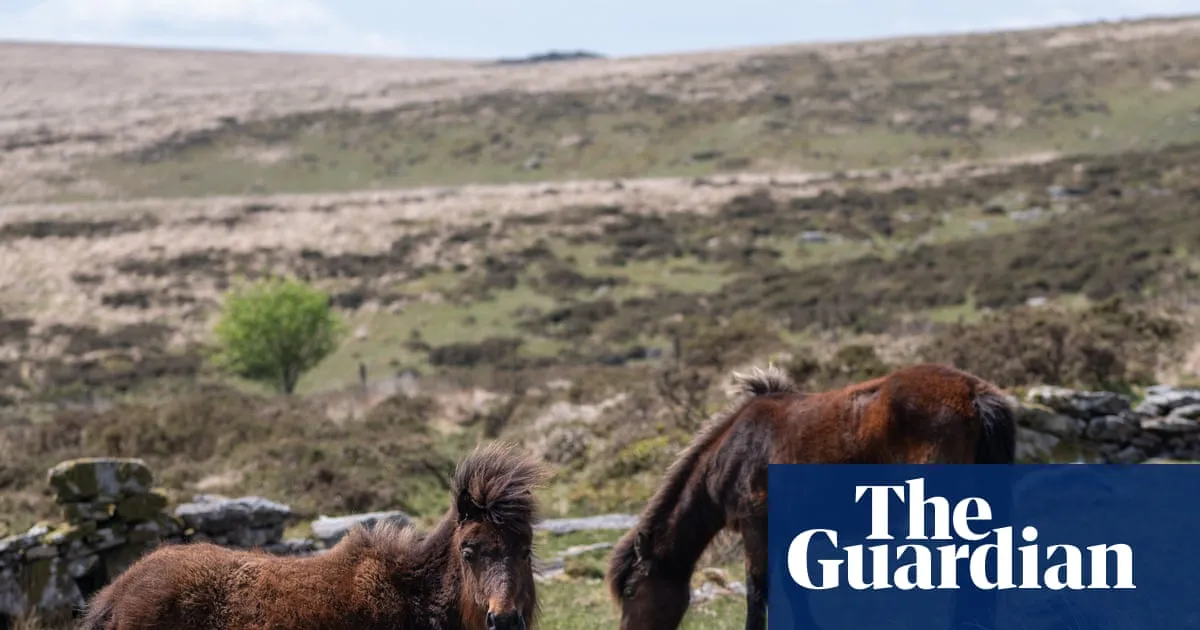
Natural England and MPs are urging the government to change its livestock rules to stop ponies on Dartmoor from being culled.Semi-wild ponies have roamed Dartmoor for more than 4,000 years and have become uniquely suited to the boggy landscape, providing a charming sight for those who visit the national park.There was therefore widespread outrage after reports that government quango Natural England were going to cause a cull of up to 90% of the ponies, with the Conservative party calling for the government body to be reviewed and possibly stripped of its powers.However, sources at the quango say it is the Department for Environment, Food and Rural Affairs’ (Defra) policy that is at fault, as it fails to differentiate between sheep and ponies. Because the barren moors are so overgrazed, putting species including rare birds and butterflies at risk as there is no food or nesting sites for them, Natural England said there should be an aim to destock the moors by 76%.Natural England has no powers to order a cull of either sheep or ponies. But commoners on the moor are currently paid for their stewardship of the national park. Evidence has found that overgrazing, mainly by sheep, has prevented wildflowers and other plants from growing and emptied parts of Dartmoor of nature.New government plans say that in order to access these funds, those who graze animals on the moor will have to reduce their livestock numbers, leading to some animals being culled.However, sources at Natural England said the rules, drafted by Defra, make no differentiation between sheep and ponies. While sheep eat the most nutritious and desirable plants, horses are highly effective at stripping the moor of tough, unpalatable vegetation such as molinia grass and gorse, both of which are swamping the peat bogs and heather of the moor. Farmers are much more likely to get rid of ponies than their sheep, as they can sell the latter for meat.Dartmoor ponies eat the highly destructive molinia grass that is reducing Dartmoor’s biodiversity. Photograph: Abbie Trayler-Smith/The GuardianA source said: “Defra policy in agri-environment schemes does not allow us to differentiate between livestock animals in making agreements.” Sources at the quango said this had been deeply frustrating. Online abuse directed at Natural England included X posts that claimed its chair, Tony Juniper, wanted to personally kill ponies.There are fewer than 1,000 Dartmoor hill ponies, down from around 7,000 in 1999, according to the Dartmoor Hill Pony Association. A government commissioned review into Dartmoor, published two years ago, found that Natural England “should not take actions likely to result in a reduction in pony numbers”, adding they were “invaluable for conservation grazing”.Joss Hibbs, secretary of the DHPA, said: “Natural England is putting ponies in direct competition with commercial livestock who pay the farmers’ bills. Their plans disregard the scientific evidence and could decimate an endangered species that has been a feature of the landscape for over 4,500 years.”Natural England and MPs are calling for Defra to give a carve-out for the ponies. Local Labour MP Steve Race said: “The ponies are not livestock – they’ve existed as an integral part of Dartmoor’s ecosystem for thousands of years, and are the only thing that eats the highly destructive molinia grass that is reducing Dartmoor’s biodiversity.”Race, who’s constituency is in nearby Exeter, and the other Devon MPs are meeting with ministers at Defra next week to discuss the carve-out.Caroline Voaden, the Liberal Democrat MP for South Devon, whose constituency covers part of Dartmoor, said: “Dartmoor ponies have roamed the moors since the bronze age, yet under plans drawn up by a government quango, their population could drop by as much as 90% in the next few years. I am deeply alarmed, as are many others, that we might see the near elimination of ponies on the moor. The potential consequences of Natural England’s proposed grazing contracts are staggering. We must do everything we can to protect what are among the last semi-wild species of pony in the UK and ensure their survival for generations to come.”Defence minister and Plymouth MP, Luke Pollard, has written to Defra to ask that ponies are given a carve-out. He said: “I am deeply concerned that the proposed contracts include ponies within overall livestock unit limits, which risks creating a financial incentive to prioritise more commercially viable livestock, such as cattle and sheep, over ponies.”Kemi Badenoch, the leader of the Conservative party, said: “This is total madness from another unaccountable quango. The government must overrule Natural England and stop it immediately.”A spokesperson for the prime minister said: “This government will not allow a cull of Dartmoor ponies and we don’t manage our pony populations by culling in this country.”
SRCThe Guardian - World News
LANGEN
LEANCenter-Left
WORDS780
ENT10
TUE · 2026-06-16 · 13:36 GMTBRIEF NSR-2026-0616-84911
NSR-2026-0616-84911News Report·EN·Environmental
Natural England and MPs call for rule change to stop Dartmoor pony cull
Natural England and several MPs are urging the government to amend livestock rules to prevent a cull of Dartmoor ponies. Reports indicate that a Department for Environment, Food and Rural Affairs (Defra) policy on agri-environment schemes fails to distinguish between ponies and sheep, potentially leading to a significant reduction in the pony population.
Helena HortonThe Guardian - World NewsFiled 2026-06-16 · 13:36 GMTLean · Center-LeftRead · 4 min
The Guardian - World NewsFIG 01
Reading time
4min
Word count
780words
Sources cited
5cited
Entities identified
10entities
Quality score
100%
§ 01
Briefing Summary
AI-generatedNEWSAR · AI
Natural England and several MPs are urging the government to amend livestock rules to prevent a cull of Dartmoor ponies. Reports indicate that a Department for Environment, Food and Rural Affairs (Defra) policy on agri-environment schemes fails to distinguish between ponies and sheep, potentially leading to a significant reduction in the pony population. While Natural England aims to reduce overgrazing, primarily by sheep, which harms biodiversity, its current agreements do not allow differentiation. This has led to concerns that farmers may cull ponies, which are crucial for managing invasive grasses, to meet livestock reduction targets for funding. MPs are meeting with Defra ministers to advocate for a specific exemption for Dartmoor ponies, highlighting their historical and ecological importance.
Confidence 0.90Sources 5Claims 5Entities 10
§ 02
Article analysis
Model · rule-basedFraming
Environmental
Human Interest
Tone
Mixed Tone
AI-assessed
CalmNeutralAlarmist
Factuality
0.70 / 1.00
Factual
LowHigh
Sources cited
5
Well sourced
FewMany
§ 03
Key claims
5 extracted01
Dartmoor hill pony numbers have decreased from around 7,000 in 1999 to fewer than 1,000.
statisticDartmoor Hill Pony Association
Confidence
0.95
02
Natural England and MPs are urging the government to change livestock rules to prevent a cull of Dartmoor ponies.
factualNatural England and MPs
Confidence
0.90
03
New government plans require livestock reduction to access agri-environment funds, potentially leading to culls.
factualArticle
Confidence
0.85
04
Defra policy fails to differentiate between sheep and ponies in agri-environment schemes, causing frustration.
factualNatural England sources
Confidence
0.80
05
Overgrazing, primarily by sheep, is preventing wildflowers and other plants from growing and harming Dartmoor's biodiversity.
factualNatural England
Confidence
0.80
§ 04
Full report
4 min read · 780 words§ 05
Entities
10 identifiedKey playerOppositionContextPositiveNeutralNegative
Organizations3
Locations1
§ 06
Keywords & salience
10 termsdartmoor pony cull
1.00
livestock rules
0.90
natural england
0.80
defra policy
0.80
overgrazing
0.70
biodiversity
0.60
agri-environment schemes
0.50
national park
0.40
rare birds
0.40
peat bogs
0.40
§ 07
Topic connections
Interactive graph Network visualization showing 2 related topics
View Full Graph Person Organization Location Event|Click node to navigate|Edge numbers = shared articles