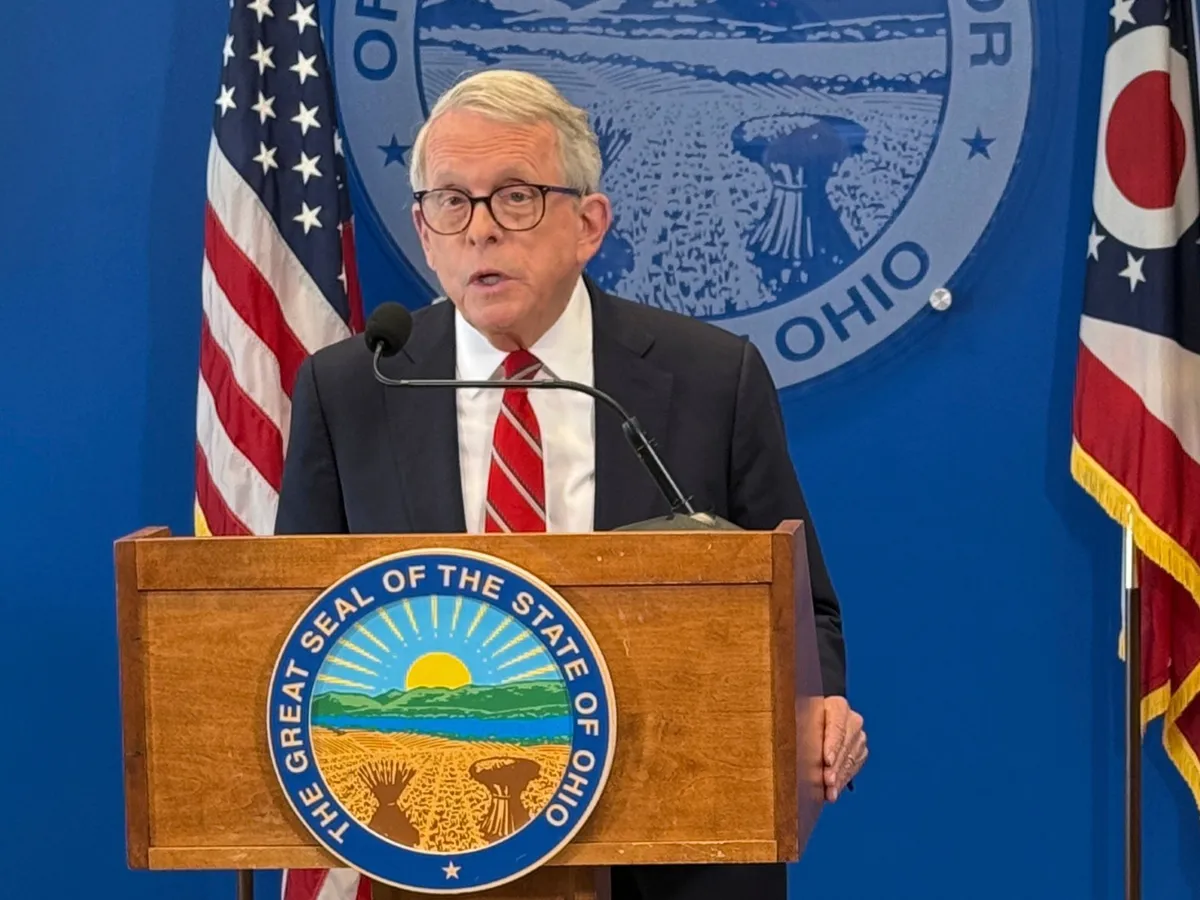
Support for capital punishment has sharply declined in the United States, with several states rolling back its use.Ohio Governor Mike DeWine speaks at a news conference on June 16 in Columbus, Ohio [Patrick Aftoora-Orsagos/AP Photo]Published On 16 Jun 2026Republican Governor of Ohio Mike DeWine has announced that he now opposes the Death Penalty, calling for an end to the punishment he once helped revive in his state.During a news conference on Tuesday, DeWine explained that, as a young prosecutor and elected official, he once believed that capital punishment could serve as a deterrent to crime. But that argument, he said, no longer stands up to scrutiny.Recommended Stories list of 3 itemslist 1 of 3US judge halts execution by nitrogen gas, ruling it unconstitutionallist 2 of 3Trump administration to prioritise seeking Death Penalty, use firing squadslist 3 of 3US judge rules Luigi Mangione won’t face Death Penalty in CEO killing caseend of list“I do not believe that argument today can be successfully made, nor do I believe that there’s any chance in the future the facts that I’ve cited to support that belief will change,” the 79-year-old DeWine said. “Therefore, I believe Ohio should abolish the Death Penalty.”The governor’s change of heart comes as he reaches the end of his second and final term. Under Ohio’s term limits, DeWine is ineligible to compete for a third term in November’s midterm elections.His public shift also puts him at odds with the Republican Party establishment in the US.In April, Republican President Donald Trump announced plans to expand the use of the Death Penalty on the federal level, including through the proposed use of firing squads.A majority of Americans still support the use of the Death Penalty. But DeWine’s announcement comes at a time when people in the US are increasingly sceptical of the punishment.The research firm Gallup shows that support for capital punishment reached a high of 80 percent in 1994 but has steadily fallen over the decades to 52 percent in 2025.Kyle Rubin of Columbus, Ohio, protests against the Death Penalty in Terre Haute, Indiana, on July 17, 2020 [File: Michael Conroy/AP Photo]That trend has been driven by a combination of procedural and moral arguments.Critics point out that Black and Latino defendants are over-represented on death row, suggesting racial bias in sentencing procedures.There are also concerns about wrongful executions. Since 1973, the Death Penalty Information Center, an advocacy group, notes that 202 people on death row were ultimately exonerated.The frequency of botched executions has also raised human rights concerns. Some have argued that the Death Penalty constitutes cruel and unusual punishment, which is prohibited by the US Constitution.DeWine, meanwhile, raised questions about the “certainty and swiftness” of justice being delivered. He argued that it generally takes longer to sentence someone to death, and the odds of the punishment being carried out are low.“In summary, each decade that the Death Penalty has been in effect, the chances of a murderer getting executed get more and more and more remote,” DeWine said.Ohio’s current Death Penalty statute took effect in 1981. DeWine, at the time, cosponsored the legislation.But he and other legislators who voted for the statute have since reversed their stance and advocated for its repeal.The belief that capital punishment deters people from committing crimes has also sharply declined in recent decades.While 62 percent of poll respondents in 1985 agreed that the Death Penalty deters murder, Gallup found that just 32 percent believed the same idea in 2011.The last execution carried out in Ohio took place in 2018, before DeWine took office.As governor, he has overseen a de facto moratorium on the Death Penalty by postponing scheduled executions. In 2021, he also signed into law a bill barring capital punishment for defendants with serious mental illness.In Tuesday’s speech, he called on the state legislature to consider repealing the 1981 Death Penalty statute, or put the matter to voters.“The legislature can take this action, and I believe they should take this action,” DeWine said. “But if the legislature does not want to make that decision, they can leave it up to a vote of the people of the state of Ohio.”Ohio’s Republican House Speaker Matt Huffman has already said in February that he would “vigorously oppose” any effort to abolish the Death Penalty. DeWine acknowledged he has spoken with Huffman, and they remain at odds.“Reasonable people, for centuries, have come down on both sides of this issue,” DeWine said. “There are good people on both sides of this issue.”While 23 states have barred the Death Penalty, the punishment remains on the books in a majority of states, even though several, including California and Oregon, have effectively paused the practice.Trump, however, has also pledged to increase his administration’s use of capital punishment, reversing a moratorium imposed under former President Joe Biden.Near the end of his first term, Trump oversaw an unprecedented number of federal executions. Thirteen people were executed from July 2020 to January 2021, a period of roughly six months.
SRCAl Jazeera
LANGEN
LEANCenter
WORDS825
ENT10
TUE · 2026-06-16 · 18:43 GMTBRIEF NSR-2026-0616-85002
NSR-2026-0616-85002News Report·EN·Legal & Judicial
Ohio Governor Mike DeWine opposes death penalty, reversing past support
Ohio Governor Mike DeWine announced he now opposes the death penalty, urging its abolition in the state. DeWine, who previously supported capital punishment and helped enact Ohio's death penalty statute in 1981, stated his belief that it is no longer a deterrent and that justice is not delivered swiftly or certainly.
Brian OsgoodAl JazeeraFiled 2026-06-16 · 18:43 GMTLean · CenterRead · 4 min
Al JazeeraFIG 01
Reading time
4min
Word count
825words
Sources cited
4cited
Entities identified
10entities
Quality score
100%
§ 01
Briefing Summary
AI-generatedNEWSAR · AI
Ohio Governor Mike DeWine announced he now opposes the death penalty, urging its abolition in the state. DeWine, who previously supported capital punishment and helped enact Ohio's death penalty statute in 1981, stated his belief that it is no longer a deterrent and that justice is not delivered swiftly or certainly. This shift in stance occurs as DeWine concludes his second and final term, placing him at odds with some Republican Party figures who advocate for its expanded use. His announcement reflects a broader national trend of declining support for capital punishment, driven by concerns about racial bias, wrongful exonerations, and botched executions. DeWine called on the state legislature to repeal the death penalty statute or allow voters to decide its fate.
Confidence 0.90Sources 4Claims 5Entities 10
§ 02
Article analysis
Model · rule-basedFraming
Legal & Judicial
Political Strategy
Tone
Measured
AI-assessed
CalmNeutralAlarmist
Factuality
0.70 / 1.00
Factual
LowHigh
Sources cited
4
Well sourced
FewMany
§ 03
Key claims
5 extracted01
DeWine's shift in stance occurs as he nears the end of his second and final term as governor.
factual
Confidence
1.00
02
Since 1973, 202 individuals on death row have been exonerated, according to the Death Penalty Information Center.
statisticDeath Penalty Information Center
Confidence
1.00
03
Support for capital punishment in the US has declined from a high of 80% in 1994 to 52% in 2025, according to Gallup.
statisticGallup
Confidence
1.00
04
DeWine previously supported capital punishment as a deterrent, but now believes that argument lacks scrutiny.
quoteMike DeWine
Confidence
1.00
05
Ohio Governor Mike DeWine announced he opposes the death penalty, calling for its abolition in the state.
quoteMike DeWine
Confidence
1.00
§ 04
Full report
4 min read · 825 words§ 05
Entities
10 identifiedKey playerOppositionContextPositiveNeutralNegative
Organizations3
Locations4
§ 06
Keywords & salience
9 termsdeath penalty
1.00
capital punishment
0.90
ohio
0.80
mike dewine
0.80
abolish
0.70
deterrent
0.60
republican party
0.50
racial bias
0.40
wrongful executions
0.40
§ 07
Topic connections
Interactive graph Network visualization showing 19 related topics
View Full Graph Person Organization Location Event|Click node to navigate|Edge numbers = shared articles