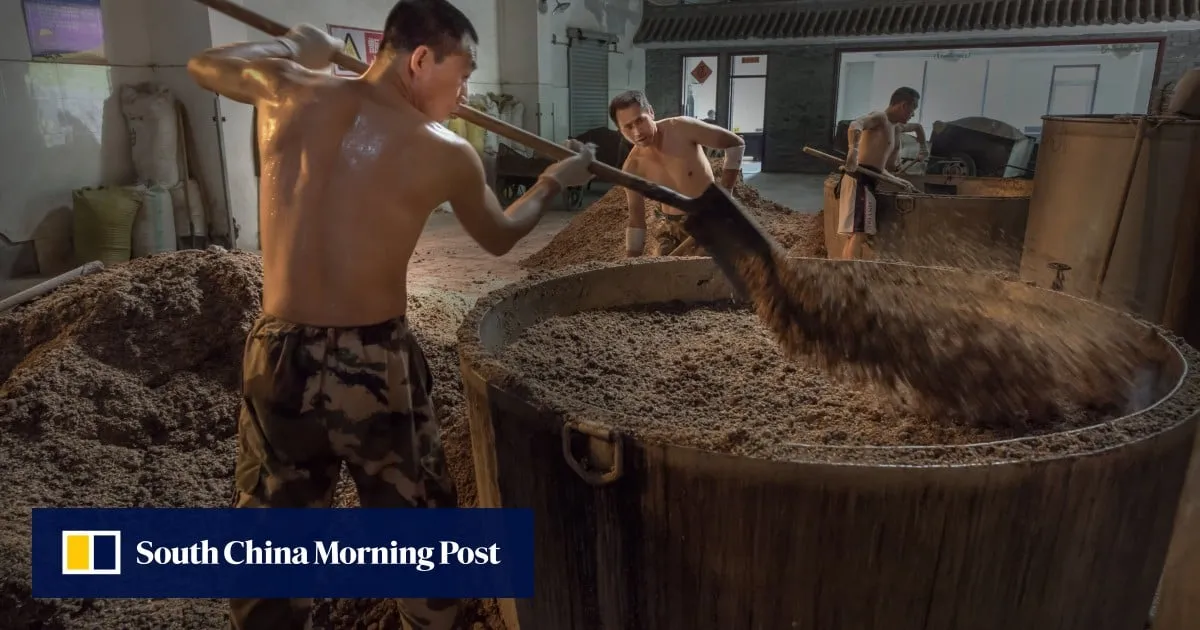
Alcohol has played a central role in human culture for at least 10,000 years, with the earliest known alcoholic beverage – a rice wine – originating from the Henan province of central China.However, much of our understanding of these early adult beverages is superficial at best. Recently, a handful of studies from China are shedding light on what the oldest Chinese residents were drinking and how they crafted these libations.The highlight was the discovery of an unopened bottle of drink from the Warring States period (475–221 BC), specifically from the State of Qin (897–221 BC).This bottle contained a significant amount of liquid, differing from the usual faint traces of chemicals, allowing researchers to thoroughly investigate the drink’s chemical composition.The team identified 24 chemical compounds that comprised the drink, offering a detailed insight into its recipe. The findings suggest that the drink was made from broomcorn millet – a grain – blended with wheat and barley.The traditional Chinese ceramic jars displayed above are used for the storage and ageing of Chinese liquor, commonly known as baijiu or huangjiu. These large earthenware jars represent a classic method of fermentation and storage. Photo: ShutterstockImportantly, this research provided further insight into a fermentation starter known as qu, which employs a mouldy yeast that is mixed with grains and water for fermentation. The presence of qu indicates that Qin society had developed sophisticated brewing techniques guided by deliberate recipes.The authors noted: “Two main brewing technologies have emerged in ancient China: one utilising cereal malts (nie) as the starter, and the other employing mouldy grains or herbs (qu).”qu is regarded as a foundational component of Chinese alcohol production and is still in practice today. Most notably, it is used to create baijiu, China’s most famous hard liquor, with qu starters typically appearing as blocks of mouldy yeast.The recipe is then combined with sorghum, a cereal grain, and fermented for two to three months before distillation into a liquor that can achieve an alcohol content of 60 to 70 per cent by volume.Unlike Western spirits consumed for personal relaxation, baijiu operates as a communal and relational medium, serving primarily to solidify social bonds and networks. Photo: ShutterstockQu is celebrated for offering a more complex and personalised flavour profile due to its use of organic ingredients, in contrast to the commercially processed yeasts common in many other alcoholic beverages.This technique first emerged during the Warring States period, but the tradition of fermenting mouldy yeast can be traced back to Neolithic China (10000–1700 BC).In a separate study, researchers in China discovered a malt beer dating from the Han dynasty (206 BC–220) belonging to a mid-level military officer in Shaanxi province, central China.This drink, known as li, is considered a “beer-like” drink brewed exclusively with wheat malt, employing a technique called nie. nie takes the form of a malted grain powder, which is added to steamed grains – often rice – and water for fermentation.Further ReadingThe resulting drink is opaque, earthy, and significantly less alcoholic than baijiu.Although baijiu translates literally to “white liquor” and bears physical similarities to white whisky, it occupies a significantly more prominent cultural role in China compared to white whisky in the West. Photo: ShutterstockThe nie method remains largely underexplored, having fallen out of favour in the 1700s. While qu continues to evolve, nie persists primarily as a historical curiosity, lacking the modern innovations seen with its counterpart.The discovery of the Han-era drink provides direct physical evidence of the malty drink’s development in ancient China.These two studies, along with ongoing robust research into ancient alcohol, are enhancing our understanding of the heritage of traditional Chinese beverages.“The results revealed detailed flavour profiles, diagnostic organic acids, starches, phytoliths, and yeast, providing multiple lines of evidence to ascertain the ingredients and brewing processes of the ancient alcoholic beverage,” wrote the authors of the qu fermentation study.
SRCSouth China Morning Post
LANGEN
LEANCenter-Right
WORDS637
ENT12
WED · 2026-06-17 · 01:00 GMTBRIEF NSR-2026-0617-85055
NSR-2026-0617-85055News Report·EN·Human Interest
Sips of history: how ancient Chinese brewing techniques shaped modern alcohol
Recent studies from China are illuminating ancient Chinese brewing techniques. Researchers discovered an unopened bottle from the Warring States period containing a drink made from broomcorn millet, wheat, and barley, utilizing a sophisticated fermentation starter called "qu." This "qu" method, involving moldy yeast, is a foundational component of Chinese alcohol production, still used today for baijiu.
Kevin McSpaddenSouth China Morning PostFiled 2026-06-17 · 01:00 GMTLean · Center-RightRead · 3 min
South China Morning PostFIG 01
Reading time
3min
Word count
637words
Sources cited
1cited
Entities identified
12entities
Quality score
100%
§ 01
Briefing Summary
AI-generatedNEWSAR · AI
Recent studies from China are illuminating ancient Chinese brewing techniques. Researchers discovered an unopened bottle from the Warring States period containing a drink made from broomcorn millet, wheat, and barley, utilizing a sophisticated fermentation starter called "qu." This "qu" method, involving moldy yeast, is a foundational component of Chinese alcohol production, still used today for baijiu. Separately, a malt beer from the Han dynasty, known as "li" and brewed with wheat malt using the "nie" technique, was found. These discoveries provide physical evidence of ancient brewing processes and ingredients, enhancing understanding of traditional Chinese beverages.
Confidence 0.90Sources 1Claims 5Entities 12
§ 02
Article analysis
Model · rule-basedFraming
Human Interest
Technology
Tone
Measured
AI-assessed
CalmNeutralAlarmist
Factuality
0.80 / 1.00
Factual
LowHigh
Sources cited
1
Limited
FewMany
§ 03
Key claims
5 extracted01
Baijiu, China's most famous hard liquor, uses qu starters and can achieve 60-70% alcohol content.
factual
Confidence
0.95
02
An unopened bottle of drink from the Warring States period (475–221 BC) was discovered, containing liquid that allowed for thorough chemical analysis.
factual
Confidence
0.95
03
The discovery of 'qu', a fermentation starter using mouldy yeast, indicates sophisticated brewing techniques in Qin society.
factual
Confidence
0.90
04
The earliest known alcoholic beverage, a rice wine, originated from the Henan province of central China.
factual
Confidence
0.90
05
The drink from the Warring States period was made from broomcorn millet blended with wheat and barley.
factual
Confidence
0.85
§ 04
Full report
3 min read · 637 words§ 05
Entities
12 identifiedKey playerOppositionContextPositiveNeutralNegative
§ 06
Keywords & salience
9 termsancient chinese brewing
1.00
rice wine
0.90
fermentation starter
0.80
qu
0.80
baijiu
0.70
warring states period
0.60
chemical composition
0.50
mouldy yeast
0.50
social bonds
0.40
§ 07
Topic connections
Interactive graph Network visualization showing 51 related topics
View Full Graph Person Organization Location Event|Click node to navigate|Edge numbers = shared articles