University students would face minimum grade requirements to qualify for student loans in England under proposals that could in effect bar thousands of young people from higher education.Under one proposal being discussed by ministers, a pass in GCSE English would become the national threshold for students to access government-backed tuition and maintenance loans through the student loans Company.The change would affect more than 30,000 students each year who enrol on full-time first degree courses without formal qualifications such as GCSEs, as well as being a potential financial disaster for universities that teach large numbers of such students, often through franchise arrangements with external partners.Critics said the new regulation would mostly harm students from poorer backgrounds and non-traditional backgrounds, including those educated overseas or who struggled within the school system.Rachel Hewitt, chief executive of the MillionPlus group representing modern universities, said: “Universities are autonomous institutions, and if a student can meet their requirements, is willing to take on that investment and is assessed to be capable, MillionPlus questions why the government thinks placing additional barriers in their way is the correct way forward.“Universities already have their own checks to ensure learners can meet English language requirements on their courses and will not take on students they are not confident can succeed.“Furthermore, this approach risks blocking access to mature students seeking to re-enter education later in life, who are precisely the group the government should want to see reskill and upskill.”The Department for Education (DfE) said it would not comment on speculation. But a spokesperson added: “We are restoring our world-class universities as engines of opportunity, aspiration and growth. That is why we are cracking down on poor-quality courses so that students can be confident they’re getting value for money from university degrees.”Libby Hackett, the chief executive of the Russell Group of leading research universities, called for the government to work with the higher education sector over how minimum entry requirements could be applied, to avoid punishing groups such as mature students.Hackett said: “In principle, we support a national minimum entry standard to higher education. Typically, there are minimum entry requirements in place to study A-levels, apprenticeships, many further education courses and most university courses. With significant levels of graduate contribution alongside public subsidies [of student loans], minimum entry thresholds can act as an important safeguard to protect student interests and taxpayer investment.“Crucial to any ongoing discussion will be balancing this with appropriate flexibility for trusted institutions, so they can determine equivalent entry routes for mature students and those from underrepresented backgrounds.”The proposal has been pitched within Whitehall as an English language requirement, similar to those required for international students. But it would also serve as a de facto admissions standard by cutting off access to finance.Last year, more than 33,000 domestic students who began studying full-time for their first degree lacked formal qualifications such as GCSEs, A-levels or recognised equivalents, amounting to one in 15 starting in 2024-25.Several universities, including Bath Spa and Leeds Trinity, admitted more than half of their domestic students without formal qualifications recorded by the higher education Statistics Agency. In many cases the students are taught through franchise arrangements with private or local colleges, in which the universities oversee the courses in return for payment.The threat of minimum entry requirements comes as the government is preparing to cut its teaching grant for university courses in England by a further £100m, according to a report in Times higher education.The DfE is expected to announce that its strategic priorities grant for 2026-27 will be cut by £100m to about £1.25bn. The grant is the main remaining source of direct funding for universities, and subsidises high-cost courses such as healthcare. The grant was previously cut by £100m for the current academic year.A spokesperson for the DfE said: “We are still finalising decisions on the strategic priorities grant for the coming academic year and we will provide an update in due course.”
SRCThe Guardian - World News
LANGEN
LEANCenter-Left
WORDS651
ENT10
WED · 2026-06-17 · 07:00 GMTBRIEF NSR-2026-0617-85099
NSR-2026-0617-85099News Report·EN·Social Justice
Students could be required to pass GCSE English to access university loans
Ministers in England are considering a proposal that would require students to pass GCSE English to access government-backed student loans for university. This change could prevent over 30,000 students annually who enroll without formal qualifications from accessing higher education.
Richard Adams Education editorThe Guardian - World NewsFiled 2026-06-17 · 07:00 GMTLean · Center-LeftRead · 3 min
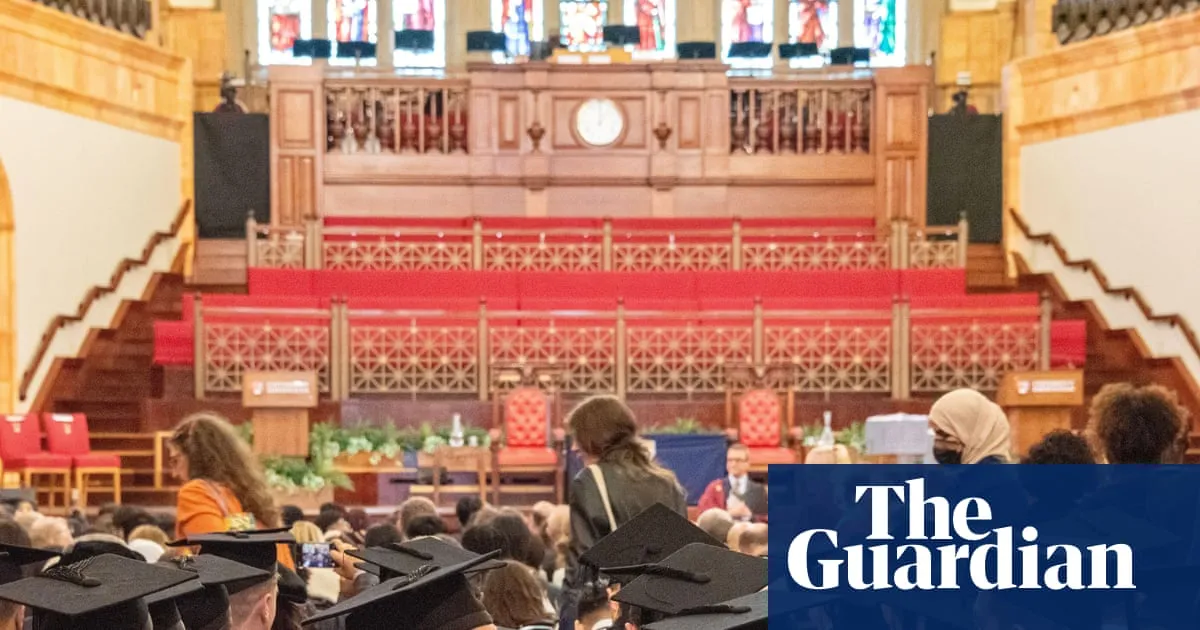
The Guardian - World NewsFIG 01
Reading time
3min
Word count
651words
Sources cited
3cited
Entities identified
10entities
Quality score
100%
§ 01
Briefing Summary
AI-generatedNEWSAR · AI
Ministers in England are considering a proposal that would require students to pass GCSE English to access government-backed student loans for university. This change could prevent over 30,000 students annually who enroll without formal qualifications from accessing higher education. Critics argue this would disproportionately affect students from disadvantaged backgrounds and mature learners. While the Department for Education declined to comment on speculation, they stated a commitment to improving university quality. The Russell Group supports a national minimum entry standard but urges flexibility for institutions to accommodate diverse student backgrounds. This proposal is seen as a de facto admissions standard by limiting financial access.
Confidence 0.90Sources 3Claims 5Entities 10
§ 02
Article analysis
Model · rule-basedFraming
Social Justice
Economic Impact
Tone
Mixed Tone
AI-assessed
CalmNeutralAlarmist
Factuality
0.60 / 1.00
Mixed
LowHigh
Sources cited
3
Well sourced
FewMany
§ 03
Key claims
5 extracted01
Universities are autonomous institutions and question why the government is placing additional barriers.
quoteRachel Hewitt (MillionPlus)
Confidence
0.90
02
Critics say the regulation would harm students from poorer and non-traditional backgrounds.
quoteCritics
Confidence
0.90
03
Students could be required to pass GCSE English to access university loans in England.
factual
Confidence
0.90
04
The government is cracking down on poor-quality courses to ensure value for money.
quoteDepartment for Education spokesperson
Confidence
0.80
05
The change would affect more than 30,000 students each year who enroll without formal qualifications.
statistic
Confidence
0.80
§ 04
Full report
3 min read · 651 words§ 05
Entities
10 identifiedKey playerOppositionContextPositiveNeutralNegative
Organizations4
Locations1
§ 06
Keywords & salience
9 termsgcse english
1.00
university loans
1.00
higher education access
0.90
minimum grade requirements
0.80
student loans company
0.70
financial impact on universities
0.60
students from poorer backgrounds
0.50
mature students
0.50
department for education
0.40
§ 07
Topic connections
Interactive graph Network visualization showing 51 related topics
View Full Graph Person Organization Location Event|Click node to navigate|Edge numbers = shared articles